
Create Content Faster With AI, Without Overcomplicating the Process
Creating content with AI doesn’t have to feel like assembling a spaceship from spare parts. Most people overcomplicate it because they think more tools equal better output. Eli would tell you the opposite: clarity beats complexity every single time. You don’t need ten prompts, five frameworks, and a color-coded workflow to write something that connects. You need one clear idea… and the willingness to let AI help you shape it faster. Start with the core message—what you actually want to say—then let AI expand, refine, and sharpen it. Not replace your voice, but reveal it. Because the real power isn’t in what AI writes for you… it’s in how quickly it helps you get unstuck and moving again.
Think of AI like a quiet creative partner sitting across from you at a coffee shop. It’s not there to take over the conversation—it’s there to keep it flowing. You bring the spark. It helps you turn that spark into something structured, readable, and real. The mistake most people make is asking AI to do everything, which is exactly how their content ends up sounding like everyone else. Instead, bring your messy thoughts, your half-finished ideas, your voice that doesn’t quite feel “polished” yet—and let AI organize it, tighten it, and give it rhythm. Faster doesn’t mean rushed. It means removing friction. And when you remove friction, you don’t just create more content… you create better content, with less resistance, and a whole lot more of you still inside it.
To build something real online, you need more than interest. Interest is easy—it shows up in bursts, in late-night ideas, in bookmarked tabs you swear you’ll come back to. But interest alone doesn’t build anything that lasts. What you need is support. Not just motivation… but structure. The kind that holds your work steady when your energy doesn’t. Because without the right tools—chosen with care, not just curiosity—you end up in a loop that feels productive on the surface but quietly goes nowhere. You’re moving, yes. But nothing is taking shape. Nothing is compounding. And over time, that gap between effort and outcome starts to feel heavier than it should.
The shift happens when you stop treating your work like an experiment… and start treating it like something worth building properly. The right foundation doesn’t just organize your process—it changes how you show up to it. It turns scattered effort into rhythm. Occasional bursts into consistency. What once felt like “trying things out” begins to feel like momentum you can trust. And slowly, almost quietly, your work starts behaving like a business. Something that runs. Something that supports you. Something that doesn’t disappear the moment life gets busy. Because when your tools are aligned from the beginning, they don’t just make things easier—they make things sustainable. And sustainability… is what turns a short-lived idea into something real enough to grow, steady enough to rely on, and strong enough to last.
Stoodaio
Click Here For Access
Stoodaio
Ready to Leverage The Power of a REAL A.I App That’s Unlike Anything You’ve EVER seen before?
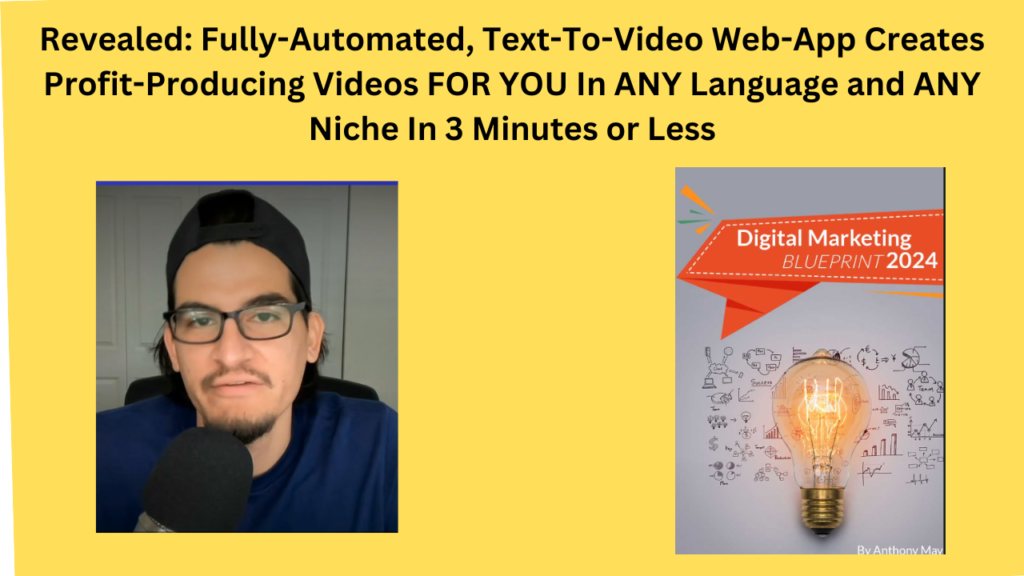
Revealed: Fully-Automated, Text-To-Video Web-App Creates Profit-Producing Videos FOR YOU In ANY Language and ANY Niche In 3 Minutes or Less!
… So You Can Get More Traffic, Make More PROFIT & Dominate Your Niche WITHOUT Wasting ANY
Time Writing Scripts, Recording VoiceOvers Or Even Creating Videos Yourself – EVER Again!
What Can Stoodaio 2.0 Do For YOU?
Done-For-You Hollywood-Quality Video Creation In ANY Language, ANY Niche, for ANY Product or service Imaginable
NEVER Write Scripts or Pay For A Script Writer EVER Again (Our A.I Does it FOR YOU)
Turn ANY existing Script Or Content into a TOTALLY Unique Version with our Powerful A.I Rewriter (limited-time bonus)
POWERFUL, human-like text-to-speech engine so the A.I turns ALL your scripts into AMAZING sounding voiceovers in ANY major language or accent
Recently Updated 2.0 Features Making this the BEST and REAL A.I Video Creation Platform That Only Needs 3 minutes To Write, Create And Publish Videos FOR YOU!
Powerful, Lightning-Fast Video Hosting Included for your videos (we’re using our video host on all the videos on this page)!
Immediately Publish Your Videos To Our Video Pages So you can drive traffic and produce profit with them RIGHT AWAY!
Over 1,500,000 Royalty-Free Videos, Images and Audios built-in so you can FULLY customize your videos HOWEVER you’d like (or let our A.I do it ALL for you)
Life Thriver Income Game
Click Here For Access
Life Thriver Income Game
by Justin & Brenda Glover
Most people don’t realize they’re playing a game.
They just feel it.
The pressure.
The repetition.
The quiet anxiety that no matter how hard they work… it never quite feels like enough.
Wake up. Work. Earn. Repeat.
And somewhere in between, a thought shows up—soft, but persistent:
“Is this really how it’s supposed to work?”
The Life Thriver Income Game begins right there.
Not with tactics.
Not with hacks.
But with a shift.
Because income… isn’t just something you earn.
It’s something you learn to build.
Justin and Brenda Glover take something that feels heavy—money, pressure, survival—and turn it into something you can actually see.
Something you can understand.
Something you can play.
They introduce a different lens:
What if income isn’t about working harder…
but about making smarter moves inside a system?
What if the goal isn’t more effort…
but more leverage?
And what if the real game…
isn’t earning money—but creating something that keeps earning for you?
This isn’t theory.
It’s structure.
The game reveals patterns most people never notice:
Why effort alone keeps you stuck
Why income disappears as fast as it comes
Why consistency feels hard when everything depends on you
And more importantly:
How to step out of that loop.
Who This Game Is For
This game is for the person who’s doing “everything right”…
and still feels like something’s off.
You might have:
A job that pays—but drains you
A business that works—but depends on you constantly
Income that comes—but doesn’t stay
You’re not lazy.
You’re not lost.
You’re just playing a game no one ever explained.
This is for the solopreneur who’s tired of starting over every month.
The side-hustler who knows there’s more than just “grind harder.”
The thinker who’s beginning to question the rules.
The one who’s starting to see:
Effort alone doesn’t create freedom.
The Moment Everything Shifts
There’s a moment—quiet, almost invisible—where things start to change.
It’s when you stop asking:
“How do I make more money?”
And start asking:
“How do I build something that makes money… without me?”
That question changes everything.
Because now you’re not chasing income.
You’re designing it.
What This Game Actually Does
The Life Thriver Income Game doesn’t overwhelm you with complexity.
It simplifies.
It breaks income down into something you can actually work with:
Moves you can make
Systems you can build
Patterns you can recognize
Decisions that compound over time
You begin to see:
Where your time is being traded…
Where your energy is being drained…
And where your leverage actually lives.
And slowly—without force—you start to shift.
From reacting…
to building.
From earning…
to creating.
The Core Idea
If there’s one idea that sits at the center of everything, it’s this:
Working creates income.
Systems create freedom.
The Outcome
After playing the game, something subtle—but powerful—happens.
You don’t just think differently.
You see differently.
You start noticing opportunities where you used to see effort.
You start building where you used to hustle.
You start creating stability where there used to be stress.
And over time…
Income stops feeling like something you chase.
And starts feeling like something you’ve designed.
Because the truth is:
Most people are working inside the game

How to Build a Web App That Actually Solves a Real Problem
Building a web app that actually solves a real problem doesn’t start with code. It starts with tension. The kind you can feel when something in your workflow keeps breaking, or when a task that should take five minutes quietly steals thirty. Most people skip this part. They rush to features, frameworks, and flashy ideas—because building feels productive. But Eli would tell you: if you don’t begin with a problem that has weight, you’ll end up polishing something no one needed in the first place.
The real work is noticing. Paying attention to the friction points in your own life or in the lives of people you understand deeply. Not surface-level annoyances, but recurring patterns. The spreadsheet that gets rebuilt every week. The email process that feels clunky no matter how many templates you try. The gap between what exists and what actually works. That gap is where good products live. Not in imagination, but in observation. Because when a problem is real, it doesn’t need to be sold—it’s already felt.
Once you’ve found that tension, the instinct is to solve all of it at once. To build something complete. Something impressive. But that’s where most apps collapse under their own ambition. Solving a real problem isn’t about building more—it’s about building just enough. Enough to remove the friction. Enough to create relief. The first version of your app shouldn’t try to be a platform. It should feel like a tool. Focused. Specific. Almost humble in what it does. Because clarity scales better than complexity ever will.
There’s a quiet discipline in restraint. It means asking harder questions before writing a single line of code. What is the one outcome this app must create? What does the user walk away with that they didn’t have before? If you can’t answer that in a sentence, you’re not ready to build—you’re still exploring. And that’s okay. Exploration is part of the process. But building without clarity is just motion without direction. It looks like progress, but it rarely compounds into anything meaningful.

When you do begin, think less like a developer and more like a translator. Your job isn’t to show what you can build—it’s to translate a messy human problem into a simple, usable experience. That means your interface should feel obvious, not clever. Your features should feel necessary, not impressive. Every extra step, every unnecessary option, every moment of hesitation is friction reintroduced. And friction is the very thing you set out to remove.
This is where listening becomes more valuable than building. The first people who use your app aren’t there to validate you—they’re there to reveal what you missed. And they will miss things, misuse things, and misunderstand things in ways you didn’t expect. That’s not failure. That’s signal. If you’re paying attention, every confused click is feedback. Every abandoned session is a clue. The goal isn’t to defend your idea—it’s to refine it until it works without explanation.
Most builders underestimate how much of this process is iteration, not invention. The version that works is rarely the version you imagined at the start. It’s the result of small adjustments made in response to real behavior. A button moved. A step removed. A feature simplified. Over time, these decisions compound into something that feels effortless to the user—but only because it wasn’t effortless to create. Simplicity is earned through attention.
And then there’s the part no one likes to talk about: patience. Not the passive kind, but the active kind. The willingness to keep showing up, refining, adjusting, even when the growth is slow and the feedback is quiet. Because solving a real problem doesn’t always look exciting from the outside. It looks like consistency. Like improving something that already works just a little bit more. Like choosing depth over distraction when a dozen new ideas are pulling at your attention.
It’s easy to get caught in the cycle of starting over. New idea, new stack, new direction. But real products aren’t built in bursts of inspiration—they’re built in layers. Each version resting on the last. Each improvement making the next one easier. When you stay with a problem long enough, you begin to understand it in ways that shortcuts can’t replicate. You start to see not just what people say they need, but what they actually struggle with beneath the surface.
And that’s where something shifts. Your app stops being a project and starts becoming a solution. Not because it’s perfect, but because it’s useful. Because it fits into someone’s life in a way that makes things simpler, clearer, or faster. That’s the standard. Not downloads. Not features. Not even revenue at first. Just usefulness. Quiet, undeniable usefulness.
In the end, building a web app that solves a real problem isn’t about chasing ideas—it’s about committing to one long enough to understand it fully. It’s about choosing clarity over complexity, listening over assuming, and refinement over reinvention. The tools will change. The technologies will evolve. But the core principle remains the same: solve something that matters, and do it in a way that feels simple on the other side.
Because the apps that last aren’t the ones that tried to do everything. They’re the ones that did one thing well enough to matter—and then kept getting better from there.
Take Action Today
Now is the hour Now in this minute Now in this second is all you will ever have . Yesterday is gone tomorrow has not yet come and when it does it becomes today where we only have hours minutes and seconds to decide whether or not we want to change in this moment..
How to Use Video in a Way That Actually Grows Your Busines
Using video to grow a business sounds simple on the surface. Press record. Share your thoughts. Post consistently. But if you’ve ever tried it, you know how quickly it becomes noise. More clips. More edits. More pressure to keep up. And somewhere in the middle of all that effort, a quiet question starts to surface: Is any of this actually working?
Because video, on its own, doesn’t build a business. Attention doesn’t automatically turn into trust. And views—no matter how high they climb—don’t guarantee movement. The truth is, most people aren’t struggling with video itself. They’re struggling with what the video is supposed to do. Without that clarity, every piece of content becomes another attempt… instead of a step forward.
The shift begins when you stop thinking of video as content—and start seeing it as conversation. Not a performance. Not a broadcast. A conversation with a specific person who has a specific tension they’re trying to resolve. When you speak to everyone, your message dissolves. But when you speak to one person clearly, something changes. The words land. The message sticks. And the right people start to recognize themselves in what you’re saying.
This is where most growth actually comes from—not volume, but resonance.
Before you record anything, you have to understand the problem you’re stepping into. Not the polished version people talk about publicly, but the quieter version they experience privately. The hesitation before they take action. The confusion they don’t know how to articulate. The friction they’ve learned to live with. Good video doesn’t just share ideas—it names what people are already feeling but haven’t fully expressed yet. And when you can do that, you don’t have to chase attention. Attention comes to you.
From there, the structure becomes simpler than most people expect. Every effective video carries one idea. Not three. Not five. One. Something clear enough that a viewer can walk away with it without needing to replay the entire thing. This is where restraint becomes a strength. Because when you try to say everything, nothing stands out. But when you say one thing well, it stays with people longer than you think.

There’s a rhythm to it. You open with a shift—something that interrupts the usual pattern of scrolling. Not with noise, but with clarity. A sentence that reframes how the viewer sees their situation. Then you guide them through it. Slowly. Naturally. As if you were explaining it across a table, not through a lens. And by the end, they’re not just informed—they’re changed, even if only slightly. That change is what creates momentum.
But here’s where most people get it wrong. They focus on making the video better… instead of making the outcome clearer.
Better lighting won’t fix a vague message. Better editing won’t compensate for a missing point. Growth doesn’t come from polishing the surface—it comes from strengthening the signal. The clearer the transformation inside the video, the easier it is for someone to say, “That was for me.” And that moment—that small recognition—is what turns a passive viewer into someone who pays attention the next time you show up.
Consistency matters, but not in the way most people think. It’s not about posting every day. It’s about showing up with the same level of clarity every time you do. One strong video a week will always outperform seven forgettable ones. Because consistency without intention just creates more noise. But consistency with direction builds familiarity. And familiarity, over time, becomes trust.
And trust is where business begins.
You don’t need millions of views to grow. You need the right people to see themselves in your work. The ones who are already close to making a decision. The ones who are searching, even if they haven’t typed it into a search bar yet. Video works when it meets people in that moment—when it feels less like content and more like timing.
There’s also a quiet shift that happens when you stop trying to “go viral.” Virality is unpredictable. It rewards extremes, not depth. But business growth is built on depth. On someone watching your video and thinking, This person understands what I’m dealing with. That thought is far more valuable than a spike in views. Because it leads somewhere. It opens a loop that can continue beyond a single piece of content.
This is why the best videos often feel simple. No overproduction. No forced energy. Just clear thinking, expressed cleanly. There’s a certain confidence in that kind of delivery. It doesn’t try to impress—it tries to connect. And connection, when repeated over time, becomes something people trust enough to act on.
Of course, none of this works if the video lives in isolation. Each piece should point somewhere. Not aggressively, not with pressure—but with intention. A next step. A deeper layer. A place where the conversation can continue. Because a video that creates clarity without offering direction leaves potential on the table. And growth doesn’t happen in isolated moments—it happens in sequences.
One video leads to another. One idea builds on the last. Over time, your body of work starts to feel cohesive. Recognizable. People don’t just watch a video—they start to follow a perspective. And that’s when everything begins to compound.
It’s easy to think of video as a tool for visibility. And it is. But its real power is in alignment. Aligning your message with the people who need it. Aligning your ideas with the problems that matter. Aligning your presence with something deeper than performance.
When that alignment is there, growth stops feeling forced.
It becomes a byproduct.
Because you’re no longer creating just to be seen—you’re creating to be understood. And when people feel understood, they don’t just watch. They stay. They listen. And eventually, when the timing is right, they move.
Not because you convinced them.
But because, somewhere along the way, your videos helped them see something clearly enough to convince themselves.