
The Right Drum Kit Isn’t Just Equipment, It’s an Opportunity to Create
he right drum kit isn’t defined by how it looks or how much it includes. It’s defined by how it responds when you sit down to play. Because a drum kit, at its core, is not just equipment—it’s a point of interaction. A space where movement becomes rhythm, where ideas take form without needing to be explained. And when the kit fits you—your style, your pace, your way of hearing things—it stops feeling like something you have to adjust to. It becomes something that moves with you.
That’s where it turns into an opportunity.
Not just to play, but to create. To explore patterns without overthinking them, to build something from nothing in a way that feels natural rather than forced. The right kit doesn’t just produce sound—it removes hesitation. It allows you to focus on what you’re expressing instead of what’s in the way. And when that happens, the experience shifts. You’re no longer working around the instrument. You’re working through it.
Change doesn’t arrive all at once. It doesn’t begin with a single defining moment or a dramatic shift that makes everything clear. It starts more quietly than that, with a decision that doesn’t need to feel significant to matter. A simple choice to move forward, even when the direction isn’t fully formed. And once that choice is made, what begins to shape the outcome isn’t the moment itself, but what follows it.
Because progress isn’t built on intensity.
It’s built on consistency.
On returning to the same action again, not only when it feels easy, but often enough that it begins to lose its resistance. At first, it requires attention. Something you have to remind yourself to do, something that feels separate from your natural rhythm. But over time, that effort begins to soften. What once felt deliberate starts to settle into something more familiar, something that no longer needs to be forced into place.
This is where something begins to take form.
Not suddenly, but gradually.
The repetition creates a rhythm. And that rhythm begins to carry the process forward, reducing the need to start from the beginning each time. What once felt like isolated effort starts to connect. What once felt uncertain begins to stabilise. And within that stability, progress starts to build in a way that feels less like effort and more like direction.
Because real progress doesn’t come from a single breakthrough.
It comes from what continues.
From the willingness to stay with something long enough for it to develop, long enough for it to reveal how it works when it isn’t interrupted. And as that continuation becomes steady, something else begins to shift. The distance that once felt significant starts to close. The direction that once felt unclear begins to settle into something you can follow.
Not all at once.
But step by step.
Through actions that felt small when they were taken, but carried more weight than they first appeared. And over time, you find yourself in a place that feels different. Not because you rushed to reach it, but because you stayed with the process long enough for it to become something stable.
Something real.
Because that’s where progress exists.
Not in a single moment, but in the decision to continue—long enough for change to become visible, and steady enough to become something you can rely on.
The Desire to Play the Drums Is Where It All Begins
The desire to play the drums doesn’t begin with technique. It doesn’t start with lessons, equipment, or a structured plan. It begins with something quieter than that. A feeling. A pull toward rhythm that doesn’t need to be explained to make sense. It might come from hearing a song and noticing the way the beat holds everything together. It might come from watching someone play and recognising something in the movement, the timing, the control. However it begins, it doesn’t arrive fully formed. It appears as a simple interest, something that feels small at first but carries more weight than it seems.
And that’s where everything starts.
Not in what you know, but in what you feel drawn toward.
Because before any skill is developed, before any progress is measured, there has to be a reason to begin. Not a logical one, not something that can be broken down into steps, but something that holds your attention long enough for you to return to it. And that return is what shapes everything that follows.
Most people think learning an instrument is about building ability. About gaining control, understanding patterns, improving over time. And while all of that is true, it only happens if the initial desire is strong enough to carry you through the early stages, where everything feels unfamiliar. Where the movements don’t quite connect, where the timing feels off, where the progress is slow and often difficult to measure.
This is where many people stop.
Not because they lack potential, but because they lose connection to the reason they started.
Because when the focus shifts too quickly toward performance, the process begins to feel like something that has to be achieved, rather than something that is experienced. The desire becomes secondary, replaced by expectation. And expectation, when it isn’t met immediately, creates frustration.
But the desire to play the drums was never meant to be replaced.
It was meant to guide the process.
Because desire creates return. It brings you back, not because you have to practice, but because you want to engage. And that engagement is what allows the skill to develop naturally over time. Not perfectly, not without effort, but in a way that feels connected rather than forced.
This is why the beginning matters more than it appears.
Not because it defines your outcome, but because it sets the tone for how you move forward. If the desire is kept intact, if it’s allowed to remain part of the process, then everything else begins to build around it. The practice becomes more consistent. The frustration becomes easier to move through. The small improvements begin to feel meaningful.
And those small improvements are what create momentum.
Not the breakthroughs, not the moments where everything suddenly clicks, but the gradual shifts that happen when you stay with something long enough for it to develop. A rhythm that feels more stable. A transition that feels smoother. A pattern that begins to hold without needing to be forced.
These are the moments that often go unnoticed.
But they are where the real progress happens.
Because each one reinforces the connection between what you’re doing and why you’re doing it. They remind you that the process is working, even when it doesn’t feel dramatic. And over time, that reinforcement builds something more stable than motivation.
It builds consistency.
And consistency is what allows the desire to evolve.
What began as a simple interest starts to take on more shape. You begin to hear things differently. You notice details you didn’t notice before. You become more aware of how rhythm functions, how it supports everything else, how it creates space and movement within a piece of music.
This awareness changes how you play.
Not in a technical sense, but in a deeper one.
You’re no longer just following patterns. You’re beginning to understand them. To feel where they sit, how they connect, how they can be adjusted and explored. And that shift—from following to understanding—is what turns playing into something more than repetition.
It becomes expression.
And expression is where the instrument begins to feel like an extension of you, rather than something separate. The movements become more natural. The timing begins to settle. The focus shifts away from getting it right and toward making it feel right.
This is where the process becomes more rewarding.
Not because it’s easier, but because it’s more connected.
You’re no longer measuring every moment against a standard. You’re engaging with the instrument in a way that reflects your own rhythm, your own pace, your own way of hearing and responding. And in that space, the desire that started everything doesn’t disappear.
It deepens.
It becomes something you rely on, something that continues to bring you back, even when progress feels slow, even when things don’t work the way you expect. Because the connection remains.
And that connection is what carries you forward.
In the end, the desire to play the drums is not just the beginning.
It’s the foundation.
Everything else is built on top of it. The skill, the understanding, the consistency, the expression—all of it develops because that initial pull was strong enough to keep you engaged. And when that desire is respected, when it’s allowed to remain part of the process, it doesn’t fade over time.
It becomes part of how you move.
Not something you return to occasionally, but something that stays with you. Something that shapes how you hear, how you play, how you connect with rhythm in a way that continues to evolve.
Because the desire to play was never just about learning an instrument.
It was about stepping into something that continues to grow, long after the first moment it appeared.
Drumming Doesn’t Just Build Skill, It Builds Something Deeper
D
Drumming is often seen as a skill to be developed. A series of movements to be learned, patterns to be memorised, timing to be refined. And on the surface, that’s exactly what it is. You sit down, you practice, you improve. The hands begin to move with more control, the rhythms begin to hold together, the coordination starts to make sense. But if you stay with it long enough, something else begins to take shape beneath that surface. Something that isn’t measured in technique alone.
Because drumming doesn’t just build skill.
It builds something deeper.
It begins with repetition. The same patterns played again and again, not because they are complex, but because they need to settle. At first, everything feels deliberate. You think about each movement, each strike, each transition. There’s a level of effort that keeps everything in place. But over time, that effort starts to change. The thinking softens. The movement becomes more natural. And what once required focus begins to happen with less resistance.
This is where the shift begins.
Not in what you can do, but in how you engage with it.
Because repetition doesn’t just create familiarity. It creates rhythm in a broader sense. Not just in the music, but in the way you approach the process. You begin to understand that progress doesn’t come from pushing harder in a single moment. It comes from returning, consistently, without needing the process to feel new each time.
This understanding carries beyond the instrument.
It shapes how you approach anything that requires development. You begin to see that improvement is rarely dramatic. It builds quietly, through small adjustments that compound over time. A slight change in timing. A smoother transition. A pattern that begins to hold without needing to be forced. These shifts may feel minor in isolation, but together, they create something stable.
And stability is what allows growth to continue.
Because when something becomes stable, it no longer needs to be rebuilt each time you return to it. You’re not starting from the beginning. You’re continuing from where you left off. And that continuation creates a different kind of confidence.
Not the kind that comes from knowing you can perform, but the kind that comes from knowing you can progress.
This is one of the deeper things drumming builds.
Patience.
Not as an abstract idea, but as something experienced directly. You learn that rushing doesn’t improve the outcome. That forcing speed before control creates more resistance, not less. And over time, you begin to trust the process. You allow things to develop at their own pace, knowing that consistency will carry you further than intensity ever could.
This patience begins to influence how you respond to challenges.
When something doesn’t work, the reaction isn’t to stop. It’s to adjust. To slow down, to break it apart, to understand where the friction is coming from. And this approach removes a lot of the frustration that often stops progress. Because instead of seeing difficulty as a barrier, you begin to see it as part of the process itself.
This is where resilience begins to form.
Not through overcoming large obstacles, but through staying with small ones long enough for them to become manageable. Each time you work through something that doesn’t come easily, you reinforce the ability to continue. And that ability becomes part of how you operate, not just in drumming, but in anything that requires sustained effort.
There’s also something else that begins to develop, something less visible but equally important.
Awareness.
As you spend more time with the instrument, you begin to notice things you didn’t notice before. The way timing shifts slightly when your focus changes. The way tension in your hands affects the sound. The way small adjustments create a different feel entirely. This awareness isn’t taught directly. It emerges through interaction, through paying attention to what’s happening as you play.
And once that awareness is present, everything begins to refine.
You’re no longer just repeating patterns. You’re adjusting them. Shaping them. Understanding how they work in a way that allows you to move beyond imitation. And this is where drumming becomes something more than practice.
It becomes expression.
Not in the sense of performance, but in the sense of connection. You’re no longer separate from what you’re playing. The rhythm reflects how you’re engaging in the moment. The instrument responds to your input, and in that exchange, something begins to feel aligned.
This alignment is what makes the process meaningful.
Because it moves beyond outcome.
It becomes something you return to not just to improve, but to engage. To reset. To focus on something that requires your full attention in a way that removes distraction. And in that space, the benefits extend beyond the instrument itself.
You develop discipline, not through force, but through repetition that feels grounded. You build focus, not by trying to concentrate, but by staying with something long enough for concentration to become natural. You create a rhythm in your actions that begins to influence other areas of your life.
This is why drumming builds something deeper.
Because it shapes how you move through process.
It teaches you that progress is not immediate, but it is reliable when you stay with it. That skill is not something you reach, but something you develop continuously. That effort, when applied consistently, creates results that feel stable rather than temporary.
In the end, what you gain from drumming isn’t limited to what you can play.
It extends into how you think, how you approach challenges, how you stay with something long enough for it to take shape.
Because the instrument becomes a place where these qualities are developed, not in theory, but in practice.
And once they are developed, they don’t remain there.
They carry into everything else you choose to build.
That’s what makes it deeper.
Not the skill itself, but what the process creates along the way.
SoundOff by Evans Full Box Set, Standard
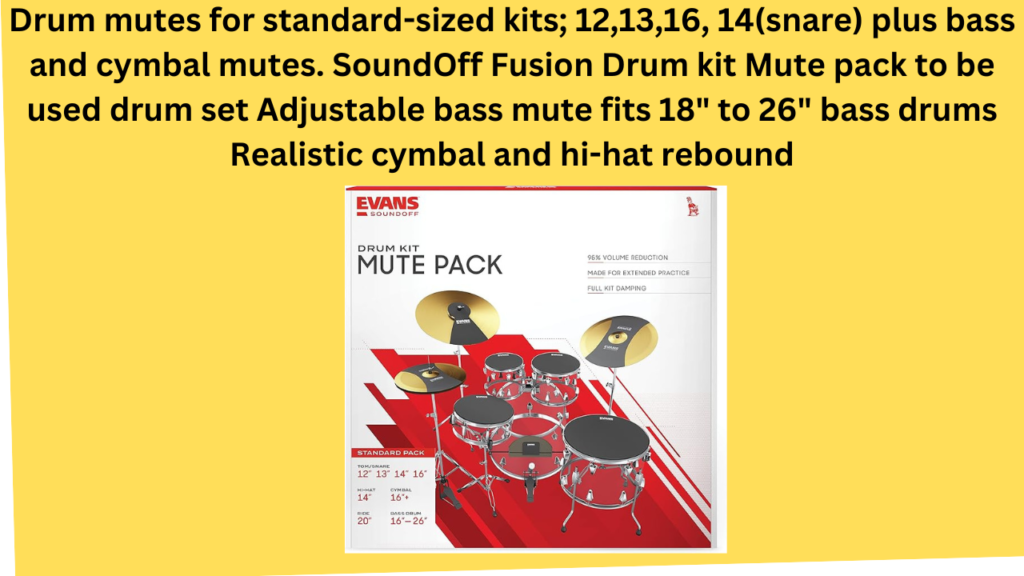
SoundOff by Evans Full Box Set, Standard
- rum mutes for standard-sized kits; 12,13,16, 14(snare) plus bass and cymbal mutes
- Adjustable bass mute fits 18″ to 26″ bass drums
- Realistic cymbal and hi-hat rebound
- A great gift for any drummer; practice at home without having to worry about volume control
- All SoundOff by Evans drum mutes are designed, engineered, and manufactured to the most stringent quality control standards in the industry
- Drum mutes for standard-sized kits; 12,13,16, 14(snare) plus bass and cymbal mutes
- Adjustable bass mute fits 18″ to 26″ bass drums
- Realistic cymbal and hi-hat rebound
- A great gift for any drummer; practice at home without having to worry about volume control
- All SoundOff by Evans drum mutes are designed, engineered, and manufactured to the most stringent quality control standards in the industry
- Drum mutes for standard-sized kits; 12,13,16, 14(snare) plus bass and cymbal mutes
- Adjustable bass mute fits 18″ to 26″ bass drums
- Realistic cymbal and hi-hat rebound
- A great gift for any drummer; practice at home without having to worry about volume control
- All SoundOff by Evans drum mutes are designed, engineered, and manufactured to the most stringent quality control standards in the industry
Alesis Drums Nitro Mesh Kit 8 Piece
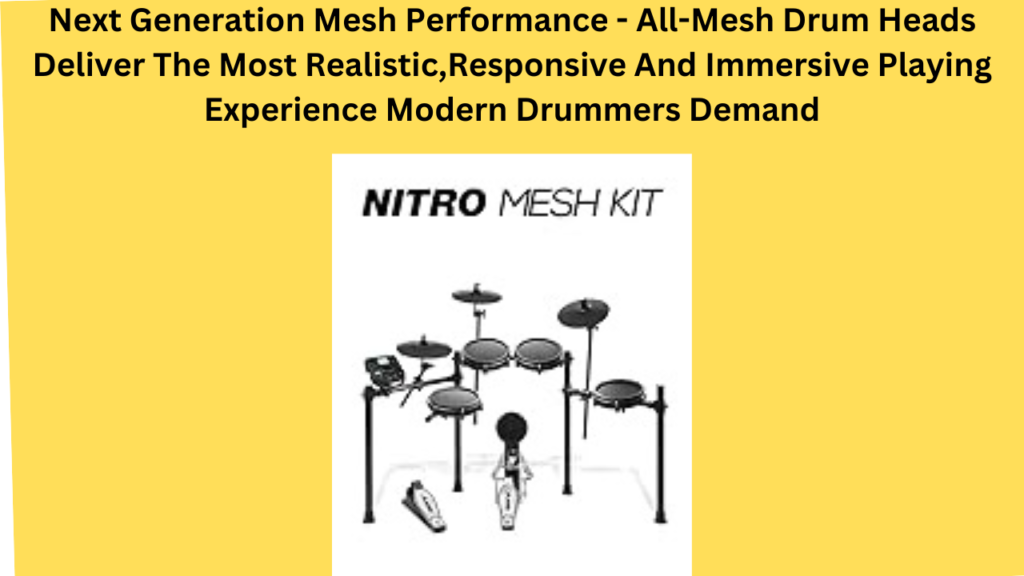
Alesis Drums Nitro Mesh Kit 8 Piece
- Next Generation Mesh Performance – All-Mesh Drum Heads Deliver The Most Realistic,Responsive And Immersive Playing Experience Modern Drummers Demand
- Premium Eight-Piece Configuration – 8″ Dual-Zone Snare Pad, (3) 8″ Tom Pads And (3) 10” Cymbals: Ride Cymbal, Hi-Hat, Crash W/Choke
- In-Demand Sound – Nitro Drum Module With 40 Ready-To-Play Classic And Modern Kits, 60 Play-Along Tracks And 350+ Expertly Curated Sounds
- Powerful Educational Features – 60 Built-In Play-Along Tracks, Sequencer, Metronome, Aux Input And Performance Recorder Help To Hone And Develop Your Drum Skills
Alesis Command Mesh Kit 8 Piece
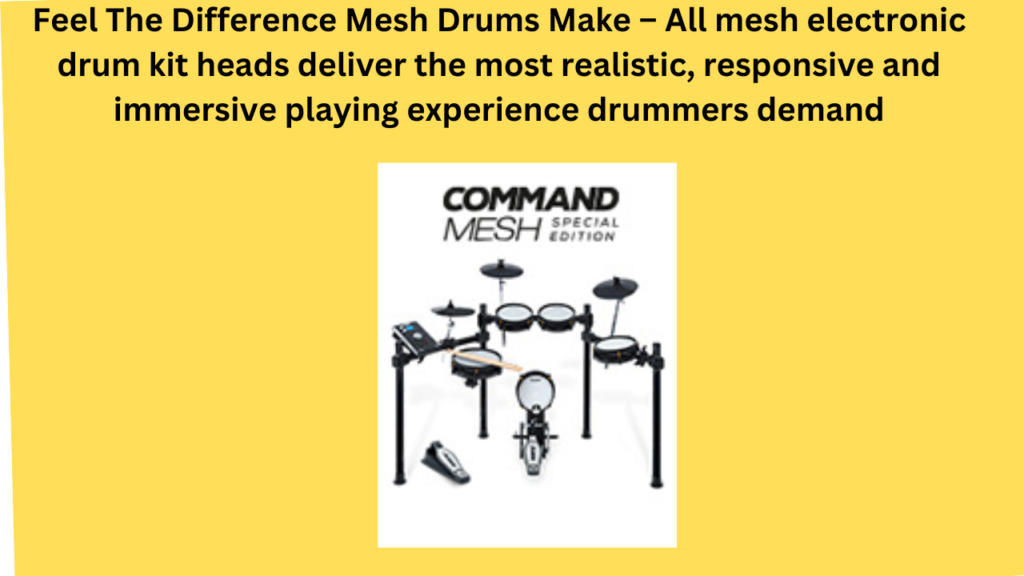
Alesis Command Mesh Kit 8 Piece Electronic Drum Kit
Total Command of Your Drumming Performance
The Alesis Command Mesh Kit is a complete 8-piece electronic drum kit that includes everything the modern drummer needs to play like a pro. It features a 10” dual-zone mesh snare and three 8” dual-zone mesh tom pads for great feel and natural response, plus an 8” mesh kick tower pad with pedal. Three cymbals provide a virtually unlimited range of playing expression: a ride cymbal, crash cymbal with choke function and hi-hat. Not only do the mesh heads deliver unmatched response and playability, the compact size means the Command Kit goes where larger kits can’t. Discover the new standard in electronic drums with the Alesis Command Mesh Kit.
In-Demand Sound, Forward-Thinking Features
The creative-core of the Command Mesh Kit, thee Command Drum Module features 70 drum kits (50 factory + 20 user) with over 600 sounds, 60 play-along tracks built-in and even an on-board metronome. the Command Drum Module also features a USB memory stick input, perfect for loading 3rd party .WAV samples and assigning these to any zone of any mesh pad on the Command Mesh Kit. With customised kit configurations, loading drum, melodic, bass, play-along tracks and FX sampled couldn’t be simpler – the sonic and creative possibilities are virtually limitless.
The Right Drum Kit for City Living Isn’t Just About Sound, It’s About Fit
Choosing a drum kit in a city environment is often approached as a technical problem. How loud is it, how much space does it take, how easily can it be managed within the limits of an apartment or shared building. And while those questions matter, they only touch the surface. Because the real challenge isn’t simply about controlling sound. It’s about finding something that fits into your life in a way that allows you to keep playing without creating friction.
Because a drum kit, no matter how well designed, only becomes useful when it can exist alongside everything else you’re managing.
In a city, space is rarely neutral. Every corner serves a purpose. Every decision about what stays and what goes carries weight. And when you bring something as physical and present as a drum kit into that environment, it has to earn its place. Not through its features, but through how naturally it integrates into your routine.
This is where most decisions go wrong.
They focus on the instrument in isolation, rather than the environment it has to live in.
A kit might sound good, it might look right, it might even feel comfortable to play—but if it disrupts the flow of your space, if it requires constant adjustment just to make it usable, it slowly becomes something you avoid. Not because you’ve lost interest, but because the effort required to engage with it begins to outweigh the experience of playing it.
And when that happens, the desire that started everything begins to fade.
This is why the right drum kit for city living isn’t just about sound.
It’s about fit.
Fit is what allows something to remain part of your life without needing to be forced into it. It’s the difference between an instrument that feels like an addition and one that feels like an extension. And that difference isn’t always visible in specifications or features. It’s felt in how easily you can return to it.
Can you sit down and play without needing to rearrange your space?
Can you engage with it without worrying about what’s happening around you?
Can it exist in your environment without creating tension, either for you or for the people near you?
These are the questions that define whether something truly fits.
Because in a city setting, playing drums isn’t just a personal experience. It exists within a shared environment. Walls carry sound. Floors transmit movement. Neighbours become part of the equation, whether you intend them to or not. And ignoring that reality doesn’t make it disappear. It creates resistance that eventually impacts your ability to continue.
This is where awareness becomes part of the process.
Not as a limitation, but as a guide.
When you understand the environment you’re working within, the choices you make begin to shift. You look for solutions that reduce friction rather than create it. A kit that allows for quieter practice without losing the feel of real playing. A setup that can be adjusted or compacted when needed. Something that supports consistency rather than interrupting it.
Because consistency is what allows progress to happen.
And consistency depends on access.

f your drum kit is difficult to use, if it requires too much effort to set up or manage each time, you begin to use it less. Not intentionally, but gradually. And over time, that distance grows. What was once part of your routine becomes something occasional. And when something becomes occasional, it loses its ability to build momentum.
This is why fit matters more than most people expect.
It determines whether the instrument remains part of your life or becomes something separate from it.
A kit that fits doesn’t demand constant attention. It doesn’t create problems that need to be solved before you can play. It simply exists, ready to be used when you are. And that readiness changes how often you engage with it.
Because when something is easy to return to, you return to it more often.
And those returns are what create progress.
This doesn’t mean compromise.
It means alignment.
Choosing something that works within your environment doesn’t mean giving up on quality or experience. It means finding a balance that allows both to exist. A kit that feels good to play, but also respects the space it occupies. One that allows you to express what you need to express, without creating unnecessary obstacles in the process.
This is where the idea of sound shifts.
It’s no longer just about volume or tone.
It becomes about control.
The ability to adjust, to manage, to shape how the instrument interacts with your environment. Because in a city, control is what allows freedom. It gives you the ability to play without hesitation, to engage fully without needing to constantly consider the impact.
And when that control is in place, something else begins to settle.
Confidence.
Not just in your playing, but in your ability to continue playing.
Because when you know that your setup works, that it fits into your life without creating tension, you remove one of the biggest barriers to consistency. You no longer have to decide whether it’s the right time or the right moment. The conditions are already in place.
This is what allows the process to continue.
Not perfectly, not without adjustment, but steadily.
And that steadiness is what turns an instrument into something more than an object.
It becomes part of your rhythm.
Something that exists alongside your daily life, not separate from it. Something you can return to without needing to create space for it each time, because it already belongs there.
In the end, the right drum kit for city living isn’t defined by how it sounds in isolation.
It’s defined by how it fits into everything around it.
Because when it fits, it stays.
And when it stays, it continues to support the one thing that matters most.
Your ability to keep playing.
Take Action Today
If we are paralysed by fear, procrastination and indecision then there can be no success in our lives becausse we are a prisoner of our own inaccueate thinking which keeps us from achieving anything that is worthwhile.
Click Play Then Click The Square In The Right Lower Corner
Roland TD-07DMK E-Drums Set
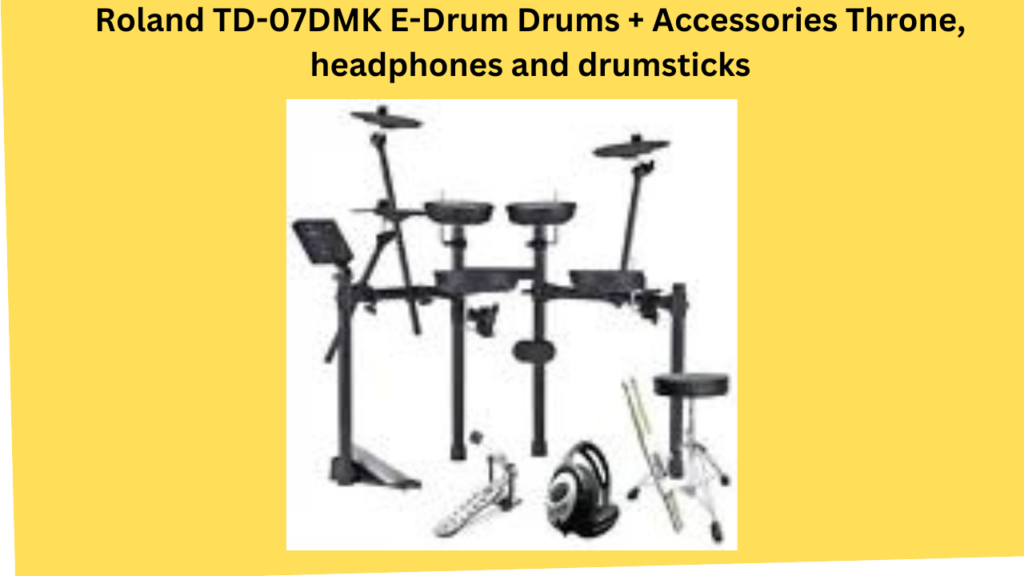
Roland TD-07DMK E-Drum Drum Set
The TD-07Mk E-Drum Set from Roland joins the extremely successful V-Drum Series known for its playability and high-quality, realistic sounds. In addition to the snare and tom pads based on the quiet two-ply Roland mesh heads, the TD-07KV has large crash and ride pads, as well as a kick pad with a realistic pedal response.
With the new sound module, Extensive editing options are available for modifying and creating individual sounds. Are already on board 25 preset kits saved with 143 instrument sounds. In addition, there is the integrated EQ and ambiance effect for more sound depth and 30 multi-effects.
Roland V-Drums TD-07KVX Electronic Drum Set
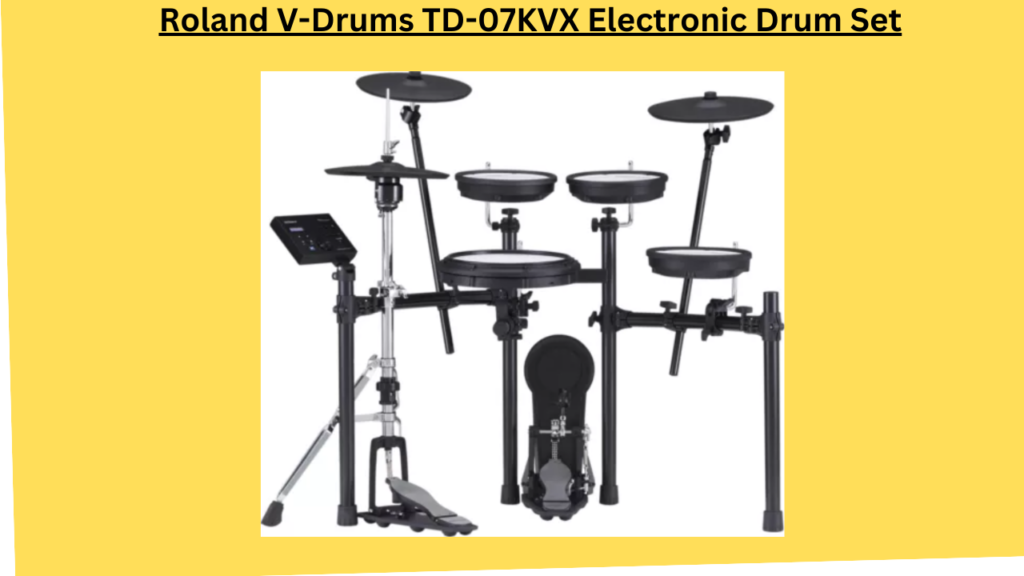
Roland TD-07KVX V-Drums Set
The TD-07KVX is the pinnacle of Roland’s TD-07 V-Drums series, offering the ultimate compliment of pads and cymbals to satisfy the most demanding drummers.
For more than two decades, Roland’s V-Drums have forged a reputation as the electronic kits of choice, with a tone and feel that puts everything else in the shade.
Behind every serious electronic drum set is the processing power of a great sound module, and the TD-07 is the ideal complement to the pro hardware of your TD-07KVX. Mix and match from a bank of acoustic drums, electronic drums, and percussion types, all recorded at some of the world’s greatest studios.
Acoustic drum kits are noisy by nature, and even certain electronic kits can cause a disturbance due to the contact noise of sticks on pads. But as the culmination of Roland’s decades of R&D, the TD-07KVX is designed to be far quieter than any other digital kit.
Roland TD-07KV E-Drum Bundle
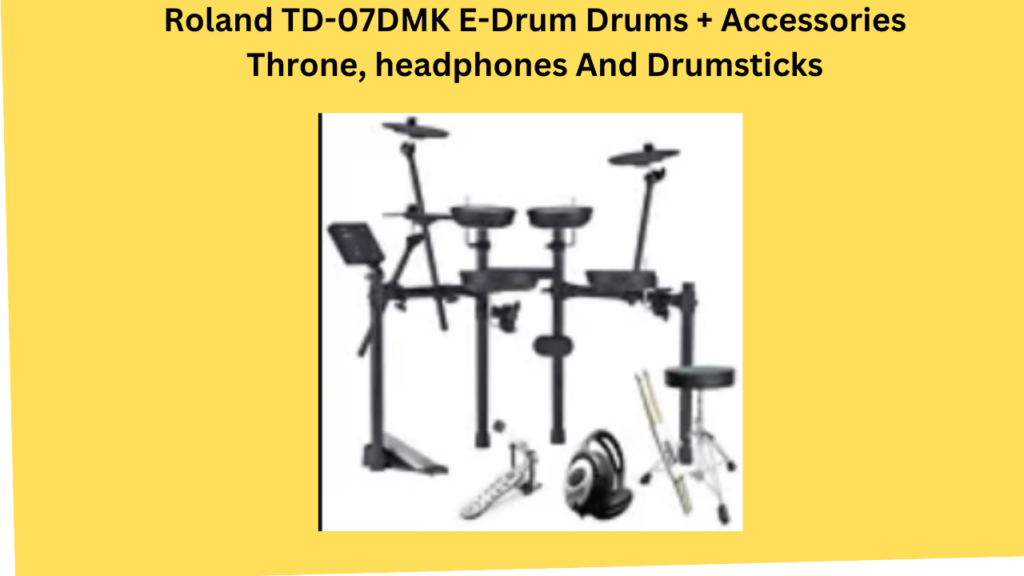
Roland TD-07KV E-Drum Bundle
A huge benefit of electronic drums is direct communication with modern music production software. The TD-07 module is an audio/MIDI recording interface in itself, with the ability to send stereo sound and MIDI data to a Mac or Windows computer via a single USB cable.
Drumming with favorite tracks is one of the most fun and productive things you can do with an electronic kit, and the TD-07KV makes it easy.
n 1997, Roland introduced the world’s first mesh drumhead to universal acclaim, and they’ve been the de facto standard ever since.
Melodics™ is a desktop app that connects to your V-Drums. By playing along to step-by-step lessons and tracks, you can learn new beats, build your rhythm and timing, record yourself, and discover where you can improve with the playback feature.
A Drum Kit Is Only the Beginning, What You Add Makes the Difference
A drum kit, at first, feels like the centre of everything. The shells, the cymbals, the hardware—each piece arranged in a way that suggests completeness. You sit down in front of it and it looks like something that should already work, something that should already carry the experience you’re looking for. And in many ways, it does. It gives you a starting point. A structure to engage with. A place where rhythm can begin to take shape.
But a drum kit, on its own, is only the beginning.
Because what you experience through it is shaped by everything you bring into it over time.
Most people assume that once the kit is in place, the rest will follow naturally. That the sound, the feel, the progress—all of it will develop simply through use. And while use is part of it, it doesn’t account for what actually creates depth in the way you play. Because depth doesn’t come from the kit itself. It comes from how you interact with it.
The first layer is attention.
Not in the sense of trying harder, but in noticing more. The way the stick rebounds after each stroke. The slight difference in tone depending on where you strike the drum. The way timing shifts when your focus drifts, even slightly. These details are always there, but they only begin to matter when you start to see them. And once you do, they change how you approach everything else.
Because attention creates awareness.
And awareness changes how you play.
What once felt automatic begins to feel intentional. Not forced, but guided. You’re no longer just moving through patterns. You’re adjusting them, refining them, understanding how they respond to your input. And this is where the kit begins to open up. Not because it has changed, but because your interaction with it has.
Then comes consistency.
Not as a strict routine, but as a willingness to return. To sit down and play again, even when nothing feels different, even when progress isn’t obvious. Because consistency isn’t about immediate results. It’s about allowing the process to continue long enough for something to develop beneath the surface.
At first, it feels repetitive.
Then it begins to feel familiar.
And eventually, it becomes something you can rely on.
This is where small changes start to accumulate. A rhythm that holds more steadily. A transition that feels less forced. A pattern that begins to settle into place without needing to be controlled. These are not dramatic shifts, but they are significant. Because they represent something building over time.
And that building is what creates momentu

But there’s another layer that often goes unnoticed.
Interpretation.
The moment where you move beyond playing what is given and begin to shape it into something that feels your own. Not by changing everything, but by adjusting what already exists. A slight variation in timing. A different emphasis on a beat. A choice to leave space where you would normally fill it.
These choices are subtle.
But they carry weight.
Because they reflect how you hear, how you feel, how you connect with the rhythm in front of you. And this is where playing becomes more than repetition. It becomes expression. Not in a performative sense, but in a way that feels internal, grounded, connected to something that doesn’t need to be explained.
This is what you add.
Not something external, not something that can be purchased or installed, but something that develops through your interaction with the instrument. Your awareness, your consistency, your interpretation—these are the elements that shape what the drum kit becomes over time.
Because without them, the kit remains static.
It exists, but it doesn’t evolve.
And evolution is what creates depth.
This is also where patience begins to play a role.
Not as something you try to practice, but as something that emerges naturally when you stay with the process long enough. You begin to understand that progress doesn’t come from forcing change. It comes from allowing it to happen through repetition, through refinement, through the accumulation of small adjustments that begin to settle into something stable.
This patience changes how you respond to difficulty.
Instead of pushing through it, you work with it. You slow down. You break things apart. You return to the basics, not because you’ve failed, but because you’re building something that needs a solid foundation. And in doing that, you create a process that holds, even when things become more complex.
This is where the drum kit becomes more than a starting point.
It becomes part of a system.
Not a fixed system, but one that evolves as you do. One that reflects your growth, your understanding, your way of approaching rhythm and movement. And within that system, the kit is no longer the centre.
You are.
Not in a way that replaces the instrument, but in a way that completes it. Because the instrument provides the structure, but you provide the direction. The kit responds, but you decide how that response is shaped.
This is the difference.
Between having a drum kit and developing something through it.
Because what you add is what determines how far it can go. Not in terms of speed or complexity, but in terms of depth. In how it feels to play, how it sounds when it comes together, how it continues to evolve as you stay with it.
In the end, the drum kit is only the beginning.
It gives you a place to start, a framework to engage with, a foundation to build on.
But what makes the difference is everything that follows.
The attention you bring.
The consistency you maintain.
The awareness you develop.
The interpretation you allow.
These are the elements that transform the instrument into something more than it appears at first.
Something that grows with you.
Something that reflects not just what you play, but how you play it.
And over time, that reflection becomes something you recognise.
Not as a finished result, but as a process that continues.
Because what you add never really stops developing.
And that’s where the real difference is made.