
The Right Drum Kit Isn’t Just Equipment, It’s an Opportunity to Create
The right drum kit isn’t just something you play.
It’s something you grow into.
It shapes how you create, how you experiment, and how you express what you hear in your head. When the right kit is in front of you, it doesn’t feel like equipment—it feels like possibility. Every sound, every rhythm, every small adjustment becomes part of a larger process of discovering your own style.
Because creating isn’t just about having tools…
It’s about having the right ones.
The ones that respond the way you need them to. The ones that make practice feel engaging instead of repetitive. The ones that turn ideas into something real you can hear, feel, and refine.
And when that connection is there, something shifts.
You don’t just play more—you explore more. You push further. You develop not just skill, but confidence. And over time, that consistency turns into something meaningful.
Not just better sound…
But a deeper ability to create.
Change doesn’t happen in a single moment.
It begins with a decision.
A quiet choice to move forward—to take action today, even if the path isn’t fully clear yet. And once that decision is made, what matters most is not intensity, but consistency. Showing up again. Following through. Allowing small actions to repeat long enough that they become part of your rhythm.
Because that’s how habits are formed.
And over time, those habits begin to shape something bigger. Not all at once, but steadily. The effort you put in, day after day, begins to compound. What once felt unfamiliar becomes natural. What once felt difficult becomes part of how you operate.
This is where progress lives.
Not in a single breakthrough…
but in the accumulation of consistent action.
And if you stay with it—long enough to learn, refine, and grow—you’ll find yourself somewhere new. A place you haven’t been before.
Not by chance…
but by commitment.
A place most people simply call success.
The Desire to Play the Drums Is Where It All Begins
The desire to play the drums rarely arrives as a fully formed plan.
It begins quietly.
A rhythm you notice. A beat that stays with you longer than it should. The feeling of wanting to tap along, to follow the pulse, to be part of something that moves—not just in sound, but in energy. It’s not always something you can explain.
But it’s there.
And that’s where everything begins.
Because before skill, before technique, before any understanding of how it all works—there’s that initial spark. The simple thought: I want to do that.
And while it might seem small, it isn’t.
That desire is the starting point of every musician who has ever sat behind a drum kit and made something meaningful. Not because they had everything figured out, but because they chose to follow that feeling instead of ignoring it.
At first, it can feel distant.
You hear drummers play and it sounds complex. Fast. Effortless in a way that feels out of reach. And it’s easy to believe that there’s a gap between where you are and where they are—a gap that’s too wide to cross.
But what you don’t see is how it actually starts.
Not with speed.
Not with perfection.
But with simple, repeated moments.
A single beat.
A basic rhythm.
A pattern that feels unfamiliar at first, but slowly becomes something you can hold onto.
Because playing the drums isn’t about mastering everything at once.
It’s about building something step by step.
There’s a physical side to it, of course—the coordination, the timing, the control. Learning how your hands and feet work together, how each movement connects to the next. At the beginning, it can feel disconnected. Like you’re trying to manage too many things at once.
But over time, something begins to settle.
What once felt forced starts to feel natural. Movements become smoother. The gaps between beats begin to make sense. And the rhythm—something that once felt external—starts to feel like something you’re creating from within.
That’s when it becomes more than practice.
It becomes expression.
Because the drums are not just about keeping time.
They’re about shaping it.
Adding energy where it’s needed. Pulling back when it matters. Creating space, tension, release. Even the simplest rhythm carries feeling when it’s played with intention.
And that’s something you can’t rush.
It develops as you spend time with it.
There will be moments when progress feels slow. When things don’t quite click. When you repeat the same pattern over and over, wondering if it’s leading anywhere.
And it is.
Even when it doesn’t feel like it.
Because every repetition is doing something beneath the surface. Building familiarity. Strengthening coordination. Training your ear to recognize what’s right and what’s not. These are small shifts—but they add up.
This is how growth happens.
Quietly.
Without announcement.
Until one day, something that once felt difficult… doesn’t anymore.
And that’s when confidence begins to form.
Not the kind that comes from comparison—but the kind that comes from experience. From knowing that you’ve put in the time. That you’ve stayed with it long enough to see change.
That confidence changes how you approach everything.
You play more freely.
You experiment more.
You begin to trust your own sense of rhythm.
And that trust opens the door to creativity.
Because once you’re no longer focused only on how to play, you can start exploring what to play. You can try new patterns. Change the feel. Adjust the timing. You’re no longer just following—you’re creating.
And that’s where the real connection happens.
Not between you and the instrument…
but between you and the music.
There’s also something grounding about the drums that’s easy to overlook. The physical presence of it. The way each strike produces a response you can feel as much as you can hear. It’s direct. Immediate. There’s no delay between action and result.
And that creates a kind of focus.
When you’re playing, you’re there.
Not thinking about everything else. Not distracted. Just present, in the rhythm, in the moment. And that presence is part of what draws people back to it, again and again.
Because it’s not just about learning to play.
It’s about being part of something that moves.
Of course, the path isn’t always smooth.
There will be times when motivation fades. When progress slows. When the initial excitement feels distant. And this is where the desire that started it all becomes important again.
Because that desire is what brings you back.
Not perfectly. Not every day. But enough to continue. Enough to take the next step, even when it feels small. And those small steps—taken consistently—are what carry you forward.
Over time, you begin to see how far you’ve come.
The rhythms that once felt impossible are now familiar. The coordination that once felt awkward is now natural. The sound you create is no longer accidental—it’s intentional.
And that’s when something shifts.
You’re no longer just someone who wants to play the drums.
You’re someone who does.
In the end, it doesn’t begin with talent.
It doesn’t begin with experience.
It begins with that quiet desire—the moment you hear something and feel drawn to it. The moment you decide, even briefly, that this is something you want to explore.
Because that’s all it takes to start.
And once you start, everything else builds from there.
One beat at a time.
Drumming Doesn’t Just Build Skill, It Builds Something Deeper
Drumming is often seen as a skill.
Something you learn. Something you practice. Something you improve over time through repetition, focus, and effort. And on the surface, that’s true. You develop timing. Coordination. Control. You learn how to keep a rhythm steady, how to move between patterns, how to play with precision.
But if you stay with it long enough—if you go beyond the early stages—something else begins to emerge.
Something deeper.
Because drumming doesn’t just build skill.
It builds awareness.
At the beginning, everything feels external. You’re thinking about where your hands go, when your foot should move, how to stay on beat. It’s mechanical. Structured. A process of learning how the pieces fit together.
But over time, that structure becomes something more fluid.
You stop thinking about every movement.
You start feeling it.
The rhythm becomes internal instead of something you’re trying to follow. And in that shift, you begin to develop a different kind of awareness—not just of what you’re playing, but of how it feels.
That awareness carries beyond the kit.
It changes how you listen.
Not just to music, but to timing, to space, to the subtle details most people overlook. You begin to notice the pauses, the transitions, the moments where something builds or pulls back. And that ability to notice—to truly pay attention—is something that extends far beyond drumming.
It becomes part of how you engage with everything.
There’s also a discipline that forms quietly in the background.
Not forced. Not rigid.
But consistent.
Because drumming requires repetition. It asks you to return to the same patterns, the same movements, again and again—not for the sake of doing them, but for the sake of understanding them. And in that repetition, you begin to develop patience.
The kind that doesn’t rush progress.
The kind that allows things to unfold.
You learn that improvement doesn’t always show up immediately. That sometimes the work you put in today won’t reveal itself until later. And that understanding changes how you approach not just practice—but growth itself.
Because you begin to trust the process.
Even when results aren’t visible yet.
There’s also something grounding about drumming that’s hard to describe until you experience it.
The physicality of it.
The connection between movement and sound. The way each strike produces an immediate response you can hear and feel. There’s no delay. No distance between action and outcome.
And that creates presence.
When you’re playing, you’re there.
Fully engaged. Focused. Not thinking about what comes next or what just happened—but in the moment, responding to the rhythm as it unfolds. And that kind of presence is rare.
Because in most areas of life, attention is divided.
But here, it’s centered.
And over time, that ability to focus—to stay with something fully—becomes something you carry with you.
Into your work.
Into your thinking.
Into the way you approach challenges.
Another layer begins to form as you continue.
Confidence.
Not the loud kind. Not the kind that seeks recognition.
But a quieter, more grounded confidence.
The kind that comes from knowing you’ve put in the time. That you’ve worked through the frustration, the mistakes, the moments where things didn’t click—and stayed with it long enough to see progress.
That kind of confidence isn’t dependent on external validation.
It’s built internally.
And because of that, it lasts.
Drumming also teaches you how to recover.
Mistakes happen. Missed beats. Slight misalignments. Moments where things don’t land exactly as you intended. And in those moments, you don’t stop.
You adjust.
You find your way back into the rhythm.
And that ability—to recover without losing momentum—is something that extends far beyond music. It teaches you that mistakes are not endpoints.
They’re transitions.
Part of the process, not interruptions to it.
Over time, this changes how you respond to challenges.
You become less reactive.
More adaptable.
More willing to continue, even when things aren’t perfect.
There’s also creativity.
At first, you follow patterns. You learn what’s already been created. You build a foundation. But once that foundation is in place, something opens up.
You begin to experiment.
Change the rhythm. Adjust the feel. Combine elements in new ways. You’re no longer just playing—you’re creating. And that creativity isn’t limited to the instrument.
It influences how you think.
How you approach problems.
How you see possibilities where there once felt like limitations.
Because creativity is not just about expression.
It’s about perspective.
And drumming expands that perspective.
Perhaps one of the most important things it builds is connection.
Not just to the music—but to yourself.
There’s a moment that happens when everything aligns. When the rhythm feels natural, the movement feels effortless, and the sound reflects exactly what you intended. It’s not something you can force.
It happens when you’re present enough, practiced enough, and open enough for it to come together.
And in that moment, you’re not thinking.
You’re just playing.
That kind of connection is rare.
But once you experience it, you understand something important.
It’s not just about the outcome.
It’s about the process of getting there.
In the end, drumming is more than a skill you develop.
It’s a process that shapes how you think, how you respond, how you grow.
It builds awareness.
It builds patience.
It builds focus, confidence, and creativity.
And all of that happens quietly.
Without announcement.
Without needing to be measured.
But it’s there.
In the way you approach things.
In the way you handle challenges.
In the way you continue, even when progress feels slow.
Because drumming doesn’t just teach you how to play.
It teaches you how to stay.
How to listen.
How to adapt.
How to move forward, one beat at a time.
And over time, that becomes something deeper than skill.
It becomes part of who you are.
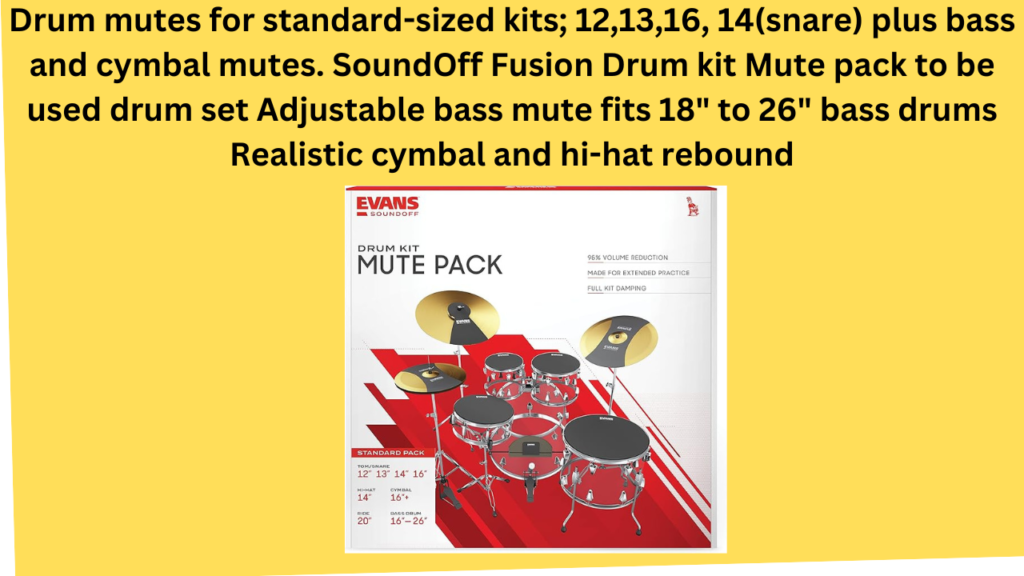
SoundOff by Evans Full Box Set, Standard
SoundOff by Evans Full Box Set, Standard
- rum mutes for standard-sized kits; 12,13,16, 14(snare) plus bass and cymbal mutes
- Adjustable bass mute fits 18″ to 26″ bass drums
- Realistic cymbal and hi-hat rebound
- A great gift for any drummer; practice at home without having to worry about volume control
- All SoundOff by Evans drum mutes are designed, engineered, and manufactured to the most stringent quality control standards in the industry
- Drum mutes for standard-sized kits; 12,13,16, 14(snare) plus bass and cymbal mutes
- Adjustable bass mute fits 18″ to 26″ bass drums
- Realistic cymbal and hi-hat rebound
- A great gift for any drummer; practice at home without having to worry about volume control
- All SoundOff by Evans drum mutes are designed, engineered, and manufactured to the most stringent quality control standards in the industry
- Drum mutes for standard-sized kits; 12,13,16, 14(snare) plus bass and cymbal mutes
- Adjustable bass mute fits 18″ to 26″ bass drums
- Realistic cymbal and hi-hat rebound
- A great gift for any drummer; practice at home without having to worry about volume control
- All SoundOff by Evans drum mutes are designed, engineered, and manufactured to the most stringent quality control standards in the industry
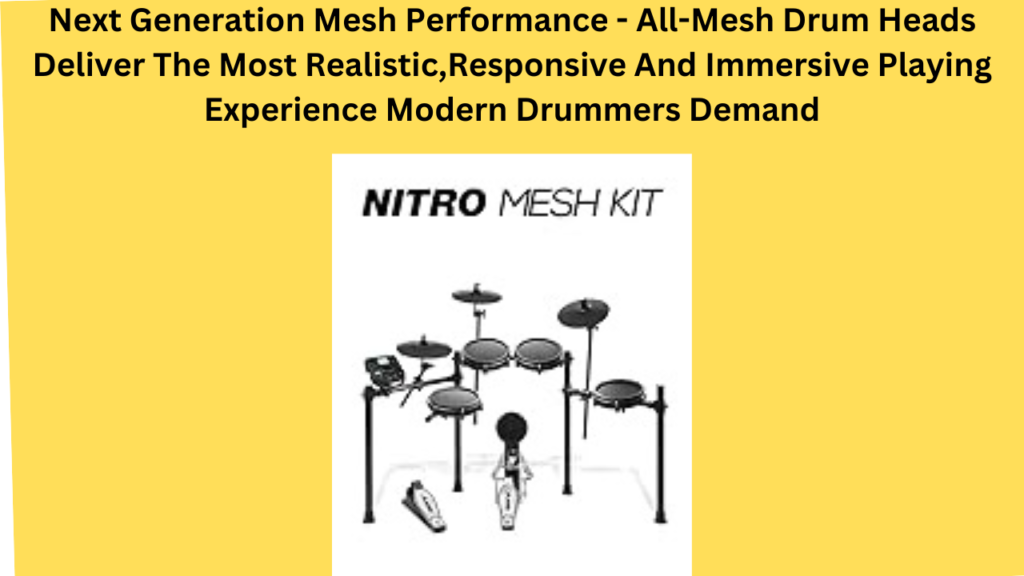
Alesis Drums Nitro Mesh Kit 8 Piece
Alesis Drums Nitro Mesh Kit 8 Piece
- Next Generation Mesh Performance – All-Mesh Drum Heads Deliver The Most Realistic,Responsive And Immersive Playing Experience Modern Drummers Demand
- Premium Eight-Piece Configuration – 8″ Dual-Zone Snare Pad, (3) 8″ Tom Pads And (3) 10” Cymbals: Ride Cymbal, Hi-Hat, Crash W/Choke
- In-Demand Sound – Nitro Drum Module With 40 Ready-To-Play Classic And Modern Kits, 60 Play-Along Tracks And 350+ Expertly Curated Sounds
- Powerful Educational Features – 60 Built-In Play-Along Tracks, Sequencer, Metronome, Aux Input And Performance Recorder Help To Hone And Develop Your Drum Skills
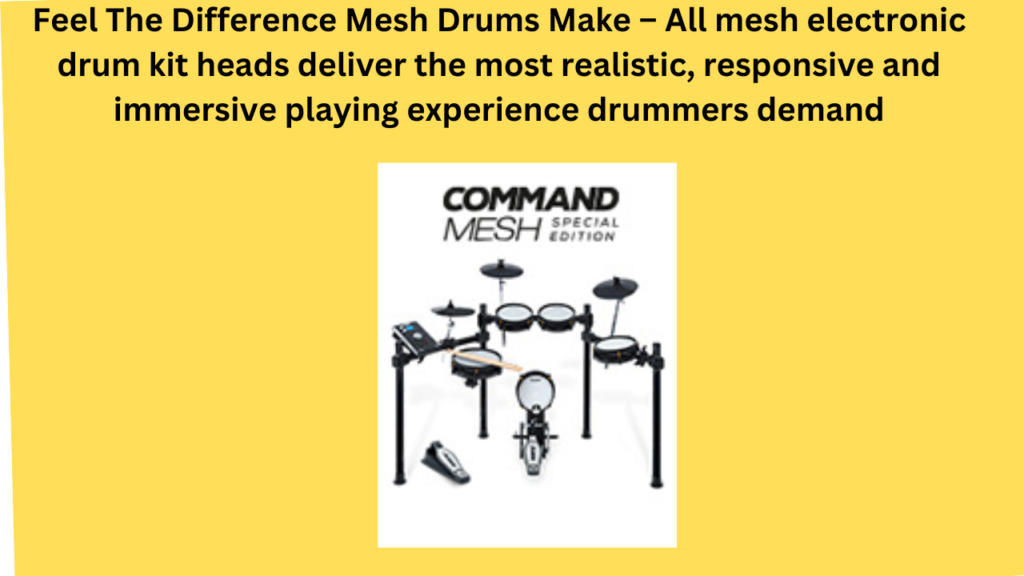
Alesis Command Mesh Kit 8 Piece
Alesis Command Mesh Kit 8 Piece Electronic Drum Kit
Total Command of Your Drumming Performance
The Alesis Command Mesh Kit is a complete 8-piece electronic drum kit that includes everything the modern drummer needs to play like a pro. It features a 10” dual-zone mesh snare and three 8” dual-zone mesh tom pads for great feel and natural response, plus an 8” mesh kick tower pad with pedal. Three cymbals provide a virtually unlimited range of playing expression: a ride cymbal, crash cymbal with choke function and hi-hat. Not only do the mesh heads deliver unmatched response and playability, the compact size means the Command Kit goes where larger kits can’t. Discover the new standard in electronic drums with the Alesis Command Mesh Kit.
In-Demand Sound, Forward-Thinking Features
The creative-core of the Command Mesh Kit, thee Command Drum Module features 70 drum kits (50 factory + 20 user) with over 600 sounds, 60 play-along tracks built-in and even an on-board metronome. the Command Drum Module also features a USB memory stick input, perfect for loading 3rd party .WAV samples and assigning these to any zone of any mesh pad on the Command Mesh Kit. With customised kit configurations, loading drum, melodic, bass, play-along tracks and FX sampled couldn’t be simpler – the sonic and creative possibilities are virtually limitless.
The Right Drum Kit for City Living Isn’t Just About Sound, It’s About Fit
Living in the city changes how you approach almost everything.
Space is limited.
Noise carries.
Time feels compressed in a way that’s hard to ignore.
And when it comes to choosing a drum kit, those factors matter more than most people expect.
Because the right drum kit for city living isn’t just about sound.
It’s about fit.
At first, it’s easy to think in simple terms—what sounds good, what looks right, what other drummers are using. But once you place that drum kit into a city environment, the context shifts. Suddenly, it’s not just about how it performs in isolation, but how it exists within your space, your routine, and the people around you.
And that changes the decision entirely.
Sound, of course, is still important.
It’s what draws you in. The tone, the feel, the way each strike responds. But in a city setting, sound isn’t just something you experience—it’s something you share, whether you intend to or not.
Thin walls. Close neighbors. Limited hours where noise feels acceptable.
All of these become part of the equation.
This is why many drummers in the city begin to look beyond traditional acoustic kits. Not because they don’t appreciate them—but because they recognize that the environment requires something more adaptable.
Electronic drum kits often become the natural choice.
Not as a compromise…
but as a solution.
They allow you to control volume. To play through headphones. To practice at times that would otherwise be impossible. And in doing so, they remove one of the biggest barriers to consistency.
Because the ability to play freely—without worrying about disruption—changes how often you sit down at the kit.
And consistency is what leads to progress.
But fit goes beyond sound and volume.
It includes space.
In a city apartment, every square meter matters. A full-sized acoustic kit can quickly dominate a room, turning a living space into something that feels crowded and impractical. And when something feels out of place, it becomes harder to use it regularly.
The right kit, in contrast, integrates into your space.
It fits without forcing.
Compact setups. Foldable frames. Kits designed with smaller footprints in mind. These aren’t just conveniences—they’re what make the difference between something you use occasionally and something that becomes part of your daily rhythm.
Because accessibility matters.
If your kit is easy to set up, easy to reach, and easy to play, you’re more likely to use it. And over time, that ease translates into consistency.

There’s also the question of feel.
One of the concerns people often have when choosing a more compact or electronic setup is whether it will still feel like drumming. Whether it will capture the physical connection—the response, the feedback, the sense of control.
And that’s where choosing carefully matters.
Not all kits are the same.
Some offer a more realistic playing experience. Better responsiveness. A closer connection between what you do and what you hear. And in a city environment, finding that balance—between practicality and feel—is what defines the right fit.
Because if it feels right, you’ll stay with it.
And staying with it is what matters most.
There’s also a lifestyle element that often goes unnoticed.
City living is dynamic. Schedules shift. Energy levels change. Time is often limited and unpredictable. In that kind of environment, flexibility becomes essential.
The right drum kit adapts to that.
It allows you to play for ten minutes or an hour. It doesn’t require a long setup or a specific time window. It fits into your life instead of asking your life to fit around it.
And that flexibility removes resistance.
Because the easier it is to start, the more often you will.
Over time, this creates something important.
Momentum.
Not from long, perfect sessions…
but from consistent, repeated engagement.
There’s also a quieter benefit to choosing a kit that fits your environment well.
Peace of mind.
When you’re not worried about disturbing others, about noise complaints, about whether you’re playing at the “right” time, you can focus fully on what you’re doing. You can play with intention, with presence, without distraction.
And that changes the experience.
It makes it more enjoyable.
More sustainable.
More something you return to, not something you have to manage carefully.
Of course, this doesn’t mean giving up on the idea of acoustic sound entirely. Some drummers find ways to incorporate quieter setups, practice pads, or hybrid solutions that allow them to experience both sides.
But again, it comes back to fit.
What works in your space.
What aligns with your lifestyle.
What allows you to play consistently without friction.
Because in the end, the best drum kit is not the one that looks the most impressive or sounds the loudest.
It’s the one you actually use.
The one that fits into your world in a way that feels natural.
The one that supports your progress instead of complicating it.
City living requires a different kind of thinking.
More intentional. More aware of surroundings. More focused on balance. And when you apply that thinking to your choice of drum kit, something becomes clear.
You’re not just choosing an instrument.
You’re choosing how it fits into your life.
How often you’ll play.
How easily you’ll start.
How consistently you’ll continue.
Because those things—more than anything else—determine what you become as a drummer.
Not the size of the kit.
Not the volume of the sound.
But the ability to show up, again and again, and play.
And when your setup supports that—when it fits not just your space, but your life—you remove the barriers that hold most people back.
You make progress possible.
Not all at once.
But steadily.
One session at a time.
And that’s what the right drum kit for city living really offers.
Not just sound…
But fit.
Not dramatically.
But steadily.
In a way that lasts.
Because when you use video well…
you’re not just creating content.
You’re building connection.
And connection is what moves everything forward.
Take Action Today
If we are paralysed by fear, procrastination and indecision then there can be no success in our lives becausse we are a prisoner of our own inaccueate thinking which keeps us from achieving anything that is worthwhile.
Click Play Then Click The Square In The Right Lower Corner
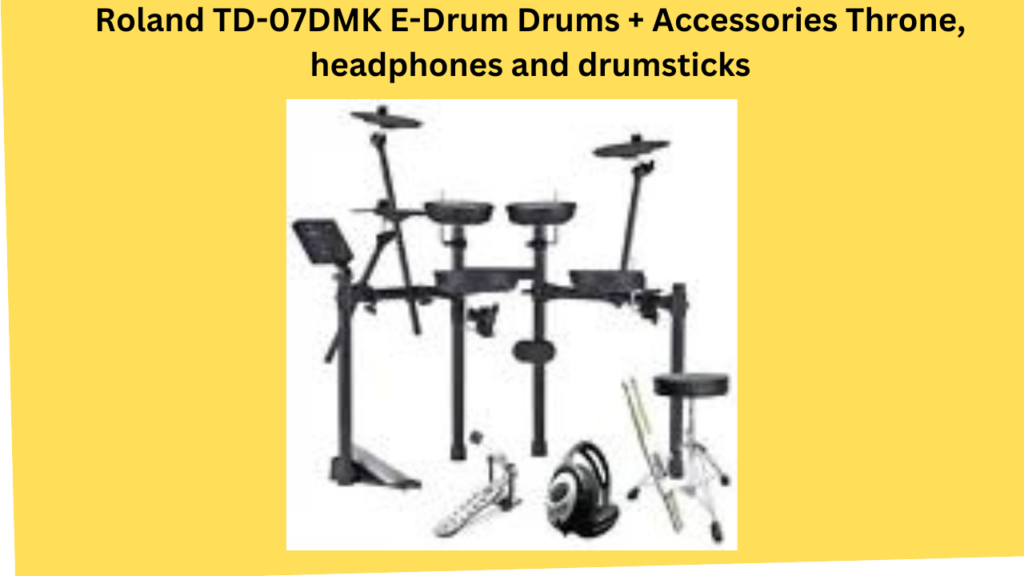
Roland TD-07DMK E-Drums Set
Roland TD-07DMK E-Drum Drum Set
The TD-07Mk E-Drum Set from Roland joins the extremely successful V-Drum Series known for its playability and high-quality, realistic sounds. In addition to the snare and tom pads based on the quiet two-ply Roland mesh heads, the TD-07KV has large crash and ride pads, as well as a kick pad with a realistic pedal response.
With the new sound module, Extensive editing options are available for modifying and creating individual sounds. Are already on board 25 preset kits saved with 143 instrument sounds. In addition, there is the integrated EQ and ambiance effect for more sound depth and 30 multi-effects.
Roland V-Drums TD-07KVX Electronic Drum Set
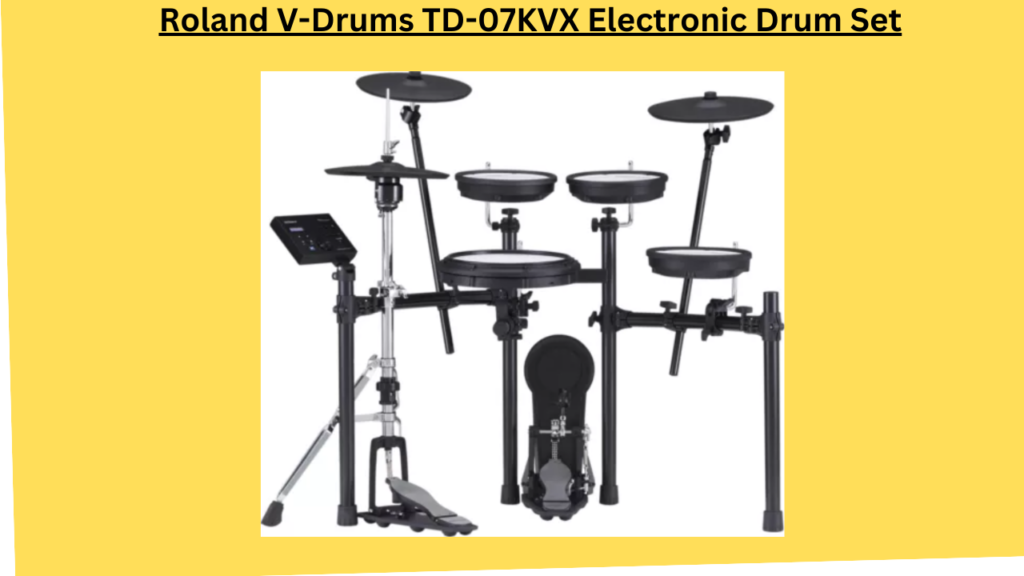
Roland TD-07KVX V-Drums Set
The TD-07KVX is the pinnacle of Roland’s TD-07 V-Drums series, offering the ultimate compliment of pads and cymbals to satisfy the most demanding drummers.
For more than two decades, Roland’s V-Drums have forged a reputation as the electronic kits of choice, with a tone and feel that puts everything else in the shade.
Behind every serious electronic drum set is the processing power of a great sound module, and the TD-07 is the ideal complement to the pro hardware of your TD-07KVX. Mix and match from a bank of acoustic drums, electronic drums, and percussion types, all recorded at some of the world’s greatest studios.
Acoustic drum kits are noisy by nature, and even certain electronic kits can cause a disturbance due to the contact noise of sticks on pads. But as the culmination of Roland’s decades of R&D, the TD-07KVX is designed to be far quieter than any other digital kit.
Roland TD-07KV E-Drum Bundle
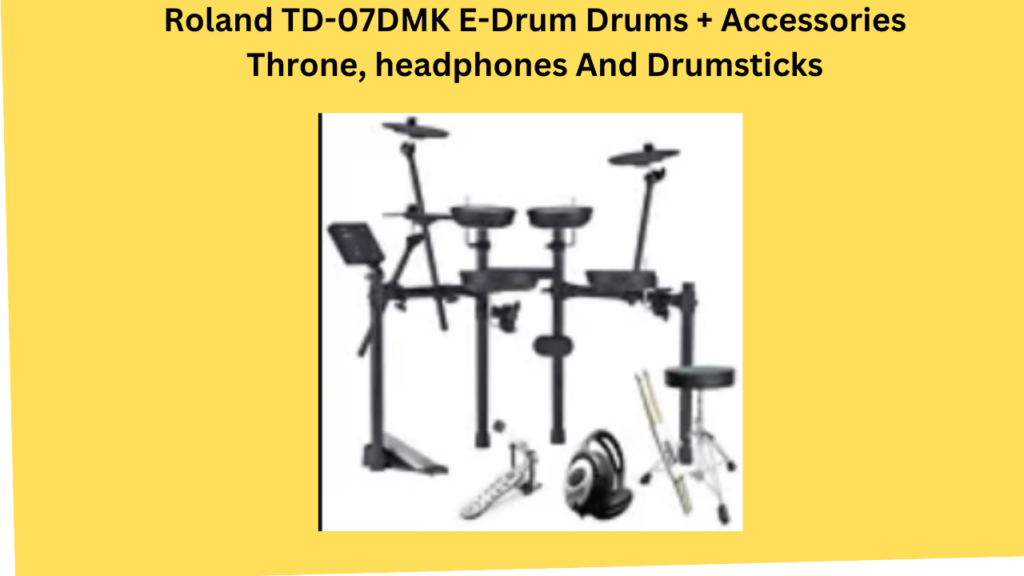
Roland TD-07KV E-Drum Bundle
A huge benefit of electronic drums is direct communication with modern music production software. The TD-07 module is an audio/MIDI recording interface in itself, with the ability to send stereo sound and MIDI data to a Mac or Windows computer via a single USB cable.
Drumming with favorite tracks is one of the most fun and productive things you can do with an electronic kit, and the TD-07KV makes it easy.
n 1997, Roland introduced the world’s first mesh drumhead to universal acclaim, and they’ve been the de facto standard ever since.
Melodics™ is a desktop app that connects to your V-Drums. By playing along to step-by-step lessons and tracks, you can learn new beats, build your rhythm and timing, record yourself, and discover where you can improve with the playback feature.
A Drum Kit Is Only the Beginning, What You Add Makes the Difference
A drum kit often feels like the starting point.
The moment you sit down behind it, there’s a sense that you’ve arrived somewhere. That now, finally, you can begin. The shells are in place. The cymbals are set. The sticks are in your hands. It feels complete.
But it isn’t.
Because a drum kit is only the beginning.
What you add—over time, with intention—is what makes the difference.
At first, it’s easy to focus on the visible parts. The drums themselves. The hardware. The setup. But once you begin playing, you start to notice something else. The experience of drumming isn’t shaped by the kit alone.
It’s shaped by everything around it.
The small additions.
The subtle adjustments.
The choices that refine how it feels, how it sounds, and how you interact with it.
One of the first things you become aware of is comfort.
How you sit. How you reach. How your body moves between each part of the kit. A drum throne that supports you properly, pedals that respond smoothly, sticks that feel balanced in your hands—these are not extras.
They are essentials.
Because discomfort creates distraction.
And distraction breaks focus.
When everything feels right physically, your attention shifts. You’re no longer thinking about positioning or strain—you’re thinking about rhythm, timing, expression. And that shift allows you to go deeper into your playing.
There’s also the matter of sound.
Not just the sound of the kit itself—but how it’s controlled, shaped, and experienced. Items like drumheads, tuning tools, dampening materials—these influence more than you might expect. They refine the tone. They bring clarity to each strike. They allow you to shape the sound instead of simply reacting to it.
Because sound is not fixed.
It’s adjustable.
And learning how to adjust it is part of the process.
Another layer begins to form when you consider practice.
A drum kit gives you the ability to play—but what you add determines how effectively you improve. A practice pad, a metronome, a simple way to track your timing—these tools don’t make the experience more complex.
They make it more focused.
Because improvement doesn’t come from playing randomly.
It comes from playing with intention.
A metronome teaches consistency. It reveals where you rush, where you slow down, where your timing shifts without you noticing. And while it can feel restrictive at first, it eventually becomes something else.
A guide.

A reference point that helps you stay grounded.
Over time, this builds something deeper than skill.
It builds control.
There’s also the environment.
Where your drum kit lives matters.
The acoustics of the room. The space around you. The ability to play without interruption. Even small adjustments—like positioning, sound absorption, or lighting—can change how the experience feels.
Because if your environment supports you, you play differently.
More freely.
More consistently.
With less resistance.
And that consistency is what creates progress.
Another important addition—often overlooked—is learning.
Not just playing, but understanding.
Instructional content. Guidance. Insight into how things work and why they work that way. These are not separate from the instrument—they are part of it. Because the more you understand, the more effectively you use what you have.
A simple adjustment in technique can change everything.
The way you hold the sticks.
The way you strike the drum.
The way you transition between movements.
These are small details—but they shape the outcome.
And learning them intentionally saves time, reduces frustration, and builds confidence.
There’s also an emotional element to what you add.
Inspiration.
The music you listen to. The drummers you observe. The moments that make you want to sit down and play, even when you weren’t planning to. This kind of influence is not something you can measure—but it matters.
Because motivation doesn’t always come from discipline.
Sometimes, it comes from connection.
From hearing something that reminds you why you started.
And when that connection is present, practice doesn’t feel like effort.
It feels like exploration.
Over time, all of these additions begin to work together.
Not separately—but as part of a system.
Your setup becomes more refined. Your movements become more natural. Your understanding becomes deeper. And what started as a basic drum kit becomes something more.
A space where you create.
A place where you develop.
A process that continues to evolve.
Because the goal isn’t just to own a drum kit.
It’s to grow into it.
To shape it in a way that supports your progress, your style, your direction. And that shaping doesn’t happen all at once. It happens gradually, through small decisions, small improvements, small additions that make a difference over time.
This is what separates casual playing from meaningful progress.
Not the kit itself…
but what you build around it.
In the end, the drum kit is just the foundation.
What you add—physically, mentally, and creatively—is what brings it to life.
It’s what turns sound into rhythm.
Practice into progress.
Movement into expression.
And when you begin to see it that way, your approach changes.
You stop looking for everything in the kit itself.
And start building something around it.
Something that supports you.
Something that grows with you.
Something that, over time, becomes more than just an instrument.
It becomes part of how you create.