
The Quiet Tools That Make Your Emails Work While You Rest
There’s a quiet shift that happens when your emails stop depending on you being present. Not in a detached way, but in a structured one. Where the message has already been thought through, the timing already considered, the path already set. And while you’re elsewhere—focused on something else, or simply stepping away—the system continues. Not loudly. Not aggressively. Just steadily, in the background, doing what it was designed to do.
Most people think effective emails come from writing more. Sending more. Staying active enough to stay visible. But the tools that actually make emails work over time tend to be quieter than that. They’re built around sequence, not urgency. Around consistency, not bursts of effort. A well-placed follow-up. A message that arrives at the right moment, not the fastest one. These small decisions, made once, begin to carry forward without needing to be repeated.
And over time, that changes how everything feels. You’re no longer starting from scratch each time. You’re building on something that’s already in motion. The pressure to constantly create eases, replaced by a sense of continuity. Because the work isn’t just in what you send—it’s in what keeps moving after you’ve stepped away. And when that’s in place, your emails stop feeling like tasks you have to manage… and start becoming something that quietly works on your behalf.
There’s a part of the process most people move past too quickly. The returning. The refining. The willingness to sit with something that already feels complete and look at it again without rushing to move on. It’s often treated as a final step, something separate from the act of creating. Something to get through so the work can be finished. But that separation is where the value is lost, because the work doesn’t end when the first version is done.
It begins to take shape when you return to it.
Because an idea, no matter how clear it feels in your mind, isn’t experienced there. It’s experienced in how it moves when someone else encounters it. In the pacing. In the clarity. In the way one sentence leads into the next without creating friction. And without that layer of refinement, even something well thought through can feel incomplete, not because the idea is lacking, but because the way it’s delivered hasn’t fully settled.
This is where the quiet part of the process does its work.
Not as correction, but as alignment.
A way of taking what you intended to say and shaping it into something that can be received without resistance. Because the distance between what you mean and what someone understands is often small, but significant enough that it changes how the message is experienced. And when that distance isn’t addressed, the idea doesn’t land in the way you expected, even if the intention behind it was clear.
Over time, this begins to shift how you see refinement.
It’s no longer about fixing what feels wrong.
It becomes about bringing what is said into alignment with how it is experienced. Making sure the delivery carries the same weight as the idea itself, so nothing is lost between the two. Because when that alignment is in place, the message doesn’t need to push for attention or force its way through.
It settles.
Clear enough to be understood, and steady enough to remain.
Movavi: Because Good Content Deserves a Better Finish
There’s a moment in the creative process that often gets overlooked. Not because it isn’t important, but because it comes after the part most people identify as the real work. The idea has been formed. The content has been recorded or written. The message exists. And at that point, it’s easy to feel like it’s done. As if what matters most has already happened.
But what people experience isn’t the idea in its raw form.
They experience how it’s finished.
And that distinction matters more than it first appears.
Because a strong idea, left unrefined, doesn’t always carry its weight. It can feel incomplete, not because the thinking behind it is lacking, but because the delivery hasn’t been shaped in a way that allows it to be received clearly. The pacing might feel uneven. The transitions might interrupt the flow. The clarity might be there, but not in a way that holds attention from beginning to end.
This is where the finishing process becomes part of the work itself.
Not an afterthought, not a final layer added for polish, but a stage where the content begins to settle into its intended form. Where what was created is shaped into something that can be experienced without resistance.
This is where tools like Movavi Video Editor begin to show their real value.
Not because they add complexity, but because they remove friction.
Because the purpose of editing isn’t to make something look impressive. It’s to make something feel clear. To take what exists and align it with how it should be experienced. To ensure that the message moves the way it was meant to, without distraction, without unnecessary weight.
And that’s where most people get it wrong.
They assume better tools are meant to create better-looking content. More effects, more transitions, more layers of visual refinement. But those things, when overused, often do the opposite of what was intended. They draw attention away from the message instead of supporting it. They add noise where clarity is needed.
A better finish doesn’t come from adding more.
It comes from shaping what’s already there.
This is what makes a tool useful in a real sense. Not its ability to do everything, but its ability to do what matters without getting in the way. To allow you to adjust pacing without breaking flow. To refine sound without overcomplicating the process. To bring the different elements of your content into alignment so that nothing feels out of place.
Because when everything sits where it should, the content begins to carry itself.
The viewer doesn’t notice the editing. They don’t think about the transitions or the cuts or the adjustments. They simply move through the content without interruption. And that uninterrupted experience is what allows the message to land fully.
This is why the finishing stage is so often underestimated.
It doesn’t create the idea, but it determines how the idea is received.
And over time, that reception becomes the difference between content that is understood and content that is overlooked. Not because one is better at its core, but because one has been given the space to be experienced clearly.
This is especially important in a space where attention is limited.
Where people are moving quickly, where decisions are made in seconds, where the smallest amount of friction can cause someone to move on without fully engaging. In that environment, clarity is not optional. It’s essential.
And clarity is built in the details.
In how the beginning draws someone in without confusion. In how the middle holds together without losing direction. In how the ending resolves in a way that feels complete. Each part matters, not as separate elements, but as a continuous experience.
This is where finishing becomes less about perfection and more about alignment.
Not making something flawless, but making it coherent. Making sure that what you intended to say is what is actually felt when someone watches or reads. And that alignment is what gives content its strength.
Because when the delivery matches the idea, there is nothing left to interpret.
The message arrives as it was meant to.
This is also where confidence begins to build in your own process.
When you know that what you create will be finished in a way that supports it, the pressure to get everything perfect in the first attempt begins to ease. You allow the idea to form naturally, knowing that refinement will come later. And that separation—between creation and finishing—gives both stages the space they need to work properly.
Creation becomes more fluid.
Finishing becomes more intentional.
And together, they create something that holds together from start to end.
This is the role that tools like Movavi are meant to play. Not to replace creativity, but to support it. To provide a way to take what you’ve created and bring it into a form that reflects its full value. To remove the barriers that often exist between an idea and its final expression.
Because in the end, good content isn’t defined only by what it contains.
It’s defined by how it’s experienced.
And that experience is shaped in the finishing.
That final layer where everything is brought into alignment, where nothing feels out of place, where the message moves without interruption. It’s quiet work, often unnoticed when done well, but essential to everything that follows.
Because when content is finished properly, it doesn’t need to fight for attention.
It holds it.
And when it holds attention, it has the space to do what it was meant to do.
To be understood.
To stay with the person experiencing it.
To carry its value beyond the moment it’s first encountered.
That’s what a better finish creates.
Not just a better presentation, but a clearer connection between what was created and how it’s received.
And that’s where good content becomes something more than an idea.
It becomes something that lasts.

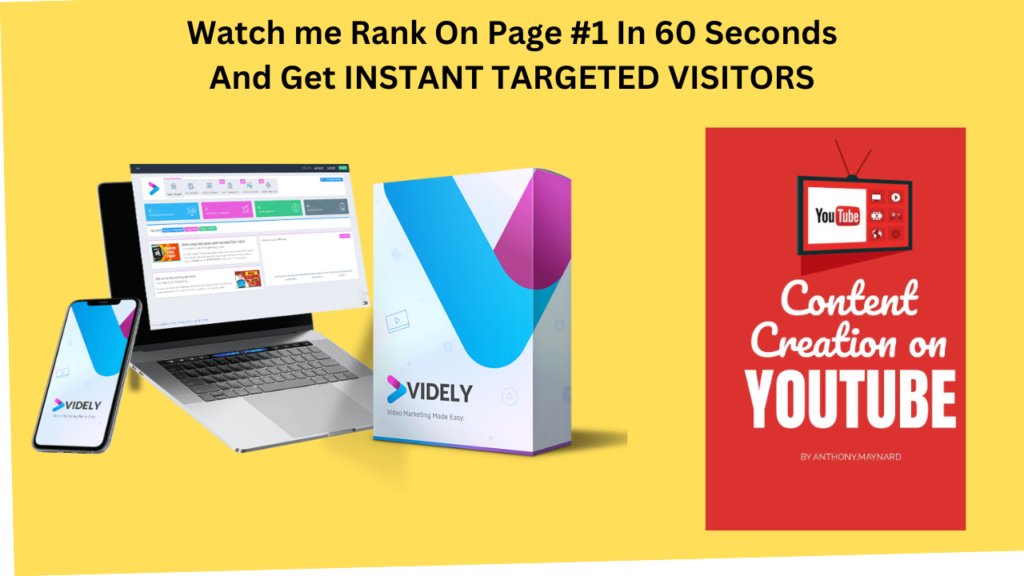
Videly System
Click Here For Access
Videly Video Ranking Tool
If you want to get somewhere with your video marketing and get on the front page of Google then I suggest you acquire a copy of this tool which will help you improve your video marketing results.
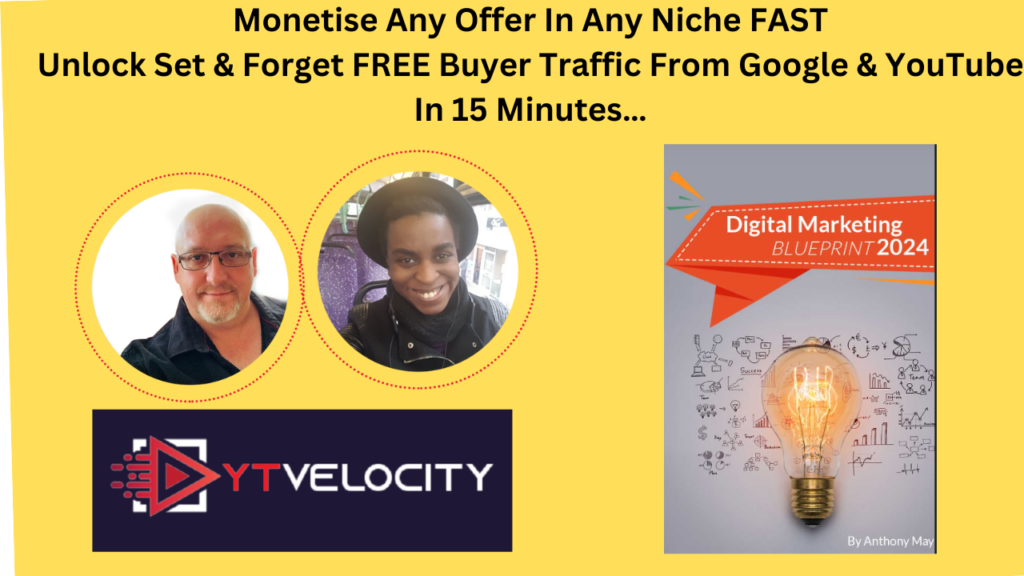
YTVelocity
Click Here For Access
YTVerlocity
Monetize Any Offer In Any Niche FAST… Secret Blueprint Unlocks Set & Forget FREE Buyer Traffic From Google & YouTube In 15 Minutes…
YT Velocity will show you how to rank at the top of YT and Google fast, while building an authority YouTube channel that will make you commissions over and over on autopilot… This will work for Affiliate Marketing, CPA, E-Comm, Dropshipping, Launch Jacking, Bloggers… even for your own products…
Bye 9 To 5 Passive Channels
Click Here For Access
Bye 9 To 5 Passive Channels
Are you interested in starting or scaling a YouTube channel, without having to show your face or become a YouTuber? Do you want to increase your revenue and freedom, and become your own boss? You’ve spent countless hours searching for the right business. You finally stumbled across “Doing YouTube without making videos” and you know this is finally the answer you’ve been looking for. You love the idea that it’s very lucrative, doesn’t cost any money to get started, doesn’t take much time to work on, it doesn’t require any technical skills or experience, and you don’t have to be on camera or use your voice.
Sounds simple enough, but now you’re not sure what the next step is. “How do I start my channel? What niche should I choose? How do I monetize my channel? How do I put my videos together and do it without having to be a YouTuber? What is the secret to doing this quickly so it doesn’t take me all day?” “Most importantly, how do I scale my channel and crush the YouTube algorithm?” Because you don’t want to spend years trying to learn how to do this the hard way. You want a simple, proven system and a systematic roadmap that’ll get you there FAST.
Why Video Is the Opportunity Most Creators Are Still Underestimating
There’s a quiet shift happening in the way people consume and understand information, and it’s not as obvious as it first appears. It isn’t just about platforms changing or formats becoming more popular. It’s about how people decide what to trust, what to stay with, and what to act on. And in that shift, video has taken on a role that many creators still haven’t fully recognised.
Because video isn’t just another way to present content.
It’s a different way to be understood.
Most creators still approach video as if it’s an extension of what they’re already doing. A written idea turned into spoken words. A message repackaged into a visual format. And while that approach works at a basic level, it misses what makes video different in the first place. It treats video as a delivery method, when in reality, it’s an experience.
And experience changes how something is received.
When someone reads, they interpret. They fill in tone, intention, pacing. They decide how something feels based on the words alone. But when someone watches a video, much of that interpretation is already present. The tone is there. The pacing is visible. The intention is carried through voice, expression, timing. And because of that, the distance between what you mean and what someone understands becomes smaller.
That reduction in distance is where the opportunity exists.
Because most content fails not because the idea is weak, but because the message doesn’t land in the way it was intended. There’s a gap between what is said and what is understood. And video, when used properly, helps close that gap.
But this is also why it’s misunderstood.
Because many creators focus on what video looks like instead of what it does. They think in terms of editing, quality, production value. They try to make their videos better in ways that are visible, without addressing what actually determines whether a video works.
Clarity.
Without clarity, no level of production can carry a message.
A well-edited video with an unclear idea still feels scattered. It may look impressive, but it doesn’t stay with the viewer. It doesn’t create understanding. And without understanding, there is nothing to build on.
This is where most creators underestimate video. They assume the barrier to entry is technical, when in reality, it’s structural. It’s about knowing what the video needs to do, not just how it needs to look.
Because a video that works isn’t defined by how polished it is.
It’s defined by how clearly it moves someone from one point of understanding to another.
This is where the opportunity begins to take shape.
Not in creating more content, but in creating content that holds together. That guides the viewer without forcing them. That removes uncertainty instead of adding to it. And when that happens, something shifts in how people engage.
They stop watching passively.
They start following the message.
This is what most written content struggles to achieve consistently. Not because writing is ineffective, but because it requires more effort from the reader. More interpretation, more attention, more time. Video reduces that effort. It allows someone to stay with an idea more easily, not because it’s simpler, but because it’s more direct.
And in a space where attention is limited, that directness matters.

But the real opportunity isn’t in capturing attention.
It’s in holding it long enough for something to change.
Because attention on its own doesn’t create results. It creates visibility. And visibility, without depth, fades quickly. But when attention is held, when someone stays with a message long enough to understand it, something begins to build.
Understanding becomes trust.
And trust is what leads to action.
This is why video has become more powerful over time, even as more people use it. Not because it’s new, but because it aligns with how people want to engage. They don’t want to work to understand something if they don’t have to. They want clarity. They want to see how something fits. They want to feel whether it makes sense.
Video allows that to happen more naturally.
But only when it’s used with intention.
Because without intention, video becomes noise. Another piece of content added to an already crowded space. Something that exists, but doesn’t contribute to anything meaningful. And this is where many creators begin to feel like video doesn’t work for them.
Not because video itself is ineffective.
But because it hasn’t been used in a way that supports the message.
When you begin to approach video differently, the entire process changes. You stop thinking about what to create, and start thinking about what needs to be made clear. What does the viewer need to understand by the end of this? What uncertainty needs to be removed? What question needs to be answered?
And when those questions are clear, the structure of the video begins to form naturally.
It doesn’t need to be forced.
It doesn’t need to rely on trends or formats or external strategies.
It simply needs to carry the idea from beginning to end without losing it.
This is where simplicity becomes powerful.
Not because it’s easier, but because it removes what isn’t needed. It allows the message to stand without distraction. And in that space, the viewer is able to engage fully, without being pulled in multiple directions.
This is also where consistency begins to matter more than volume.
Because when your videos carry the same level of clarity, the same way of thinking, something begins to build over time. Your audience starts to recognise the pattern. They know what to expect. And that expectation creates a sense of stability.
That stability becomes trust.
And once trust is in place, the role of your content changes.
It no longer needs to prove itself with every new video.
It builds on what already exists.
This is the part most creators underestimate.
They think the opportunity in video is growth through reach.
But the real opportunity is growth through understanding.
Through creating content that doesn’t just attract attention, but holds it long enough to create clarity. Through building something that accumulates over time, rather than resetting with each new piece.
Because when your videos begin to work together, when each one adds to what has already been created, something shifts.
Your content becomes more than individual pieces.
It becomes a system.
A way of communicating that continues to work, even when you’re not actively creating. A structure that supports your message in a way that doesn’t rely on constant effort.
And that’s where the real leverage exists.
Not in how many videos you create, but in how clearly they build on each other.
In the end, video is still underestimated because it’s being approached at the surface level.
As a format.
As a tool.
As something to use alongside everything else.
But when you begin to see it for what it actually is—a way to reduce distance between what you mean and what is understood—the opportunity becomes clear.
Not louder.
Not more complex.
Just clearer.
And clarity, when it’s sustained over time, is what creates results that last.
Take Action Today
Successful people are quick decision-makers who only work in the now because they understand that the time to decide is now. This is the difference between those who succeed and those who fail.
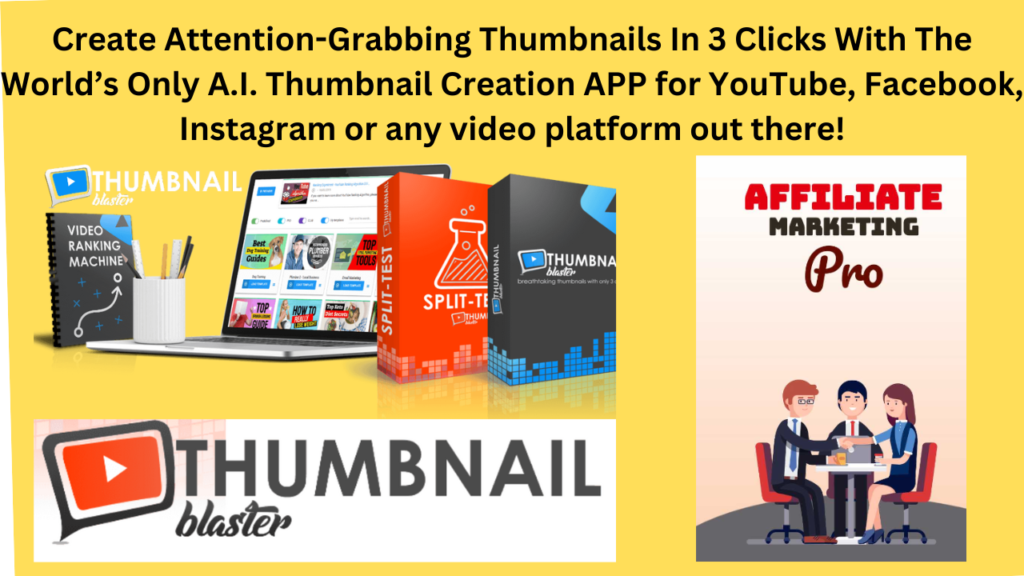
ThumbnailBlaster
Click Here For Access
Thumnail Blaster Video Tool
Create Attention-Grabbing
Thumbnails In 3 Clicks With The World’s Only A.I. Thumbnail Creation APP
for YouTube, Facebook, Instagram
or any video platform out there!
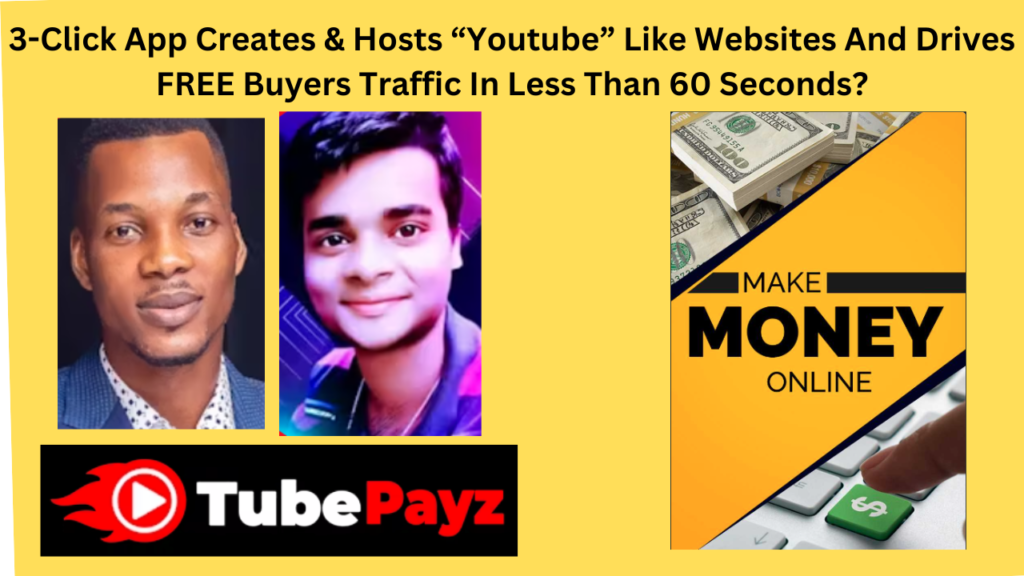
TubePayz
Click Here For Access
TubePayz
TubePayz Is The First To Market App That Creates YOUTUBE Like Website Loaded With 3.9 Million Videos In 250+ Different Categories (Such As Health, Movies, Fashion, etc…) And Gets Us FREE Buyer Traffic In 60 Seconds Flat!
Launch Your Very Own Youtube-Like Websites/Channels & Enjoy Daily Profits…
TubePay Comes Loaded With Mind-Blowing Features…
DFY 3.9M+ Videos In Different Niches 1-Click, Auto-Import Millions Of Videos From Youtube, Vimeo, DailyMotion… Choose From 250+ Different Categories Go Live With Unlimited Attendees (Zoom & GotoWebinar Like Feature) With Real-Time Chat Add Millions Of YouTube Short Videos Upload, Host & Embed Videos To Websites Pay & Unlock Feature In-Built Video Studio Drag N’ Drop Upload Feature Send Unlimited Emails To Your Audience GEO blocking Monetize Videos & Earn Money
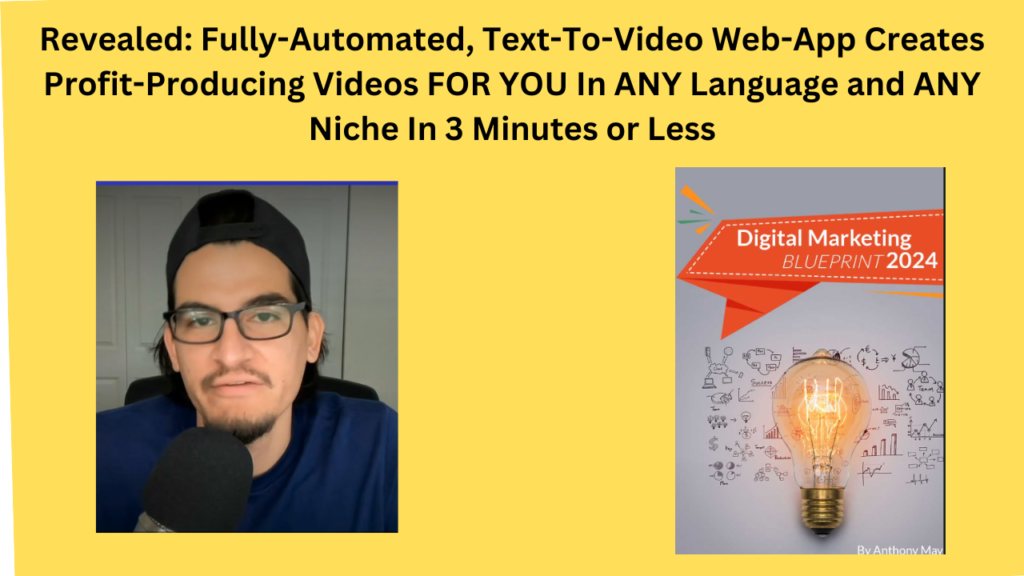
Stoodaio 2.0
Click Here For Access
Stoodaio Agency 50 Video Creator
Stoodaio will write you a UNIQUE and perfectly readable script for you that provides IMMENSE value to your audience.
It will identify the prominent keywords in your script and break it up into different slides and AUTOMATICALLY match it with RELEVANT images and background videos based on those keywords.
At the same time, it will then turn that script into a human-like voice-over FOR YOU. (in ANY language and/or accent imaginable)
Then it will mash it ALL together and render a WEB-READY video for you in a matter of minutes and put it on our BLAZING fast video hosting engine.
Why Building Opportunities Into Your Marketing Plan Changes Everything
Most marketing plans are built around activity. What to post, when to send, how often to show up. There’s a structure to it, a sense of movement, a schedule that keeps everything in motion. And on the surface, it feels productive. Things are being created, shared, distributed. But underneath that activity, something is often missing. Direction. Not in terms of where the business is going, but in how each piece of marketing contributes to something that actually moves it forward.
Because activity on its own doesn’t create growth.
It creates motion.
And motion, without something to anchor it, rarely leads anywhere meaningful.
This is where building opportunities into your marketing plan begins to change everything. Not as an additional element, not as something separate from what you’re already doing, but as the foundation that gives everything else a purpose. Because when opportunities are clear, marketing stops being about staying visible and starts becoming about guiding someone toward a decision that makes sense.
Most people treat opportunities as moments. A launch, a promotion, a specific campaign that exists for a limited time. Something that appears, performs, and then disappears until the next cycle begins. And while that approach can create short-term results, it also creates inconsistency. Each new effort has to start from the beginning. The context has to be rebuilt. The connection has to be re-established.
But when opportunities are built into your marketing plan, they stop being isolated events.
They become part of a continuous structure.
This is where the shift begins.
Instead of asking, “What should I post today?” the question becomes, “What is this leading toward?” Each piece of content, each email, each video starts to carry a role. Not just to inform or engage, but to contribute to something that develops over time. And when that development is consistent, the need to push for attention begins to fade.
Because clarity replaces urgency.
When someone encounters your content and can see how it connects to something larger, they don’t need to be convinced in a single moment. They begin to understand the direction you’re guiding them toward. And that understanding builds gradually, without needing to be forced.
This is what most marketing lacks.
Not effort, but continuity.
Without continuity, everything feels separate. Each message exists on its own, disconnected from what came before and what comes after. And when that happens, the audience is left to piece things together on their own. Some will. Most won’t. Not because they aren’t interested, but because the path isn’t clear enough to follow.
Building opportunities into your marketing plan removes that gap.

It creates a path that people can move along naturally. A progression that doesn’t need to be explained every time, because it’s already being reinforced through each interaction. And over time, that progression becomes familiar. It becomes something people recognise, something they can return to without needing to reorient themselves.
This familiarity is what builds trust.
Not through repetition alone, but through consistency of direction. When your marketing consistently leads somewhere, when it doesn’t change course with every new idea or trend, it begins to feel stable. And stability allows people to engage more deeply, because they’re not constantly adjusting to something new.
This also changes how you create.
Instead of starting from zero each time, you begin to build on what already exists. A piece of content isn’t just something to publish—it’s something that supports the larger structure. It reinforces the opportunity, adds clarity to it, or moves someone closer to understanding it.
And because of that, your efforts begin to compound.
Each piece adds to the last. Each message strengthens the overall direction. And over time, the need to constantly create something new begins to lessen, because what you’ve already created continues to work.
This is where marketing becomes more efficient.
Not through doing less, but through doing things that connect.
When everything is aligned around a clear opportunity, there is less waste. Less content that exists without purpose. Less effort spent on things that don’t contribute to growth. And that alignment creates a different kind of momentum. One that isn’t dependent on spikes of activity, but on steady progression.
This is also where your audience begins to respond differently.
Because when opportunities are built into your marketing, they don’t feel like interruptions. They don’t appear suddenly, asking for attention or action without context. They emerge naturally, as the next step in something that already makes sense.
And when something makes sense, it doesn’t need to be pushed.
It can be chosen.
This is a subtle shift, but it changes everything. Because the role of your marketing moves from trying to create action to making action easier. It removes the pressure that often surrounds selling, replacing it with clarity that allows decisions to happen without resistance.
Over time, this creates a more stable form of growth.
Not one that depends on constant reinvention, but one that builds through consistency. Where each opportunity is supported by what came before it, and in turn supports what comes next. A system that doesn’t need to be rebuilt with each new campaign, because it was designed to continue.
And within that system, something else becomes possible.
Space.
Space to think, to refine, to improve without feeling like everything depends on immediate output. Because when your marketing is structured around opportunities that are always present, you’re not relying on isolated moments to create results. You’re working within something that continues to function even when you’re not actively pushing it.
This is what gives marketing its leverage.
Not visibility, not volume, but structure.
A structure that allows your efforts to build on each other, to create something that holds together over time. And when that structure is in place, everything else begins to align more naturally. The content, the messaging, the offers—they all start to move in the same direction.
In the end, building opportunities into your marketing plan isn’t about adding more.
It’s about giving what you’re already doing a purpose.
Because when your marketing leads somewhere clear, when it supports something that continues to develop, it stops feeling like a series of disconnected actions.
It becomes a system.
One that doesn’t just create activity, but creates movement.
And movement, when it’s sustained, is what changes everything.

Are You Ready For Opportunity?
If you are ready for an opportunity which means you are looking to ACT Now then you are in the right place to find something that resonates with you so you can decide to ACT NOW.