
Welcome to another issue of From Inbox to Income — where we turn thoughtful words into meaningful revenue, share soulful email strategies, and celebrate creative solopreneurs like the brilliant rebels they are 💌✨
Know someone who spends 45 minutes writing an email… only to get three opens and one accidental unsubscribe? Forward this to them.
In today’s issue:
- 👀 Why most emails get ignored before the first sentence is even read
- ✍️ The tiny shift that makes your emails feel human instead of “market-y”
- 🔥 How to write emails people actually want to open tomorrow
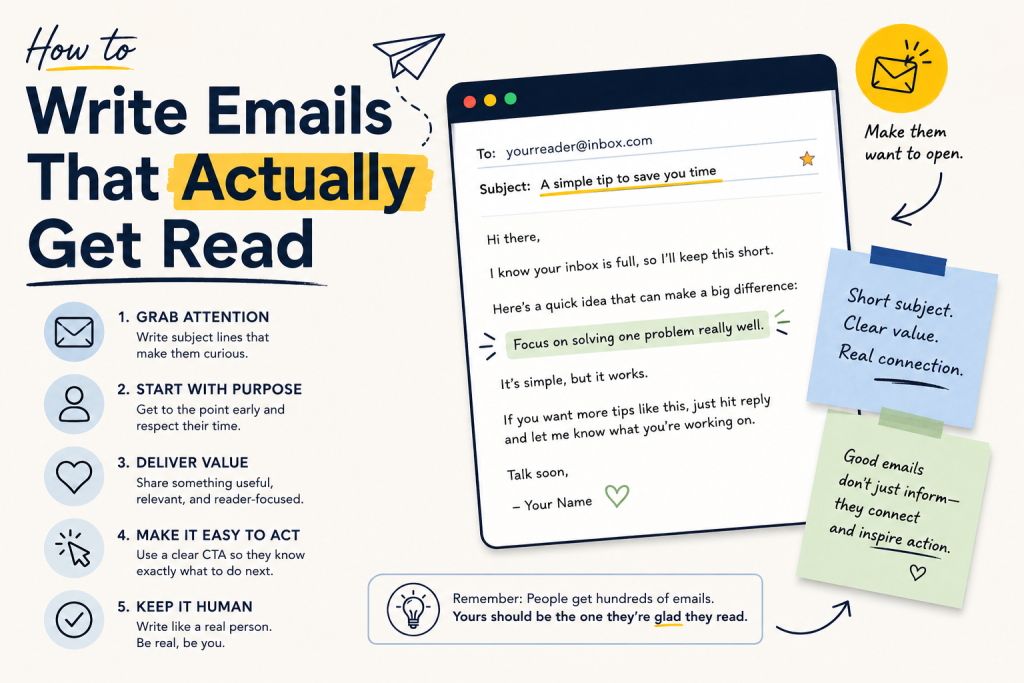
How to Write Emails That Actually Get Read
Here’s the uncomfortable truth:
Most unread emails are not a writing problem.
They’re a trust problem.
Because your subscribers are not asking:
“Is this email optimized?”
They’re asking:
“Is this worth my attention?”
And attention is expensive now.
Your reader has 43 unopened emails.
Three Slack notifications.
An Instagram reel whispering productivity lies into their nervous system.
And somewhere in the chaos… your carefully crafted email arrives wearing the subject line:
“Weekly Newsletter #12”
Oof.
No wonder it died quietly in Promotions.
💭 The Real Reason People Ignore Emails
A few years ago, I worked with a designer named Clara.
Beautiful brand.
Beautiful website.
Beautiful offers.
But her emails?
Felt like corporate oatmeal.
Technically fine.
Emotionally forgettable.
She kept saying:
“I don’t understand. I’m giving value.”
And she was.
But value alone doesn’t create connection.
Because nobody opens an email thinking:
“I hope this contains actionable bullet points.”
They open because they want:
- Relief
- Insight
- Entertainment
- Recognition
- Momentum
- A feeling
Your subscribers are humans before they are leads.
That changes everything.
⚡ The Inbox Test Nobody Talks About
Before you send an email, ask yourself this:
“Would I read this if someone else sent it to me?”
Not skim.
Not politely open.
Actually read.
Most emails fail because they sound like they were written at people instead of to people.
There’s a difference.
“At” sounds like:
- “Optimize your conversion metrics”
- “Increase engagement with this framework”
- “Here are 5 productivity hacks”
“To” sounds like:
- “You know that weird guilt you feel when you haven’t emailed your list in two weeks?”
- “I think too many people are overcomplicating email right now.”
- “This one sentence doubled replies on a client email yesterday.”
One sounds like content.
The other sounds like conversation.
And conversation wins.
Every time.
🛠️ The 3-Part Formula for Emails People Actually Read
Here’s the framework I teach clients when their open rates feel flatter than airport coffee.
1. Start with tension 🎯
Humans pay attention to unfinished emotional loops.
Not facts.
Not features.
Not “hope you’re doing well.”
Tension creates movement.
Examples:
- “I almost didn’t send this email.”
- “Your emails might be too polished.”
- “A client said something brutal to me yesterday…”
You’re not clickbaiting.
You’re creating curiosity with honesty.
That’s different.
2. Write like a real person ☕
This sounds obvious until you read most newsletters.
The fastest way to sound robotic is trying too hard to sound professional.
Professional doesn’t mean sterile.
Your reader wants you.
Not LinkedIn GPT soup.
Here’s a simple exercise:
Read your email out loud.
If you sound like a customer service chatbot trapped in a beige office park…
rewrite it.
Shorter sentences help.
Fragments help.
Rhythm helps.
So does specificity.
Compare these:
❌ “Consistency is important in email marketing.”
✅ “A quiet inbox loses trust faster than a bad subject line.”
One teaches.
The other sticks.
🧠 3. Make the reader feel seen
This is the secret.
The best emails feel like someone finally articulated the thing sitting quietly in your chest.
That’s why lines like this work:
“You don’t need a bigger list. You need a more believable message.”
Or:
“Half the reason people procrastinate emailing their list is because they’re afraid of sounding annoying.”
Your reader wants language for what they already feel.
Give them that…
…and they’ll keep opening.
🌊 Why This Matters More Than Ever
AI can generate infinite emails now.
Which means generic writing is becoming invisible faster than ever.
The creators who win in the next few years won’t necessarily be the loudest.
They’ll be the most recognizable.
The ones whose emails feel unmistakably human.
The ones who sound like themselves.
The ones whose readers think:
“I always open their emails.”
That sentence?
That’s the real metric.
Not vanity open rates.
Not click tricks.
Not fake urgency.
Trust.
Because trust compounds quietly before revenue compounds publicly.
💬 One More Thing Before You Send Your Next Email
Stop trying to sound impressive.
Start trying to sound true.
One honest sentence written with clarity will outperform ten “optimized” paragraphs written to impress strangers.
Every time.
So before your next send, ask:
- Is this useful?
- Is this interesting?
- Does this sound like me?
- Would I genuinely want to receive this?
If the answer is yes…
Hit send.
Even if it’s imperfect.
Especially then.
🔖 Closing Insight
People do not remember the most polished emails.
They remember the ones that made them feel understood.
That’s the game now.
Not louder.
Closer.
✨ Repeatable Proverb
“The emails that convert best rarely sound like marketing. They sound like someone paying attention.”
Reply with your take 🧠
#EmailMarketing #EmailCopywriting #SolopreneurMarketing #NewsletterStrategy #EmailListGrowth #AuthenticMarketing #ConversionCopywriting #CreatorBusiness #InboxToIncome #RelationshipMarketing
Would you like me to generate:
- 3 subject line + preheader pairs
- a matching 16:9 hero image
- or both?
Sources and brand guidance used: