How To Course Education Isn’t About Knowing More, It’s About Knowing What to Do Next
How-to course education is often mistaken for learning more.
More information.
More detail.
More ideas to understand.
But over time, something becomes clear.
Knowing more doesn’t always move you forward.
Because how-to course education isn’t about knowing more.
It’s about knowing what to do next.
The real value of a course is not in how much it teaches, but in how clearly it guides. When something is explained in a way that makes the next step obvious, hesitation disappears. You don’t need to overthink or second-guess—you simply act on what makes sense.
Because progress begins the moment understanding turns into action.
Over time, that difference becomes visible. Some courses leave you informed, but unchanged. Others give you direction. They connect learning to action in a way that feels natural, not forced, and that’s where movement begins.
Building something online doesn’t begin with activity.
It begins with structure.
Because in order to move from an idea to something real, you need the right tools and resources in place. Not just to get started—but to support what you’re building as it grows. Without that foundation, what you’re creating can feel temporary, uncertain, more like a hobby than something sustainable.
But when the right elements are in place, something changes.
What you’re building begins to take shape.
It becomes more defined.
More structured.
More aligned with something that can last.
Because it’s not just about starting…
It’s about setting things up in a way that allows you to continue.
And when that foundation is built with clarity from the beginning,
Back To Basics
Back To Basics
This course will help you if you are just starting out, or even if you have been trying to make money online but have found your lack of technical skills has been holding you back. Back To Basics teaches you how to make money as an affiliate without needing a website, without needing an email list, and without needing to make review videos.
Supersites

The Mastermind Circle
Here’s The List Of What You Will Get Inside The Mastermind Circle Business Training – We have some high-quality business training inside designed to be simple and easy to follow and created just for small business owners like yourself. Mindset Training – Having the right mindset is key to the success of your business, having a positive attitude will help your business grow and thrive. Members Offer – You will get access to some members-only offers that are just for
PWA
Click Here For Access
Time management is one of the most important skills to have, but it is often a concept that many businesses, and people, struggle with. Small businesses, in particular, cannot afford to waste time with bad time management and inefficiency. However, the benefits of good time management practices are immeasurable. Businesses that utilize good time management are better positioned to consistently deliver their product, or service, on-time.
When You Teach Through Video, Your Knowledge Becomes Something Others Can Use
When You Teach Through Video, Your Knowledge Becomes Something Others Can Use
Building something online doesn’t begin with activity. It begins with structure. A foundation that supports what you’re creating, not just at the start, but as it continues to grow. Because without that structure, even the best ideas can feel temporary—uncertain, difficult to sustain, disconnected from anything long-term.
But when the right elements are in place, something begins to change.
What you’re building starts to take shape.
It becomes more defined.
More consistent.
More aligned with something that can actually last.
And this is where teaching through video begins to play a different role than most people expect.
At first, video can feel like an output. A way to share what you know, to explain something clearly, to put your ideas into a format that others can see and hear. And while that’s part of it, it doesn’t fully capture what’s happening beneath the surface.
Because when you teach through video, your knowledge doesn’t just stay as information.
It becomes something others can use.
There’s a difference between knowing something and being able to apply it. And that difference is often where progress either begins or stops. Many people understand ideas conceptually, but struggle to translate them into action. Not because they lack ability, but because the path between understanding and doing isn’t always clear.
Video changes that.
It shows the process.
Not just the result.
When someone watches you explain something while actively working through it—step by step, in real time—it removes a layer of uncertainty. They’re no longer trying to imagine how it works. They can see it. Follow it. Understand not just what to do, but how it actually looks when it’s being done.
And that clarity creates something important.
Confidence.
Not just for you, but for the person watching.
Because when something is visible, it becomes easier to trust. Easier to repeat. Easier to take and apply in a way that feels grounded instead of abstract. And over time, that ability to create clarity becomes one of the most valuable aspects of what you’re building.
There’s also something that happens on your side of the process.
When you begin teaching through video, your own understanding begins to deepen. You’re no longer just thinking through ideas—you’re expressing them. Structuring them. Breaking them down in a way that someone else can follow.
And in doing that, you begin to see things differently.
You notice gaps.
You refine your thinking.
You simplify what once felt complex.

Because teaching requires clarity.
And clarity sharpens understanding.
This is where video becomes more than a way to share.
It becomes a way to develop.
Each time you explain something, you’re not just delivering information—you’re reinforcing it. Strengthening your own perspective while making it accessible to someone else. And over time, that process compounds.
Your knowledge becomes more structured.
More precise.
More usable.
Not just for others, but for you as well.
There’s also a broader layer to this that connects back to what you’re building.
When your knowledge becomes something others can use, it begins to create value beyond the moment it’s shared. A single video doesn’t just exist as content—it becomes a resource. Something that can be returned to, referenced, applied in different situations.
And when multiple videos begin to connect, something larger begins to form.
A system.
A body of work that reflects not just what you know, but how it can be used. And that system becomes part of your foundation. Something that supports your growth, your visibility, your ability to create impact over time.
Because now, you’re not just sharing ideas.
You’re creating direction.
Helping others move from where they are to a clearer next step.
And that’s where the real shift happens.
Your role changes.
You’re no longer just someone who understands something.
You become someone who helps others apply it.
And that difference shapes everything that follows.
There’s also something important about accessibility.
Video allows you to meet people at different levels of understanding without needing to adjust the message constantly. The way you explain something—the tone, the pacing, the visual context—creates an experience that can be followed even if someone is encountering the idea for the first time.
It removes barriers.
Simplifies complexity.
And makes it easier for someone to engage without feeling overwhelmed.
And when that happens, your knowledge becomes more than something you hold.
It becomes something that moves.
Something that travels beyond your own experience and into someone else’s process.
Something that continues.
Because once someone uses what you’ve shared—once they apply it, refine it, build from it—it extends beyond the original moment of teaching. It becomes part of something larger. Something ongoing.
And that’s what gives it weight.
Not the information itself.
But what it allows others to do with it.
If you step back, the pattern becomes clear.
Teaching through video isn’t about saying more.
It’s about making things clearer.
It’s about taking what you understand and shaping it into something that can be seen, followed, and applied. Something that reduces uncertainty and creates direction.
Because in the end, knowledge only becomes valuable when it’s usable.
And video is one of the most effective ways to make that happen.
Not by adding more complexity.
But by showing what matters.
Step by step.
In a way that turns understanding into action.
And when you do that consistently, something begins to form.
Not just content.
Not just information.
But a body of work that helps people move forward.
And that’s what makes the difference.
Not what you know.
But what you make possible for others to do with it.
ard.
Take Action Today
with how to courses you get to know things you would otherwise be ignorant of. This what true education does it smashes ignorance into onowing and being able to apply what has been learned This requires somw effort on your part but it is worth it if you truly want to learn and become informed.
A How To Course Isn’t Created by Information, It’s Built Around What People Need to Do Next
A How To Course Isn’t Created by Information, It’s Built Around What People Need to Do Next
At first, most how-to courses are built with the same intention—to provide as much useful information as possible. The structure is designed to be complete. Every step explained, every concept covered, every detail included so that nothing feels missing. And on the surface, that approach seems logical. The more thorough the course, the more valuable it should be.
But over time, something becomes clear.
Information alone doesn’t create movement.
You can go through an entire course, understand every section, and still find yourself unsure of what to do when it’s over. Not because the material wasn’t useful, but because it didn’t fully connect to action. It explained the process, but didn’t place you inside it.
And that’s where the difference begins.
A how-to course that actually works isn’t built around what people need to know.
It’s built around what they need to do next.
This shift changes everything about how the course is created.
Instead of asking, “What should be included?” the focus becomes, “What does someone need in order to move forward right now?” Not eventually. Not after they’ve understood everything. But in the moment they’re in, with the level of clarity they currently have.
Because progress doesn’t come from having all the information.
It comes from having enough direction to act.
Most courses overwhelm because they try to solve every problem at once. They anticipate every question, cover every variation, and present everything as equally important. And in doing so, they create something that feels complete—but difficult to use.
Because when everything matters, nothing stands out.
And when nothing stands out, action becomes delayed.
The courses that create real movement do the opposite.
They reduce.
They narrow the focus.
They take a process that could feel complex and bring it down to a single, clear step. Something small enough to begin without hesitation, but meaningful enough to create progress.
And once that step is taken, the next one becomes easier to see.
This is how momentum is built.
Not through volume, but through sequence.
Each part of the course leading naturally into the next—not because it’s been organized that way structurally, but because it reflects how someone actually moves through the process. Step by step. Decision by decision. Action by action.
There’s also something important about timing.
The right information, given at the wrong moment, becomes noise. It might be accurate, even valuable, but if it doesn’t align with where someone is in the process, it creates confusion instead of clarity.
A course built around action understands this.
stage.

It introduces ideas when they’re needed.
Not before.
Not after.
But at the moment they become useful.
And that precision changes how the course is experienced.
Instead of feeling like something to get through, it feels like something to work with. Each section becomes a point of application, not just explanation. Each idea connects directly to something the learner can do, not just something they can understand.
This is where engagement begins to deepen.
Because now, the course isn’t something separate from the work.
It becomes part of it.
There’s also a quieter layer to this approach that often goes unnoticed.
It builds confidence.
Not by telling someone they’re ready, but by showing them that they can move. Each small action reinforces that sense of progress. Each completed step becomes proof that the process works—not in theory, but in practice.
And over time, that confidence compounds.
Because it’s grounded in experience.
Not assumption.
This is why the structure of a how-to course matters more than the amount of information it contains.
A well-structured course doesn’t feel heavy.
It feels clear.
It removes unnecessary decisions. It guides attention. It creates a path that can be followed without constant uncertainty. And that clarity is what allows someone to continue, even when things become challenging.
Because the next step is always visible.
Not perfectly defined, but clear enough to take.
There’s also something important about what happens after the course is finished.
Most courses end with completion.
A final lesson, a sense that everything has been covered.
But a course built around action doesn’t feel finished at that point.
It feels continued.
Because what it created wasn’t just understanding.
It created movement.
A direction that extends beyond the material itself. A way of approaching things that can be applied again, refined, adjusted, and built upon over time.
And that continuation is where the real value exists.
Not in what was included.
But in what was set in motion.
If you step back, the pattern becomes clear.
Information fills space.
Action creates progress.
And a how-to course that truly works understands the difference between the two.
It doesn’t try to give everything.
It gives what’s needed.
At the right time.
In the right sequence.
With enough clarity to act.
Because in the end, people don’t move forward because they know more.
They move forward because they know what to do next.
And when a course is built around that idea, it becomes more than something you complete.
It becomes something you use.
Something that stays with you.
Something that continues to shape how you think, how you act, and how you move forward—long after the final lesson is finished.
And that’s what makes the difference.
Not the information itself.
But the way it leads to action.
Funnely Enough

Click Here For Access
Funnely Enough
This is a full marketing system where the product content is free at the start and then paid through the funnel with a useful product that will help you to succeed online if implemented and acted on consistently. This opportunity is free to join.
Lightning List
Click Here For Access
Lightning List
10 X Great List Building methods that work for any niche. No tech skills are needed. Newbie friendly. This is genuine ‘Gold Dust’ content your tribe will love..
List Your Links
Click Here For Access
List Your Links
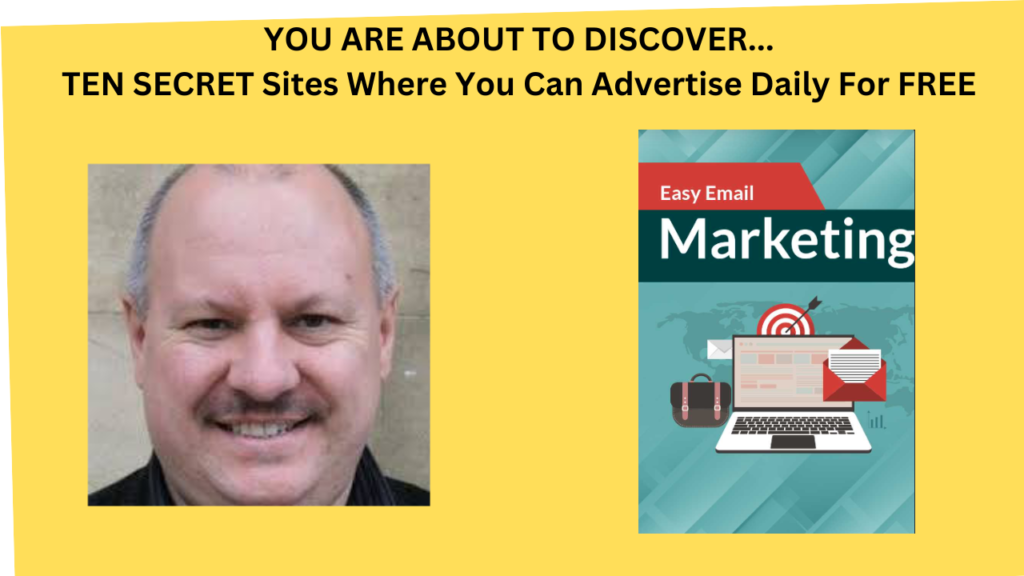
You will discover 10 x top-secret sites that nobody else is using in the Warrior Plus, JVZoo and Clickbank affiliate space. You can advertise for FREE on a daily basis at all of these sites, whichever niche you are in, and will always be able to get your offers to a targetted audience without the need for a list or using paid traffic methods.