
The Evergreen Marriage Audiobooks Worth Returning To (Because Real Commitment Deepens Over Time)
There’s a quiet expectation that marriage should eventually feel settled. Understood. As if, over time, everything naturally finds its place and stays there. But the audiobooks worth returning to—the ones that actually reshape how you see commitment—tell a different story. They don’t present marriage as something you figure out once. They show it as something that continues to unfold. Not through big, defining moments, but through the small, repeated choices that often go unnoticed.
The first time you listen, it feels like perspective. A clearer way to think about communication, patience, the space between two people trying to understand each other. But when you return to it—after time has passed, after certain conversations have gone well and others haven’t—the same ideas begin to feel more personal. You start to recognize patterns. The ways you respond without thinking. The moments where listening could have gone deeper. And that awareness begins to shift how you show up, not perfectly, but more intentionally than before.
Because real commitment doesn’t stay the same. It deepens—or it drifts—depending on how it’s tended to over time. And that’s why these evergreen marriage audiobooks matter. They give you something steady to come back to when things feel unclear, when communication becomes strained, when the connection feels slightly out of reach. A reminder that marriage isn’t built in a single understanding. It’s built through returning—again and again—to the effort of seeing each other more clearly.
You can change your life—but not in the sudden, dramatic way it’s often imagined. It begins with something quieter. A decision made today, followed by a simple act: doing what you said you would do. Not once, but again tomorrow. And the day after that. Because action, when repeated, begins to carry its own momentum. It moves you forward in ways that intention alone never can.
At first, it feels small. Almost too small to matter. A few days of showing up. Then a week. And somewhere around that third week, something begins to shift. The resistance softens. What once felt like effort starts to feel familiar. Not effortless—but steady enough that you don’t have to convince yourself to continue. That’s when a habit begins to take hold. Not because you forced it into place, but because you stayed with it long enough for it to become part of your rhythm.
And then come the hours. Quiet, steady, easy to overlook in the moment. They don’t feel like progress. They don’t feel like transformation. But they accumulate. What people call “10,000 hours” isn’t really about the number—it’s about what happens when you keep returning to something over and over again. The way it begins to shape how you think. How you respond. How you show up without needing to question it. You stop chasing outcomes and start becoming the kind of person those outcomes belong to.
Over time, that consistency carries you somewhere new. Not all at once, but gradually. You begin to notice that the version of you who once struggled to begin now moves with a kind of quiet certainty. And one day, you realize you’ve arrived in a place that once felt distant. Not because you rushed toward it—but because you stayed long enough for it to meet you.
Marriage Help: The Definitive Guide
Marriage Help: The Definitive Guide
Would you like to learn how to rebuild your relationship, reconnect with your spouse, improve communication, and grow intimacy and love? If you answered yes to this question, you are going to want to continue listening.
Marriage is wonderful. You meet the right person that you never want to be without, and you vow to spend the rest of your life with them. It can seem like sunshine and roses, but then reality hits. You start to realize you are both different people, and as such, you may have disagreements. Maybe you both have very busy jobs that keep you apart for longer than you’d like. Suddenly you’re a few years in, and it’s like you’re married to a very different person. But are they really all that different, or has the new worn off of the relationship?
The Seven Principles for Making Marriage Work
The Seven Principles for Making Marriage Work
Just as Masters and Johnson were pioneers in the study of human sexuality, so Dr. John Gottman has revolutionized the study of marriage. As a professor of psychology at the University of Washington and the founder and director of the Seattle Marital and Family Institute, he has studied the habits of married couples in unprecedented detail over the course of many years. His findings, and his heavily attended workshops, have already turned around thousands of faltering marriages.
This book is the culmination of his life’s work: the seven principles that guide couples on the path toward a harmonious and long-lasting relationship. Straightforward in their approach, yet profound in their effect, these principles teach partners new and startling strategies for making their marriage work. Gottman helps couples focus on each other, on paying attention to the small day-to-day moments that, strung together, make up the heart and soul of any relationship. Being thoughtful about ordinary matters provides spouses with a solid foundation for resolving conflict when it does occur and finding strategies for living with those issues that cannot be resolved.
Make Him BEG to Be Your Husband
Make Him BEG to Be Your Husband
Do You Want to Know How to REALLY GET YOUR MAN TO MARRY YOU?
It’s the situation every woman dreads: You know this is the guy you want to spend the rest of your life with, so why isn’t he getting down on one knee? You’re happy and strong, you’ve been together a while, and you’re practically living in each other’s pockets.
I have GOOD NEWS: There is a better way to make him marry you than to nag him into a commitment. I have a foolproof method to get a ring on your finger, and it works in 99 out of every 100 cases. Follow the advice in this book, and I guarantee that he won’t just propose, he’ll think it was HIS OWN IDEA, all along.
The Perfect Marriage: Keys to Finding Love
The Perfect Marriage: Keys to Finding Love & Making It Last
Why is the divorce rate so high? What makes the perfect marriage? Why do people get married, and how can we find the perfect person for us and have a happy, successful marriage that will last forever?
This book is a deep analysis of marriage over the ages and discusses what kind of impact family and marriage have on our society, mental health, and overall lives. It is also a guide on how to find the right person, how to communicate well and attract someone in a natural and authentic way.
What a Marriage Audiobook Video Really Is (And Why It Helps You See Things More Clearly)
What a Marriage Audiobook Video Really Is (And Why It Helps You See Things More Clearly)
Most people think a marriage audiobook video is simply a different way to deliver advice. The same ideas you might read or hear—just paired with visuals to make them easier to follow. And on the surface, that’s true. But if you spend enough time with them—if you return to them, not just once but over time—you begin to notice something else happening.
It’s not just the format that changes.
It’s the way you understand what you’re seeing.
Because marriage, like most forms of connection, is difficult to fully grasp from the inside. When you’re in it, everything feels immediate. Emotional. Personal. You react before you reflect. You respond based on what you feel in the moment, not always on what’s actually happening beneath it. And because of that, even the best advice can feel hard to apply.
You hear it. You agree with it. But in the moment that matters, it slips.
This is where a marriage audiobook video begins to work differently.
It creates distance—just enough to let you observe without being caught inside the reaction.
When you watch a situation unfold while hearing it explained, something shifts. A conversation between two people becomes something you can study, not just relate to. A moment of tension becomes something you can see from both sides, rather than just one. And in that space, clarity begins to form.
Not because the idea is new.
But because you’re finally seeing it clearly.
There’s a difference between knowing that communication matters and actually seeing what happens when it breaks down. The tone that changes. The pause that’s missed. The assumption that goes unspoken but shapes everything that follows. These are small details, easy to overlook when you’re inside your own conversations.
But when you see them from the outside, they become obvious.
And once they’re obvious, they stay with you.
This is what makes the format so effective. It doesn’t rely on you remembering what to do. It helps you recognize what’s happening. And recognition is what allows change to happen naturally.
Because once you see a pattern clearly enough, you begin to notice it in your own life.
Not in a forced or analytical way, but quietly.
In the middle of a conversation, something feels familiar. A tone. A reaction. A moment where you would normally respond a certain way. And instead of moving automatically, there’s a pause. Brief, but enough to shift something.
That pause is where awareness lives.
And awareness is where change begins.
There’s also something important about the way these videos combine voice and visual. The explanation gives you structure—a way to understand the idea. But the visual gives it weight. It shows you how it actually looks when it plays out in real time.
And that combination reduces confusion.
You don’t have to imagine how something might work. You’ve seen it. You’ve heard it explained. You’ve experienced it in a way that feels real enough to remember. And because you remember it, you’re more likely to recognize it when it matters.
This is what makes the learning feel different.
It’s not just information.
It’s perspective.
No More Perfect Marriages
If you feel like the spark is gone, like a critical spirit has invaded your marriage, like you want more intimacy but something is in the way, you could be suffering from the Perfection Infection.
The Perfection Infection happens when we cultivate unrealistic expectations of ourselves and our spouse, gradually leading to intimacy-killing behavior, also known as the “Seven Slow Fades”. That was the case for Jill and Mark Savage, and in No More Perfect Marriages they guide you in everything you need to know to kick the Perfection Infection right out and return to intimacy.
Attached
An insightful look at the science behind love, Attached offers listeners a road map for building stronger, more fulfilling connections.
Is there a science to love? In this groundbreaking audiobook, Psychiatrist and Neuroscientist Amir Levine and Psychologist Rachel S. F. Heller reveal how an understanding of attachment theory – the most advanced relationship science in existence today – can help us find and sustain love.
Pioneered by Psychologist John Bowlby in the 1950s, the field of attachment explains that each of us behaves in relationships in one of three distinct ways:
The All-or-Nothing Marriage
After years of debate and inquiry, the key to a great marriage remained shrouded in mystery. Until now….” (Carol Dweck, author of Mindset: The New Psychology of Success)
Eli J. Finkel’s insightful and ground-breaking investigation of marriage clearly shows that the best marriages today are better than the best marriages of earlier eras. Indeed, they are the best marriages the world has ever known. He presents his findings here for the first time in this lucid, inspiring guide to modern marital bliss.
The All-or-Nothing Marriage reverse engineers fulfilling marriages – from the “traditional” to the utterly nontraditional – and shows how any marriage can be better.
Improving Communication in Your Marriage
Improving Communication in Your Marriage
The most important factor of marital happiness isn’t what you think. Learn more and save your marriage now!
Let’s admit it: No marriage is perfect. Every couple has some misunderstandings and conflicts. However, happy couples can prevent their misunderstandings from escalating. Even if they argue emotionally, they never resort to psychological abuse. They always figure out a compromise, afterward.
Some unhappy couples can’t deal with the tiniest disagreement. Any random word or action can trigger a violent conflict. And then, there are unhappy couples who are very quiet on the surface, but their interactions are filled with disdain and passive aggression toward each other. And some couples are just constantly annoyed with roommates who happen to co-parent some kids.
The difference between all these couples? Their communication skills!

Over time, as you return to these videos, that perspective begins to deepen. The first time you watch, you follow the situation. The second time, you notice the details. The third time, you begin to understand the patterns beneath it all.
And with each return, something becomes clearer.
Not all at once. But enough.
Enough to see where communication tends to break down. Enough to understand how small moments shape larger outcomes. Enough to recognize that what feels like a big issue often begins with something much smaller, much earlier.
This is how understanding builds.
Not through a single realization, but through repeated exposure to the same idea, seen from slightly different angles.
There’s also a quieter shift that happens as you engage with this format over time.
You begin to take less personally—and notice more objectively.
Not in a detached way, but in a grounded one. You start to see that many of the challenges in marriage aren’t about one person being right or wrong. They’re about patterns. Habits. Ways of responding that have been repeated long enough to feel automatic.
And once you see those patterns, they lose some of their power.
Because you’re no longer reacting blindly.
You’re responding with awareness.
This doesn’t make everything easy. It doesn’t remove difficulty or eliminate misunderstanding. But it changes how you move through those moments. It gives you a different starting point—one that’s less reactive, more intentional.
And that shift, small as it may seem, changes everything over time.
Because marriage isn’t shaped by one conversation.
It’s shaped by many.
And the way those conversations unfold depends on how clearly you can see what’s happening in them.
That’s what a marriage audiobook video offers.
Not answers, but clarity.
A way to step back just enough to understand what’s going on beneath the surface. A way to observe patterns before they fully take hold. A way to recognize yourself in the process, without getting lost in it.
If you step back, the value becomes clear.
Most people don’t struggle because they don’t care about their relationship. They struggle because they can’t always see it clearly while they’re inside it. Emotions move quickly. Reactions happen automatically. And by the time there’s space to reflect, the moment has already passed.
This format slows things down.
Just enough.
Enough to see what would otherwise be missed. Enough to understand what would otherwise feel confusing. Enough to carry that understanding into the next conversation, and the one after that.
And over time, those small shifts begin to add up.
Not in a dramatic way.
But in a steady one.
A different tone here. A longer pause there. A moment of understanding where there might have been frustration before. Each one small, but together creating something more stable. More connected.
More clear.
That’s what a marriage audiobook video really is.
Not just content to watch.
But something to return to.
Something that helps you see—again and again—until what once felt unclear begins to make sense.
ideas.
The ADHD Effect on Marriage
An invaluable resource for couples in which one of the partners suffers from attention deficit hyperactivity disorder (ADHD), this authoritative book guides troubled marriages toward an understanding of and appreciation for the struggles and triumphs of a relationship affected by it and to look at the disorder in a more positive and less disruptive way.
Summary & Analysis of Attached
Summary & Analysis of Attached
PLEASE NOTE: This is a summary and analysis of the book and not the original book.
In their groundbreaking book, Doctor Amir Levine and psychologist Rachel Heller use the attachment theory to provide insight into how love actually works. Discover your attachment style and learn how it affects your romantic relationships – for better or for worse.
What does this ZIP Reads summary include?
- Synopsis of the original book
- A detailed explanation of each attachment style
- How to identify your, and your partners, styles
- Common pitfalls for each style
- How to create a healthy dynamic moving forward
- Editorial review
- Background on the authors
The Science of Trust
For the past 35 years, John Gottman’s research has been internationally recognized for its unprecedented ability to precisely measure interactive processes in couples and to predict the long-term success or failure of relationships. In this groundbreaking book, he presents a new approach to understanding and changing couples: a fundamental social skill called “emotional attunement,” which describes a couple’s ability to fully process and move on from negative emotional events, ultimately creating a stronger relationship.
Every Man's Marriage:
Authors Stephen Arterburn and Fred Stoeker believe that every man can meet the secret desires of his wife. The problem is, that most of us aren’t exactly sure what that desire is and how we can go about fulfilling it faithfully. In Every Man’s Marriage, you can discover the common misconceptions about what it means to exercise biblical authority and understand the role of submission in the marriage relationship.
This groundbreaking book can help men grasp and apply essential but often overlooked principles for marital leadership. Through candid reflections on their own struggles to achieve biblical unity in their own marriages, along with many years of combined experience in marital counseling, Arterburn and Stoeker apply solid, time-tested biblical wisdom to the everyday potential distortions that can lead to strife in a marriage.
Take Action Today
Do You realize that your qualification that may get you a job is just a starting point and that's all? Don't make the mistake of sitting on your job for forty years while hoping you will get success because the truth is you may not ever get what you are looking for. You have to step out and build your own boat and set your own sail if you want true success. Make a decision not to be a failure in life by grabbing the opportunity with both hands and then TAKE MASSIVE ACTION. Diehard4education will help you to succeed if you remain positive in the way you think.
The Opportunity Inside Marriage Audiobook Videos (If You Know How to Use Them)
The Opportunity Inside Marriage Audiobook Videos (If You Know How to Use Them)
Most people approach marriage audiobook videos the same way they approach advice in general. They watch, they listen, they take in what feels useful—and then they move on. It feels productive in the moment. Insightful, even. But a few hours later, the clarity fades. The ideas blur. And when a real conversation happens—one that actually matters—those insights are nowhere to be found.
Because the opportunity was never just in watching.
It was in what the watching could become.
Marriage audiobook videos are often treated as explanations. A way to understand communication, conflict, connection. And they do offer that. But beneath the surface, they offer something more valuable—something quieter. They offer perspective. A chance to see patterns clearly, without being caught inside them.
That distance changes how you engage.
You’re no longer reacting in real time. You’re observing. Noticing how a conversation unfolds. Where it shifts. Where it breaks down. Where something small—almost invisible—alters the entire direction of what follows. These are details that are easy to miss when you’re inside your own relationship.
But once you see them, you begin to recognize them.
And recognition is where the real opportunity begins.
Because when you recognize a pattern, it doesn’t just stay inside the video. It follows you. Into your own conversations. Into the way you interpret tone, silence, timing. And slowly, without forcing it, your awareness expands.
You begin to notice what’s actually happening, not just what it feels like.
That distinction matters more than most people realize.
Because many of the challenges in marriage aren’t caused by a lack of care. They’re caused by a lack of clarity. Two people responding to what they think is happening, rather than what is actually happening. And when that gap exists, even the best intentions can lead to misunderstanding.
Marriage audiobook videos begin to close that gap.
Not by giving you scripts or steps to follow, but by helping you see more clearly. And once you see clearly, your response naturally begins to change. Not perfectly, not immediately—but enough to shift the direction of the interaction.
A pause where there used to be a reaction. A question where there used to be an assumption. A moment of listening that goes just a little deeper than before.
These are small changes.
But they add up.
This is why the opportunity inside these videos is often overlooked. People expect transformation to feel dramatic. Noticeable. Immediate. But the changes that actually last tend to be subtle. Built through repeated moments of awareness, not one-time realizations.
Communication for Couples
Don’t know how to handle conflict and emotions in your relationship/marriage? Is communication an issue in your relationship/marriage? Read on…
Knowing how to communicate effectively requires you to have the information around what effective communication is, a clear understanding of how to apply it, and a great deal of practice.
Most times, poor communication skills are a result of bad habits and simply not knowing any better. It is rare that a person truly intends to communicate poorly with their spouse or anyone else.
After all, knowing the negative impact that poor communication can have on a relationship is reason enough to want to do better. That being said, practicing effective communication will require you to both learn new habits and break old ones.
To Have and to Hold
A clinical psychologist’s exploration of the modern dilemmas women face in the wake of new motherhood.
When Molly Millwood became a mother, she was fully prepared for what she would gain: an adorable baby boy; hard-won mothering skills; and a messy, chaotic, beautiful life. But what she did not expect was what she would lose: aspects of her identity, a baseline level of happiness, a general sense of well-being. And though she had the benefit of a supportive husband during this transition, she also at times resented the fact that the disruption to his life seemed to pale in comparison to hers.
Marriage, a History
Just when the clamor over “traditional” marriage couldn’t get any louder, along comes this groundbreaking book to ask, “What tradition?”
In Marriage, a History, historian and marriage expert Stephanie Coontz takes listeners from the marital intrigues of ancient Babylon to the torments of Victorian lovers to demonstrate how recent the idea of marrying for love is – and how absurd it would have seemed to most of our ancestors. It was when marriage moved into the emotional sphere in the 19th century, she argues, that it suffered as an institution just as it began to thrive as a personal relationship. This enlightening and hugely entertaining book brings intelligence, perspective, and wit to today’s marital debate.
Fighting for Your Marriage
A new and updated edition of the all-time bestselling book on marriage enhancement and divorce prevention. Since it was first published in 1994, Fighting for Your Marriage has been the bestselling book in its field. As in the original edition, the book offers invaluable advice on achieving better communication and problem-solving skills, using structured techniques to resolve conflicts, sharing a core belief system, understanding commitment and forgiveness, restoring intimacy, increasing fun, and improving your sex life. The authors show that conflict in intimate relationships is as normal and essential as love, but it’s how you fight and resolve conflicts that determine the difference between a sustained healthy marriage or a painful divorce.

And that’s exactly what these videos support.
Not a single breakthrough, but a series of small recognitions that begin to shape how you show up over time.
There’s also another layer to this opportunity—one that goes beyond personal awareness.
It’s the shift from consumption to engagement.
Most people watch and move on. But when you take a moment to reflect—to think about what you saw, what stood out, what felt familiar—you begin to deepen your understanding. You’re no longer just receiving the idea. You’re working with it.
Turning it over. Looking at it from different angles.
And in that process, something becomes clearer.
Because understanding doesn’t come from exposure alone. It comes from interaction. From taking an idea and making sense of it in your own way. And when you do that consistently, your perspective begins to sharpen.
You start to see patterns not just in the video, but across different situations.
In your own relationship.
In past conversations.
In the moments that didn’t make sense at the time, but begin to feel clearer now.
This is where the value compounds.
Not because you’re learning more, but because you’re seeing more.
And seeing more allows you to respond differently.
There’s also something important about returning.
The first time you watch a marriage audiobook video, you’re focused on the surface. The situation, the outcome, the general message. But when you come back to it later—after you’ve had your own experiences, your own challenges—the same content begins to feel different.
You notice things you didn’t before.
A tone that felt insignificant now stands out. A reaction that seemed reasonable now feels familiar in a different way. And that shift in perception deepens your understanding, not because the video changed, but because you did.
This is how learning becomes layered.
Each return adds something.
Each viewing reveals a little more.
And over time, those layers begin to form a clearer picture of how connection actually works—not in theory, but in practice.
This is what makes the opportunity inside marriage audiobook videos so valuable.
They don’t just teach you what to do.
They help you see what’s happening.
And once you see that clearly enough, your behavior begins to align with that understanding.
Naturally.
Without needing to force it.
If you step back, the difference becomes clear.
Most advice tries to tell you how to fix things. What to say. What to avoid. What to do differently next time. But real change doesn’t come from memorizing better responses. It comes from understanding the patterns that create those moments in the first place.
Marriage audiobook videos offer that understanding.
Not by simplifying the complexity of relationships, but by making that complexity visible.
And visibility is what creates clarity.
Clarity is what creates awareness.
And awareness is what creates change.
So the next time you watch one of these videos, it’s worth approaching it differently.
Not as something to finish, but as something to work with.
Notice what stands out. Reflect on what feels familiar. Return to it when your perspective has shifted. Let the ideas settle instead of rushing past them.
Because the opportunity isn’t in how much you watch.
It’s in how deeply you engage.
And when you engage deeply enough, something begins to change—not just in how you understand marriage, but in how you experience it.
One small moment at a time.
The 4 Habits of Joy Filled Marriages
The 4 Habits of Joy Filled Marriages
Discover the secrets behind deeper relational bonds and more consistent happiness in this new book about marriage by Marcus Warner and Chris Coursey.
Healthy relationships regularly produce joy, and joy keeps the relationship healthy. But this kind of happiness and health in marriage isn’t just for the lucky few who stumble upon it. It turns out that certain relational skills boost your happiness.
More than Words
Increase intimacy, connection, and love with this “critical” (Vanessa Van Edwards, bestselling author of Captivate: The Science of Succeeding with People), science-based guide to creating meaningful and lasting relationships.
When it comes to building a better relationship with your partner, touch and connection matter so much more than the words that you say. And author and therapist John Howard is here to tell us why.
More Than Words shows you how to deepen love and connection in any relationship based on the latest cutting-edge research in interpersonal neurobiology, trauma-informed healing, attachment theory, and many more scientific fields. This “brilliant guide” (Diane Poole-Heller, Ph.D., author of The Power of Attachment) explains why verbal communication may not elicit the connection you seek and offers ways to practice and form new habits that can nurture love, care, safety, comfort, and passion in relationships.
The New I Do
If half of all cars bought in America each year broke down, there would be a national uproar. But when people suggest that maybe every single marriage doesn’t look like the next and isn’t meant to last until death, there’s nothing but a rash of proposed laws trying to force it to do just that.
The New I Do, therapist Susan Pease Gadoua and journalist Vicki Larson take a groundbreaking look at the modern shape of marriage to help listeners open their minds to marrying more consciously and creatively. Offering actual models of less-traditional marriages, including everything from a parenting marriage (intended for the sake of raising and nurturing children) to a comfort or safety marriage (where people marry for financial security or companionship), the audiobook covers unique options for couples interested in forging their own paths.
Communication for Couples
Do you know that the first cause of relationship failure is the lack of communication? Do you want to improve your relationship through effective communication tips?
The divorce rate in America is at a shocking 50 percent. And most of these divorces take place within few years of getting married. The average American might think that married people part ways because of huge sins like infidelity, domestic violence, or being broke, but even though they are right to an extent, there’s also another major contributor of divorces: poor communication skills.

Are You Ready for Opportunity?
If you are ready for an opportunity which means you are looking to ACT Now then you are in the right place to find something that resonates with you so you can decide to ACT NOW.
The Proper Care and Feeding of Marriage
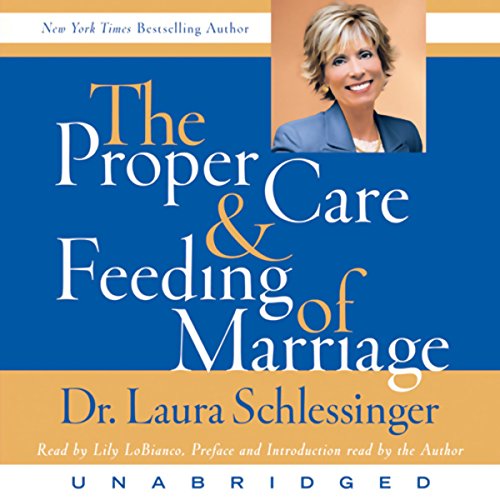
The Proper Care and Feeding of Marriage
In this long-awaited follow-up to her groundbreaking bestseller, Dr. Laura Schlessinger focuses on the need for men and women to understand and appreciate the uniqueness of masculinity and femininity; what the best ways to relate, care-take, and nurture each other are; and how to bring a marriage back from the brink of disaster.
Dr. Laura asserts that in order to produce and sustain a wonderfully satisfying marriage, spouses must recognize and appreciate the polarity between masculine and feminine.
The Jealousy Cure
The Jealousy Cure unlocks the positive power of jealousy for happy relationships.” (Foreword Reviews)
“Solid counsel for those whose relationships are plagued by jealousy and the individuals it targets.” (Library Journal)
Could jealousy be a positive thing? In this groundbreaking book, Robert L. Leahy – author of the hugely popular self-help guide, The Worry Cure – invites you to gain a greater understanding of your jealous feelings, keep jealousy from hijacking your life, and create healthier relationships.
We’ve all heard tales of the overly jealous spouse or significant other. Maybe we’ve even been that jealous person, though we may not want to admit it. It’s hard to imagine anyone sailing through life without either having feelings of jealousy or being the target of someone’s jealousy. But what if jealousy isn’t just a neurotic weakness? What if it signals that your relationship matters to you? In short – what if jealousy serves a purpose?
Men Chase, Women Choose
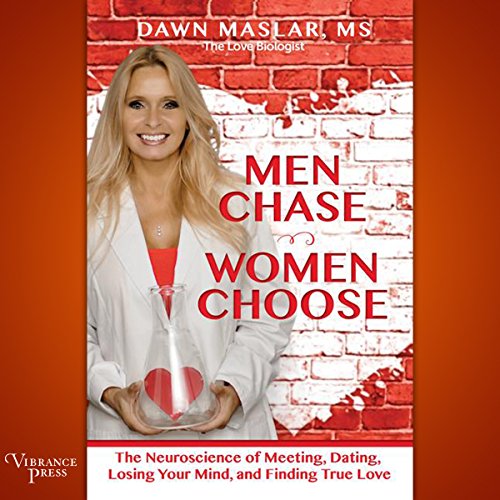
Love is one of our strongest biological drives, but it can be frustratingly elusive and misunderstood. Music, literature, and movies are filled with common folklore about love, and millions of TV viewers tune in to shows like The Bachelor and read the latest relationship tome with one simple hope: to uncover some nugget of mystic wisdom that will help them understand the exciting, addictive, insane experience called love.
Men Chase, Women Choose is the first book to offer cutting-edge research that explains how the brain works when two people first meet, start to date, fall in love, and then move into real long-term love.
Making Marriage Work
Staying happily married has become a difficult proposition in recent times. Although the institution is still firmly embedded in our culture, divorce rates have steadily climbed since the 1960s. While some marriages are truly divorce-worthy, many other broken marriages can be saved.
Recent emphasis on personal needs and greater social acceptance of divorce and alternative lifestyles may have weakened the resolve of partners to work through their problems. Furthermore, many couples may not realize that problems in their current marriages are likely to surface in other relationships. Consequently, while they may consider divorce a solution, it may in fact be only a stepping-stone to the next relationship, where patterns may repeat.