
The Evergreen Portfolio Income Audiobooks Worth Returning To (Because Real Wealth Is Built in Layers)
There’s a quiet misunderstanding when it comes to portfolio income. Most people look for the one investment, the one stream, the one move that will finally make everything click. But the audiobooks worth returning to—the ones that actually reshape how you think about wealth—tell a different story. They shift your focus away from singular wins and toward something steadier. Layers. Built over time. Each one small on its own, but together forming something resilient enough to last.
The first time you listen, it feels like strategy. Diversify. Allocate. Think long-term. But it’s not until you come back to it—after watching markets move, after making decisions that didn’t go exactly as planned—that it begins to settle into something deeper. You start to see how each layer plays its role. How patience carries more weight than precision. How consistency, applied across different areas, creates stability that no single stream ever could. These audiobooks don’t just explain portfolio income—they help you understand how to live with it.
Because real wealth isn’t built in leaps. It’s built in layers—the kind you return to, adjust, and strengthen over time. And that’s why these evergreen audiobooks matter. They give you something steady to come back to when things feel uncertain, when results feel slow, when the temptation to chase something faster starts to rise. A reminder that building income this way isn’t about doing more. It’s about doing the right things, in the right proportions, long enough for them to begin working together.
You can change your life—but not in the sudden, dramatic way it’s often imagined. It starts quieter than that. A decision made today, followed by a simple act: doing what you said you would do. Not once, but again tomorrow. And the day after that. Because action, when repeated, begins to carry its own momentum. It moves you forward in ways that thinking alone never can.
At first, it feels small. Almost too small to matter. A few days of showing up. Then a week. And somewhere around that third week, something begins to settle. The resistance softens. What once felt like effort starts to feel familiar. Not effortless—but steady enough that you don’t have to convince yourself to continue. That’s when a habit begins to take shape. Not because you forced it, but because you stayed with it long enough for it to become part of your rhythm.
And then come the hours. Quiet, steady, easy to overlook in the moment. They don’t feel like progress. They don’t feel like transformation. But they accumulate. What people call “10,000 hours” isn’t really about the number—it’s about what happens when you keep returning to something over and over again. The way it begins to shape how you think. How you respond. How you act without needing to question it. You stop chasing results and start becoming the kind of person those results belong to.
Over time, that consistency carries you somewhere new. Not all at once, but gradually. You begin to notice that the version of you who once struggled to begin now moves with a kind of quiet certainty. And one day, you realize you’ve arrived in a place that once felt distant. Not because you rushed toward it—but because you stayed long enough for it to meet you.
success.
The Intelligent Investor Revised Edition
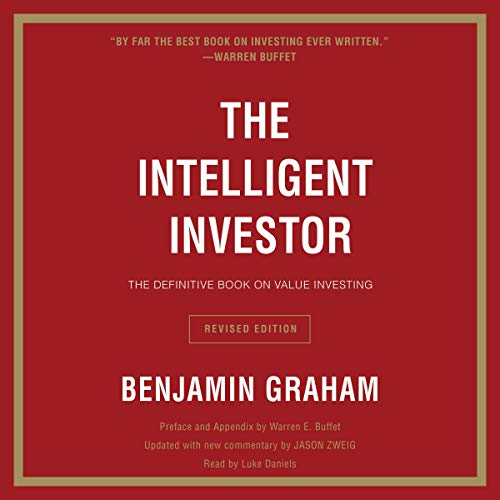
The Intelligent Investor Rev Ed
The Classic Text Annotated to Update Graham’s Timeless Wisdom for Today’s Market Conditions
The greatest investment advisor of the 20th century, Benjamin Graham taught and inspired people worldwide. Graham’s philosophy of “value investing” – which shields investors from substantial error and teaches them to develop long-term strategies – has made The Intelligent Investor the stock market Bible ever since its original publication in 1949.
Over the years, market developments have proven the wisdom of Graham’s strategies. While preserving the integrity of Graham’s original text, this revised edition includes updated commentary by noted financial journalist Jason Zweig, whose perspective incorporates the realities of today’s market, draws parallels between Graham’s examples and today’s financial headlines, and gives listeners a more thorough understanding of how to apply Graham’s principles.
The Science of Getting Rich The Classic Book
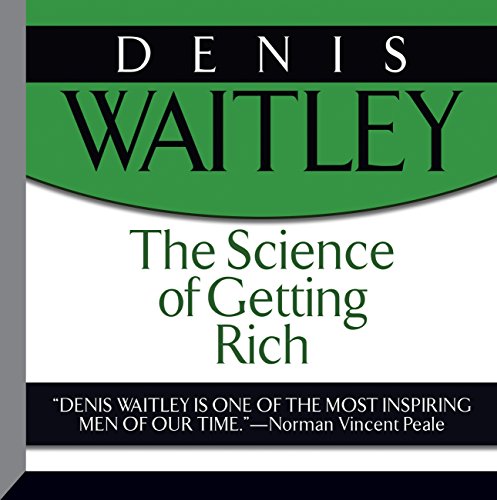
In this program, Denis Waitley narrates the classic book, written by Wallace D. Wattles in 1910, which contains the underlying philosophy of how and why to attain true wealth.
When Rhonda Byrne, creator of the global phenomenon The Secret, enlisted Denis Waitley’s participation as one of the teachers in both the video and book versions, they both discovered that Wattles’ work had profoundly influenced their own beliefs concerning fundamental laws of success, including the law of attraction, the law of increase, and the law of gratitude
The Richest Man in Babylon The Classic Book
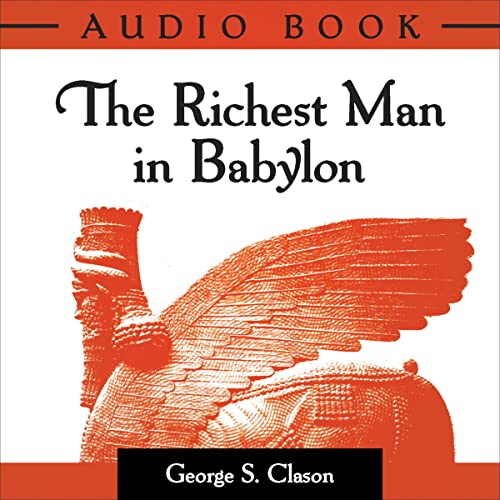
To bring your dreams and desires to fulfillment, you must be successful with money. This book shows you how to amass personal wealth by sharing the secrets of the ancient Babylonians, who were the first to discover the universal laws of prosperity.
Hailed as the greatest of all inspirational works on the subject of thrift, financial planning, and personal wealth, The Richest Man in Babylon is a timeless classic that holds the key to all you desire and everything you wish to accomplish. Through entertaining stories about the herdsmen, merchants, and tradesmen of ancient Babylon, George S. Clason provides concrete advice for creating, growing, and preserving wealth. Beloved by millions, this celebrated best seller offers an understanding of, and a solution to, your personal financial problems. This is the book that holds the secrets to keeping your money and making more.
Rich Dad Poor Dad: 20th Anniversary
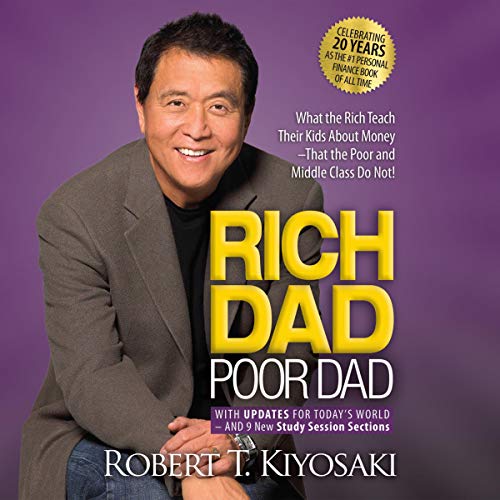
Rich Dad Poor Dad: 20th Anniversary Edition
The #1 personal finance book of all time… translated into dozens of languages and sold around the world.
Rich Dad Poor Dad is Robert’s story of growing up with two dads – his real father and the father of his best friend, his rich dad – and the ways in which both men shaped his thoughts about money and investing. The book explodes the myth that you need to earn a high income to be rich and explains the difference between working for money and having your money work for you.
20 Years… 20/20 Hindsight
In the 20th anniversary edition of this classic, Robert offers an update on what we’ve seen over the past 20 years related to money, investing, and the global economy. Sidebars throughout the book will take listeners “fast forward” – from 1997 to today – as Robert assesses how the principles taught by his rich dad have stood the test of time.
In many ways, the messages of Rich Dad Poor Dad, messages that were criticized and challenged two decades ago, are more meaningful, relevant, and important today than they were 20 years ago.
Rich Dads Cashflow Quadrant
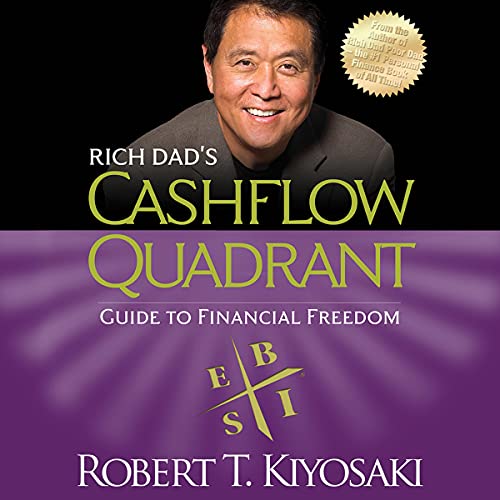
Rich Dad’s CASHFLOW Quadrant is a guide to financial freedom. It’s the second book in the Rich Dad Series and reveals how some people work less, earn more, pay less in taxes, and learn to become financially free.
CASHFLOW Quadrant was written for those who are ready to move beyond job security and enter the world of financial freedom. It’s for those who want to make significant changes in their lives and take control of their financial future.
Robert believes that the reason most people struggle financially is because they’ve spent years in school but were never taught about money. Robert’s rich dad taught him that this lack of financial education is why so many people work so hard all their lives for money…instead of learning how to make money work for them.
This book will change the way you think about jobs, careers, and owning your own business and inspire you to learn the rules of money that the rich use to build and grow their wealth.
Earl Nightingale Reads Think and Grow Rich
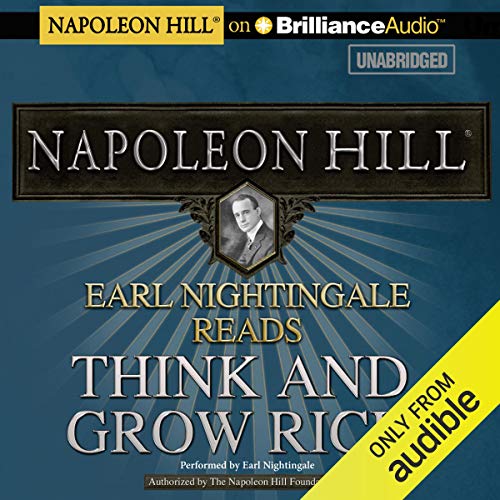
Earl Nightingale Reads Think and Grow Rich
Earl Nightingale said that he came to his “aha” moment at the age of twenty-nine while reading Napoleon Hill’s Think and Grow Rich – specifically the words “we become what we think about”. Shortly thereafter he recorded The Strangest Secret which went on to earn a gold record and became the largest selling non-entertainment recording in record industry history.
Think and Grow Rich is the standard against which all motivational books are measured. The book (and audiobook) has helped millions of people create their own success and realize their dreams. This audio condensation brings those two worlds together again – an audio lecture by famed broadcaster Earl Nightingale that clearly and quickly reviews Napoleon Hill’s classic success principles.
What an Audiobook Really Is (And Why It Changes How You Learn)
What an Audiobook Really Is (And Why It Changes How You Learn)
Most people think an audiobook is simply a book… read out loud. The same words, the same structure, just delivered through a different medium. And on the surface, that’s true. But if you spend enough time with audiobooks—if you actually return to them, listen closely, let them unfold in the background of your life—you start to notice something different happening. Something that goes beyond the format itself.
Because an audiobook isn’t just a recording.
It’s an experience shaped by how you receive it.
Reading asks for your full attention. It asks you to sit still, to focus, to give the page your time in a way that often competes with everything else in your day. And while there’s value in that, it doesn’t always fit into the rhythm of how life actually moves. Most days aren’t quiet or uninterrupted. They’re layered. Busy. Full of transitions.
Audiobooks meet you inside that reality.
They don’t require you to stop everything. They move with you. Through your commute, your walk, your routine moments that would otherwise pass without much notice. And in those moments, something subtle begins to shift. Learning is no longer something you have to carve out time for—it becomes something you carry with you.
That shift alone changes everything.
Because when learning feels accessible, you return to it more often. Not out of discipline, but because it fits. You press play without overthinking it. You listen without needing perfect conditions. And over time, those small moments begin to accumulate.
Not in a dramatic way. But steadily.
This is where the real nature of an audiobook begins to reveal itself.
It’s not just about hearing information—it’s about building a relationship with ideas over time.
When you listen, you’re not skimming. You’re not jumping between paragraphs or scanning for highlights. You’re following a voice. A pace. A flow that’s been designed to carry you through the idea step by step. And that pacing does something important—it gives your mind space to connect.
Ideas don’t just pass through you.
They settle.
You hear a concept once, and it feels interesting. You hear it again, maybe days later, and it begins to feel familiar. And somewhere along the way, it becomes something you understand—not because you memorized it, but because you’ve spent time with it.
This is how learning deepens.
Not through intensity, but through exposure.
Guide to Investing in Gold and Silver
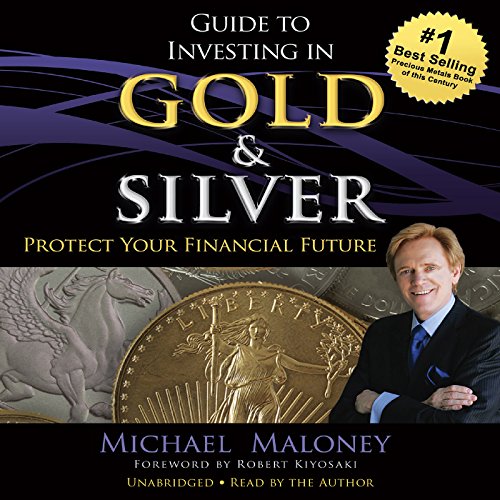
Guide to Investing in Gold and Silver
his is an updated version of the book that accurately predicted the global stock market crash of 2008, the bursting of the real estate bubble, and Ben Bernanke’s unprecedented overreaction via quantitative easing programs. First published in 2008, the book quickly became a best seller not just for its timely insight into precious metals investment but for its amazingly accurate prediction of a “roller-coaster crash” – the manipulated whipsaw between inflation, deflation, and back again. In this latest update to his book, author Michael Maloney adds his thoughts on what has played out so far, what we may be facing soon, and how gold and silver can help you transform the coming economic storm into a once-in-a-lifetime opportunity.
Beginners Basic Guide to Investing in Gold and Silver
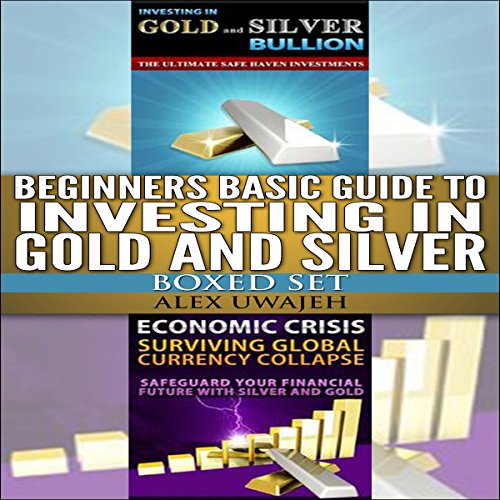
Beginners Basic Guide to Investing in Gold and Silver
Enjoy two Gold and Silver books in one bundle in the Beginners Basic Guide to Investing in Gold and Silver Boxed Set:
- Investing in Gold and Silver Bullion – The Ultimate Safe Haven Investments
- Economic Crisis: Surviving Global Currency Collapse – Safeguard Your Financial Future with Silver and Gold
The Complete Guide to Investing in Gold and Silver
The Complete Guide to Investing in Gold and Silver
here is a global economic crisis going on. The federal reserve and the central banks of the world are printing more and more money, and the United States government keeps spending more and more money.
This debases the currency, and your purchasing power is being diminished because there is too much money in circulation chasing too few goods. The end result of this madness? Inflation and rising prices. Then to add insult to injury, taxes are being raised in all sectors of the economy which further steals your wealth. So if inflation (the stealth tax), the diminishing dollar, and an increase in taxes are the enemies of your wealth, how do you defeat these treacherous enemies?
Stack Silver Get Gold: How to Buy Gold and Silver
Stack Silver Get Gold: How to Buy Gold and Silver Bullion Without Getting Ripped Off!
Stack Silver Get Gold is the only gold and silver investing book you’ll ever need because it’s written by a nationally recognized precious metals investing expert and Chicago Mercantile Exchange futures trader with 15 years of buying gold and silver bullion under his belt. He reveals all the tricks of the trade that most people in the gold and silver industry probably don’t want you to know.
How do you buy gold or buy silver without getting ripped off? How can you avoid having your gold and silver confiscated by the government? How do you start investing in gold and silver if you don’t have a ton of money to invest using a strategy called dollar cost averaging? Where do you go if you want to make a huge silver and gold investment?
You’ll discover the answers to your questions above and:

Audiobooks naturally support that process because they’re easy to return to. You can revisit a chapter while doing something else. Let it play again in the background. And each time, something new stands out. Not because the content changed—but because your perspective did.
You’re in a different place now.
And that allows the same idea to land differently.
There’s also something distinctly human about the way audiobooks deliver information. The tone of a voice. The pauses between sentences. The emphasis placed on certain words. These details carry meaning in a way that text alone often can’t. It feels less like you’re consuming content and more like you’re being guided through it.
That sense of guidance matters.
Because it keeps you engaged long enough for the idea to take hold.
In a world where attention is constantly being pulled in different directions, staying with something has become rare. Most content is designed to be consumed quickly and replaced just as fast. But the ideas that actually shape how you think don’t work that way. They need time. Space. Repetition.
Audiobooks create that environment without forcing it.
They don’t demand your full focus—but they reward your presence.
And that balance is what makes them so effective.
Over time, something begins to shift in how you approach learning altogether. You stop looking for quick takeaways and start valuing deeper understanding. You become more comfortable sitting with an idea, letting it unfold, returning to it later.
Learning becomes less about collecting information and more about integrating it.
That’s where the real change happens.
Because once an idea is integrated, it begins to influence how you think without effort. It shows up in your decisions. In how you respond to situations. In the way you interpret new information.
It becomes part of you.
And that doesn’t happen through a single exposure. It happens through repeated, consistent interaction with the same ideas over time.
Audiobooks make that kind of interaction possible.
Not by adding more to your schedule, but by working within it.
They turn idle moments into opportunities. They allow you to engage with meaningful content without needing to restructure your day. And because of that, they remove one of the biggest barriers to learning: friction.
When something is easy to start, you start more often.
When you start more often, you stay connected.
And when you stay connected, learning becomes a natural part of your life instead of something separate from it.
This is why an audiobook is more than just a different way to consume a book.
It’s a different way to experience learning itself.
One that’s less rigid, less demanding, but often more effective because of it. It doesn’t rely on perfect conditions or bursts of motivation. It relies on consistency. On presence. On the simple act of pressing play and allowing the idea to unfold.
If you step back, the appeal becomes clear.
People aren’t struggling because they don’t want to learn. They’re struggling because the way they’ve been trying to learn doesn’t fit the way they live. Audiobooks close that gap. They align learning with real life, rather than asking life to adjust around learning.
And that alignment is what makes the difference.
Because the best ideas don’t just need to be understood.
They need to be returned to.
And the formats that make that return easy—natural, even—are the ones that end up shaping you the most.
Crypto Explained: The Beginner’s Guide
Crypto Explained: The Beginner’s Guide
Cryptocurrencies have been dominating the popular financial discourse for several years now. What started as an attempt to create an alternative value storage system – opposed to widely popular paper currencies that are controlled by central banks and governments – has become a financial phenomenon worth trillions of dollars. The journey of cryptocurrency has been nothing less than remarkable. Needless to say, cryptocurrencies have become a highly popular and profitable asset class. As the popularity of cryptocurrencies continues to explode, we all want to know more and more about them. It is the single most significant groundbreaking development challenging the concepts of “money”.
Cryptocurrency: Beginners Bible
Cryptocurrency: Beginners Bible
Discover how you can make money from cryptocurrency – even if you’re a complete novice.
Between 2010 and 2017, the price of Bitcoin rose from $0.07 to over $4,000 – an increase of 5,714,190 percent!
That’s the equivalent of buying one share of Apple stock today and it being worth $9.1 million in just seven years.
But the Bitcoin ship has sailed right? Aren’t the best days of cryptocurrency over?
Think again.
In fact, there is no better time than now to get involved in the cryptocurrency market.
This year, those who bought Ethereum in January saw the price rise from $8.06 to a peak of $356 – an increase of a whopping 4,316 percent.
In the same timeframe, the SNP 500 rose a mere 10.25 percent – and that was a good year for the market.
Gold only rose 10.16 percent in the same time period.
Cryptocurrency for Beginners
Do you want to learn the basics and fundamentals of cryptocurrencies? If yes, then this audiobook is perfect for you!
Cryptocurrency has become such a popular topic that many people have started to learn about it. But, for beginners, it can be a difficult topic to understand with little to no knowledge. However, you can follow some simple steps to get you started and help you become a successful cryptocurrency investor. So, let’s get started and learn from Andrew Clemens. His audiobook is really a good resource when it comes to cryptocurrency for beginners.
Bitcoin, the most popular cryptocurrency in the world, is not only making waves, but creating trends in the industry of cryptocurrencies. As a result, the world has witnessed the rise of a number of altcoins, which have gained more popularity amongst a wider demographic. However, while most people are now aware of the existence of these alternative coins, understanding their precise details and features can be quite a daunting task. In this blog, you will be introduced to the concept of Bitcoin, its history and recent developments, the basics of Blockchain technology, as well as the opportunities that this technology has to offer in the future.
The Crypto Book: How to Invest Safely in Bitcoin
The Crypto Book: How to Invest Safely in Bitcoin
Cryptocurrencies are the biggest opportunity of your lifetime, and the crypto gold rush is only just beginning…
‘The future of money is a digital currency.’ ‘Bitcoin is a technological tour de force.’ (Bill Gates, founder of Microsoft)
Blockchain technology and the cryptocurrencies it enables are being described by some people as the biggest thing since the Internet, but very few people understand it or the opportunities it brings. Enter this down-to-earth guide to understanding what cryptocurrencies are, why it matters, and how to make money from them.
This audiobook is for everyone who has heard of bitcoin and cryptocurrencies and wants to learn more – and make money on the back of it. Believe it or not, if you bought $1,000 of Bitcoin in 2010, you would now be worth over $220m! This has left the public stunned. People around the world are asking, ‘What on earth is a crypto?’, ‘Should I buy some Bitcoin?’, ‘How do I even buy some cryptocurrencies?’, ‘Isn’t this just one big bubble?’ and more?
Take Action Today
Do You realize that your qualification that may get you a job is just a starting point and that's all? Don't make the mistake of sitting on your job for forty years while hoping you will get success because the truth is you may not ever get what you are looking for. You have to step out and build your own boat and set your own sail if you want true success. Make a decision not to be a failure in life by grabbing the opportunity with both hands and then TAKE MASSIVE ACTION. Diehard4education will help you to succeed if you remain positive in the way you think.
How to Listen to Your Audible Books (In a Way That Actually Fits Your Day)
How to Listen to Your Audible Books (In a Way That Actually Fits Your Day)
Most people think listening to an audiobook is simple. You open the app, press play, and let it run. And while that’s technically true, it misses something more important—the way you listen determines what you actually take from it. Because listening isn’t just about hearing words. It’s about how those words move through your day, and whether they stay with you long enough to matter.
The challenge isn’t access. It’s integration.
Most people try to fit audiobooks into their day the same way they would reading—setting aside time, waiting for the right moment, hoping for uninterrupted space. But life rarely cooperates in that way. The day fills up. Distractions take over. And what started as a good intention quietly gets pushed aside.
So the audiobook stays unfinished. Not because it wasn’t valuable, but because it didn’t fit.
The shift happens when you stop trying to create space for listening… and start noticing where listening already belongs.
There are moments throughout your day that don’t require your full attention. Walking from one place to another. Driving. Cleaning. Small pockets of time that usually pass without much thought. These are the moments where audiobooks begin to work differently. Not as something extra, but as something layered into what you’re already doing.
And once you begin to see those moments, listening becomes easier to return to.
Not something you have to plan—but something you naturally continue.
This is where the experience changes.
Because when listening fits into your day, it becomes consistent. And consistency is what allows ideas to settle. A few minutes here. Ten minutes there. It doesn’t feel like much in isolation, but over time, those minutes begin to accumulate into something meaningful.
Not rushed. Not overwhelming. Just steady.
There’s also a rhythm to listening that most people overlook.
You don’t have to absorb everything at once. In fact, trying to do that often makes things harder. Audiobooks aren’t meant to be rushed through like a checklist. They’re meant to unfold. To give you just enough to think about before the next idea arrives.
Sometimes that means letting a chapter sit with you longer than expected.
Sometimes it means replaying a section—not because you didn’t understand it, but because something about it felt worth hearing again.
This kind of listening is slower. But it’s also deeper.
Because understanding doesn’t come from speed. It comes from exposure. From hearing the same idea more than once, in slightly different moments, until it begins to feel familiar.
And familiarity is what turns information into something usable.
Another subtle shift happens when you stop treating listening as a passive activity.
It’s easy to let an audiobook play in the background without really engaging with it. And sometimes that’s fine. But the moments that actually stay with you—the ones that change how you think—usually come when you’re paying just a little more attention.
Not fully focused. Just present enough to notice.
How to Make Money in Stocks
Are you tired of the same old investment books where you leave still feeling like you don’t understand investing? Then, you need to keep reading…
You are about to start investing in your future!
Everything is ready. You have passion, extra capital, and a little bit of time, but you need to be educated on the how-tos. Instead of relying on the news or your friend that got the latest stock tip off of TikTok, you want to be well-versed in something as powerful and financially rewarding as this can be.
Don’t panic, it’s not too late. If you invest the right way, you can earn significant profits and put a nest egg away for your family or yourself.
A Beginner's Guide to the Stock Market
A Beginner’s Guide to the Stock Market
Learn to make money in the stock market, even if you’ve never traded before.
The stock market is the greatest opportunity machine ever created.
Are you ready to get your piece of it?
This book will teach you everything that you need to know to start making money in the stock market today.
Don’t gamble with your hard-earned money.
If you are going to make a lot of money, you need to know how the stock market really works.
You need to avoid the pitfalls and costly mistakes that beginners make. And you need time-tested trading and investing strategies that actually work.
This book gives you everything that you will need. It’s a simple road map that anyone can follow.
A Beginner's Guide to Dividend Stock Investing
A Beginner’s Guide to Dividend Stock Investing
Want to learn how to start really growing your money and gain long-term financial freedom? Keep reading to learn more and get an awesome freebie!
When expert dividend stock investor James Pattersenn, Jr., started his stock investment journey, he wasn’t quite sure where to start, either. By going into the investment world head-on, James has gleaned numerous valuable insights from both his good and bad experiences.
One of the great lessons of his investment career is that dividend stock investing, by far, offers the commonsense approach to building wealth and achieving financial freedom. Dividend stock investing is one of the simplest and safest ways to invest your money…and he highly recommends it to anyone, especially those looking to get started.
Today, he’s sharing all of his most powerful insights with you – plus awesome freebies from the investment greats!
Dividend Investing Made Easy
Ready to start finally building wealth for your family? Interested in the stock market, but don’t know where to begin? Dividend investing is a time-tested investment strategy that actually works.
It’s simple. It’s powerful. And anyone can do it, even if you know nothing at all about the stock market.
When you own dividend stocks, your money is working for you whether you are at the office, or at the beach. Imagine how your life would change, if you knew that you were on the proven path to wealth. It’s time to learn how to create safe income streams in the stock market.
Dividend investing is something that anyone can do. You can start with just a few dollars, and then watch them grow. It’s time to learn a proven strategy that takes the stress out of investing.

A sentence that stands out. A concept that feels relevant. A thought that lingers after the audio moves on.
When that happens, it’s worth pausing.
Letting the idea settle. Maybe even coming back to it later.
Because those moments are where the real value is.
Not in finishing the book, but in what you carry from it.
There’s also something to be said for returning.
Most people listen once and move on. But the audiobooks that actually shape you are the ones you revisit. Not immediately, but over time. When you’re in a different place. When your perspective has shifted just enough to hear the same idea differently.
And when you return, you realize something.
You didn’t miss it the first time.
You just weren’t ready for it yet.
This is what makes audiobooks so powerful when they’re used well. They grow with you. The same content can offer something new, simply because you’re seeing it through a different lens.
But none of this works if listening feels like a task.
If it becomes something you have to force into your day, it loses its rhythm. It starts to feel like another obligation. And once that happens, it’s easy to stop altogether.
That’s why the goal isn’t to listen more.
It’s to listen in a way that feels natural.
To let audiobooks become part of your environment, rather than something separate from it. A steady presence in the background of your day. Something you return to without resistance.
Because the easier it is to return, the more often you will.
And the more often you return, the more the ideas begin to stay with you.
Over time, something begins to shift.
You start thinking differently. Not in a dramatic way, but in small, steady adjustments. You connect ideas more easily. You notice patterns you might have missed before. You make decisions with a little more clarity.
And it doesn’t feel like effort.
It feels like a natural extension of the time you’ve spent listening.
This is the real purpose of an audiobook.
Not just to be heard, but to be carried.
To move with you through your day, shaping how you think in ways that aren’t always obvious in the moment. And when you listen in a way that fits your life, that process becomes almost effortless.
You’re not trying to learn.
You’re simply staying connected to something that helps you think better.
And over time, that connection becomes something you rely on.
Not because you have to—but because it works.
Journey Towards Early Retirement
Journey Towards Early Retirement Through Real Estate Investing
How to make enough passive income from your properties to retire in 10 years, even if you have zero investments today.
Do you want to shorten your years working a nine-to-five job and increase the years you’ll spend doing what you love, while you can still do it?
Traditional wisdom advises us to keep toiling, scrimping, and saving until we finally reach the retirement age of 60, after which we can live off what we’ve saved and hope we die before it runs out.
But what if you can hustle more today, so you don’t have to wait until you’re a senior citizen to enjoy life’s freedoms?
What if you can continue making money in retirement so that you can afford to leave a significant nest egg for your children?
Real estate is lauded by many financial experts as a key to building wealth. It’s a reliable means of beating inflation, a tangible investment that can be leveraged and can exponentially increase its value through capital appreciation.
One of the best benefits of real estate is its income-producing opportunities. There are a lot of ways real estate can make you money, from flipping, rentals, and more.
Commercial Real Estate: Journey Towards Freedom
Commercial Real Estate: Journey Towards Financial Freedom
Power up your investment portfolio and earn more than you ever thought possible.
Have you been investing for a while but wish it could give you better returns?
Are you looking to expand your portfolio beyond stocks and bonds?
Do you want to invest in a stable, yet high-return market?
If so, commercial real estate may make a good addition to your portfolio.
Commercial real estate may seem like something only institutional investors or millionaires get into.
Yes, they cost a lot more than single-family residential properties, but they also give you the opportunity to make a lot more.
According to the National Council of Real Estate Investment Fiduciaries (NCREIF) Property Index, commercial real estate has made an average of 12.7% annually over the past 15 years compared to 8.8% in the S&P 500.
And you don’t have to be a millionaire to get involved in commercial real estate. There are a variety of ways you can get financing, without getting yourself into millions of dollars in debt.
Although there are risks to any investment, with commercial real estate, your risk is cushioned by multiple and better-quality tenants and longer-term leases.
Real Estate Investing: The Ultimate Beginner’s Guide
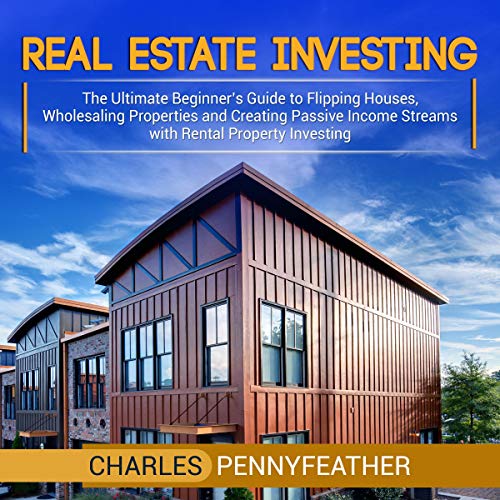
Real Estate Investing: The Ultimate Beginner’s Guide
If you want to get started with real estate investing, then pay attention….
Two manuscripts in one audiobook:
- Real Estate Investing: An Essential Guide to Flipping Houses, Wholesaling Properties, and Building a Rental Property Empire, Including Tips for Finding Quick Profit Deals and Passive Income Assets
- Rental Property Investing: Unlock the Secrets of Real Estate Investing and Management, Including Tips on Negotiation and Finding Investment Properties that Will Give You Passive Long-term Income
The Real Book of Real Estate: Real Experts
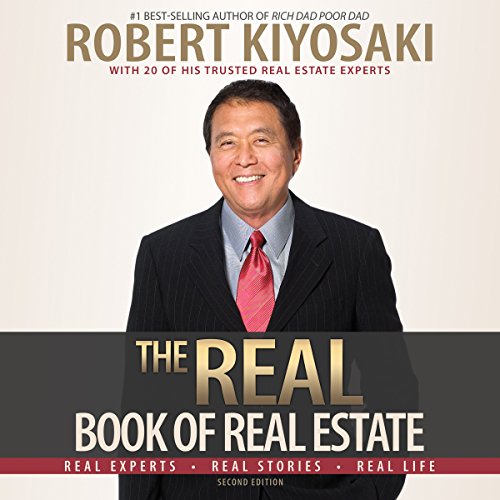
The Real Book of Real Estate: Real Experts
In a world where too many financial advisors do not follow their own advice, here is a book written by experts who practice what they teach and who will teach you to thrive, not merely survive, during turbulent economic times. This is the real deal…The Real Book of Real Estate.
The only thing better than one real estate expert teaching you how to invest and win is 20 real estate experts with that same mission. For the first time ever, Robert Kiyosaki, bestselling author of Rich Dad Poor Dad, has assembled in one book an unrivaled cast of real estate wizards and trusted advisors with one purpose in mind: to share their knowledge and teach you to win in real estate.
This is the ultimate real estate book you will come back to again and again. Read it cover to cover, or use it as a guide to help when you need it most. The Real Book of Real Estate will be your #1 source as you determine the real estate niche that is perfect for you and as you navigate the ups and downs of the real estate market and become the expert you know you can be.

Are You Ready for Opportunity?
If you are ready for an opportunity which means you are looking to ACT Now then you are in the right place to find something that resonates with you so you can decide to ACT NOW.
Step by Step Bond Investing - A Beginner's Guide
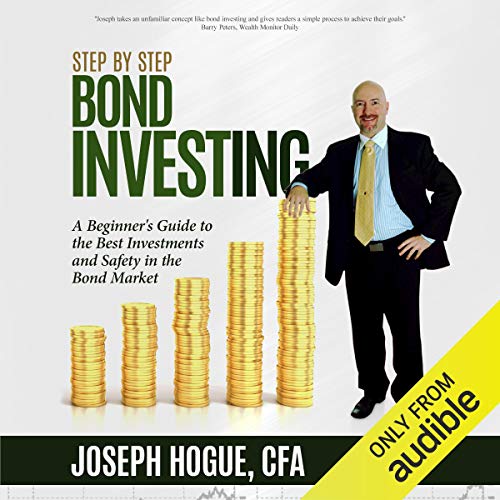
Step by Step Bond Investing – A Beginner’s Guide
Of all the opportunities to invest and make money, bond investing is likely one of the most neglected. Stocks are the get-rich investment, hyped by Wall Street and favored by investors. Commodities are widely used to hedge risk and to gamble on price changes. Even real estate is more widely held for its cash flow and other benefits.
According to research by fund manager Vanguard, the average investor holds just 15 percent of their portfolio in bonds. Since older investors typically hold much more of their investments in fixed-income, it’s safe to assume that many younger investors are neglecting bond investment altogether.
What you might not realize is that bonds are critical to reaching your financial goals. No other investment provides the kind of safety and security you’ll get from bonds, and few other investments provide the kind of cash flow you’ll get from these fixed-income opportunities.
Bond Investing for Dummies: 2nd Edition
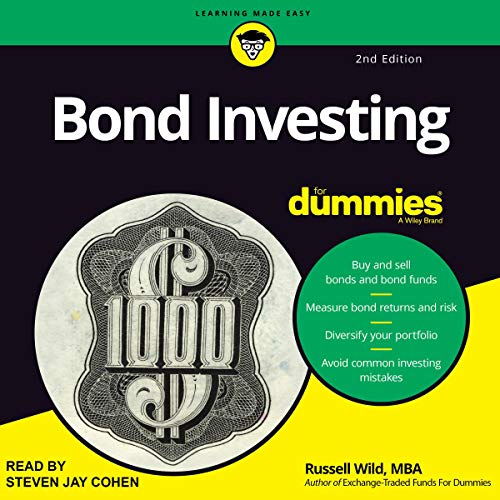
Bond Investing for Dummies: 2nd Edition
our friendly guide to trading the bond and bond-fund market.
Bonds and bond funds are among the safest and most reliable investments you can make to ensure an ample and dependable retirement income – if you do it right! Bond Investing for Dummies helps you do just that, with clear explanations of everything you need to know to build a diversified bond portfolio that will be there when you need it no matter what happens in the stock market.
This plain-English guide clearly explains the pros and cons of investing in bonds, how they differ from stocks, and the best (and worst!) ways to select and purchase bonds for your needs. You’ll get up to speed on the different bond varieties and see how to get the best prices when you sell.
The Bond King: How One Man Made a Market
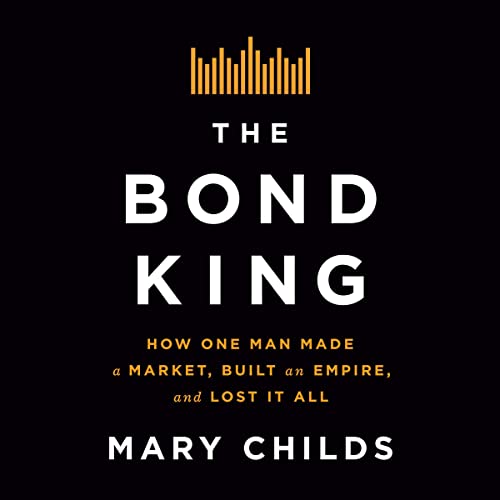
The Bond King: How One Man Made a Market
This program is read by the author.
From the host of NPR’s Planet Money, the deeply investigated story of how one visionary, ruthless investor changed American finance forever.
Before Bill Gross was known among investors as the Bond King, he was a gambler. In 1966, a fresh college grad, he went to Vegas armed with his net worth ($200) and a knack for counting cards. Ten thousand dollars and countless casino bans later, he was hooked, so he enrolled in business school.
The Bond King is the story of how that whiz kid made American finance his casino. Over the course of decades, Bill Gross turned the sleepy bond market into a destabilized game of high risk, high reward; founded Pimco, one of today’s most powerful, secretive, and cutthroat investment firms; helped to reshape our financial system in the aftermath of the Great Recession – to his own advantage;
Winning the Loser's Game: Timeless Strategies
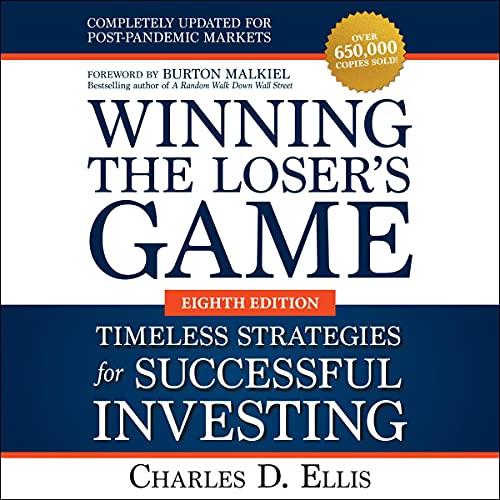
Winning the Loser’s Game: Timeless Strategies
Technology, information overload, and increasing market dominance by expert investors and computers make it harder than ever to produce investing results that overcome operating costs and fees. Winning the Loser’s Game reveals everything you need to know to reduce costs, fees, and taxes, and focus on long-term policies that are right for you.
Candid, short, and accessible, Winning the Loser’s Game walks you through the process of developing and implementing a powerful investing strategy that generates solid profits year after year. In this eagerly awaited new edition, Charles D. Ellis applies the expertise developed over his long, illustrious career. This updated edition includes new chapters on bond investing, how investor behavior affects returns, and how technology and big data are challenging traditional investment decisions; new research and evidence supporting the case for indexing investment operations; and new insights into the role of governance, developing a comprehensive saving strategy, and the power of regression to the mean.