
You Don’t Need More Living Alone Books, You Need, Ones That Actually Stay With You
You don’t need more living alone books filling space with ideas that feel useful for a moment and then quietly fade. There is a difference between something that keeps you company while you read and something that stays with you when the room is quiet again. Many books offer advice, routines, and reflections that feel comforting at first, but lose their place once the initial feeling passes. They speak to the moment, but not always to what continues after it. The ones that matter are built differently. They focus on what can be carried, what can be returned to, and what still makes sense when the experience of being alone becomes part of your everyday life.
That’s where their value begins to deepen. Not in how much they say, but in how long they remain useful. When a book meets you in a way that feels steady and clear, it becomes more than something you read once. It becomes something you return to—not because it’s new, but because it still fits. And over time, that quiet familiarity builds something that holds. Because the right books don’t just fill the space around you—they shape how you move within it, long after the last page has been turned.
Change rarely begins with a moment that feels as significant as it sounds. The decision itself is quiet. It marks a beginning, but it does not carry you very far on its own. What shapes the outcome is what follows—what you choose to do after the intention fades and the work becomes simple, repetitive, and easy to overlook.
At the beginning, there is a sense of clarity. The early days feel directed. The first few weeks begin to form something that resembles progress. But over time, that experience settles into something more familiar. The effort becomes ordinary. The results take longer to appear than expected. And what you are building does not yet reflect the time you have given it. This is where many people step away—not because they cannot continue, but because it no longer feels the way they thought it would.
But when you remain with it, something begins to form that is steadier than motivation.
Rhythm.
Not something forced, but something developed through repetition. The same actions, returned to without resistance, begin to settle into how you operate. They require less thought, less effort to begin. They become part of your movement rather than something separate from it.
And over time, that repetition begins to layer.
Quietly.
Each step supports the next. Each small action makes it easier to return again. There is no single moment where everything shifts, no clear point where progress becomes obvious. But gradually, what once felt out of reach begins to come within range. Not because you chased it directly, but because you continued long enough for your actions to take shape.
And from that point, what you have built no longer depends on how you feel in the moment.
It continues because you do.
Steady. Grounded. Real.
I'm Single, Not Dead!
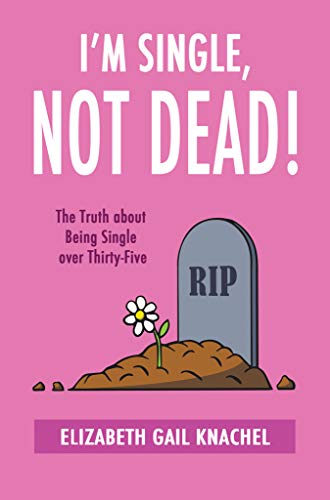
You’ve been told, “Don’t worry, you will meet him when you least expect it,” so often it makes you sick. You’ve been on every dating site imaginable for the past decade without a relationship to show for it. All your married friends have forgotten you exist, and you’re pretty sure your family has given up on you ever finding Mr. Right. Welcome to being single over thirty-five! “I’m Single, Not Dead!” is a very raw, very real look at being single over thirty-five, addressing the fears, pressures, emotions, and everything in between that comes with being single when most have moved on with their lives. Told from a single woman’s perspective, this is the truth about being single exposed!
What they don't tell you about being single

What they don’t tell you about being single
When will you marry?
Why are you still single?
Are you sure you are not being too choosy?
If they keep asking you those questions, this book might just be for you. Perhaps you have found yourself in a ‘situation instead of a relationship, or been friend-zoned, or wondered how you could hear God clearly about your relationships? I certainly have. In this book, I share my journey as a single woman and some of the challenges I have faced as a Christian, millennial twenty-something, with practical, Godly solutions. It has humor, reality, and painful realizations. I pray it helps you reflect on your own journey and ask yourself some honest questions.
About the Art of Being Alone & Single
About the Art of Being Alone & Single
Do you constantly need people to be around you to feel fulfilled and satisfied?
Do you feel empty when you have no partner?
Do you look for people and lovers to feel loved, wanted, and “enough” although they later turn out to be the wrong choice?
Are you constantly waiting for someone, hoping that this person will spend time with you?
Do you (unconsciously) attract toxic, egotistic, and narcissistic people?
Going It Alone
Going It Alone
A Living Alone Video Isn’t About Help, It’s About What It Helps You See
There is a quiet assumption behind most living alone videos. They are created to help. To guide, to support, to offer something practical that makes the experience easier to navigate. And while that intention is genuine, it often places the focus in the wrong place. Because help, on its own, is temporary. It addresses a moment, a need, a situation that feels immediate. But once that moment passes, the effect of that help often fades with it.
This is where the understanding begins to shift.
A living alone video isn’t about help.
It’s about what it helps you see.
Because seeing changes how you move.
Not just in one moment, but in every moment that follows.
When you live alone, much of the experience is not shaped by what you do, but by how you interpret what you’re doing. The same space can feel calm or empty. The same routine can feel freeing or repetitive. The same silence can feel peaceful or isolating. And these shifts do not come from external change. They come from perception.
This is why what you see matters more than what you’re told.
A video that simply offers advice may give you something to do, but it does not always change how you understand your situation. It can provide structure, but it may not create clarity. And without clarity, the experience remains dependent on how you feel in the moment.
But when something helps you see differently, it begins to change the experience itself.
It doesn’t add more.
It reveals what is already there.
This is where the real value begins.
A living alone video that works does not try to solve everything. It does not attempt to fill every gap or answer every question. Instead, it brings attention to what often goes unnoticed. It highlights the patterns, the perspectives, the small details that shape how the experience is felt.
And once those things are seen, they cannot be unseen.
This is what creates a lasting shift.
Because when you begin to see your environment differently, your relationship with it changes. What once felt like something to manage becomes something to understand. What once felt uncertain begins to take on structure. And that structure creates a sense of steadiness that does not rely on constant input.
This is the difference between guidance and awareness.
Guidance tells you what to do.
Awareness shows you what is happening.
And when you understand what is happening, your actions begin to align naturally with that understanding.
This is where the experience of living alone begins to settle.
Not because it becomes easier in a direct way, but because it becomes clearer.
Clarity removes the need to constantly search for solutions. It reduces the tension that comes from uncertainty. And it allows you to move through your space in a way that feels more natural, more grounded, more consistent.
This is what a video should create.
Not dependency, but recognition.
od.

ecause when you recognize something for what it is, you no longer need to rely on external input to navigate it. You begin to trust your own understanding. You begin to respond rather than react. And over time, that shift creates something that holds.
This is where many people begin to notice a change.
Not in their circumstances, but in how those circumstances feel.
The same environment.
The same routines.
The same space.
But experienced differently.
Because what has changed is not what is around them.
It is how they see it.
This is the quiet strength of perspective.
It does not force change.
It allows it.
And that is why a living alone video should not focus on helping in the traditional sense. Because help, when it is temporary, creates a cycle of needing more help. It solves the moment, but does not change the pattern.
But when something helps you see, it changes the pattern itself.
It shifts the way you interpret your environment, your routines, your time. And once that shift takes place, the need for constant guidance begins to fade. You are no longer looking for answers in the same way, because you understand what you are experiencing more clearly.
This is what creates independence.
Not the absence of support, but the presence of understanding.
And that understanding becomes something you carry with you.
It does not disappear when the video ends.
It continues.
It shapes your decisions.
It influences your actions.
It becomes part of how you move through your day.
This is where the real impact of a video is found.
Not in the moment it is watched.
But in the perspective it creates.
Because perspective continues.
It builds.
It evolves.
It becomes something that stays with you long after the initial experience has passed.
This is why fewer videos that create clarity can do more than many that simply provide advice.
Because clarity does not need to be repeated in the same way.
Once you see it, it becomes part of how you think.
Part of how you respond.
Part of how you understand your own experience.
And over time, that understanding becomes something steady.
Something that does not depend on how you feel in the moment.
Something that allows you to move forward with a sense of direction that comes from within.
In the end, a living alone video is not about help.
It is about what it helps you see.
Because what you see shapes how you experience everything that follows.
And when you begin to see clearly, the need for constant guidance begins to fade.
Not because you have less to navigate.
But because you understand it more fully.
And that understanding is what allows the experience to become something you can move through with confidence.
Quietly.
Naturally.
Without needing to change everything around you to feel at ease within it.
How to Be Single and Happy
Single, less stressed, and free
If you’re tired of swiping through dating apps, ghosting, and hearing well-meaning questions about why you’re still single, it’s hard not to feel “less-than” because you haven’t found your soul mate.
Until now.
How to Be Single and Happy is an empowering, compassionate guide to stop overanalyzing romantic encounters, get over regrets or guilt about past relationships, and identify what you want and need in a partner. But this isn’t just another dating book. Drawing on her extensive expertise as a clinical psychologist, as well as the latest research, hundreds of patient interviews, and key principles in positive psychology, Dr. Jennifer Taitz challenges the most common myths about women and love (like the advice to play hard to get). And while she teaches how to skillfully date, she’ll also help you cultivate the mindset, values, and connections that ensure you’ll live your best, happiest life, whether single or coupled up.
Single On Purpose
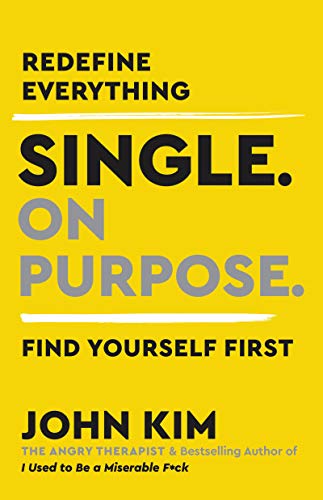
The author of I Used to Be a Miserable F*ck, The Angry Therapist, now teaches you how to prioritize your relationship with yourself and live a more meaningful life, whether you’re alone, dating, or with a partner.
There’s more to life than loving someone. But being single can feel like a death sentence. Why does being alone = being lonely? And why do we stop working on ourselves when we’re in a relationship?
Status Single
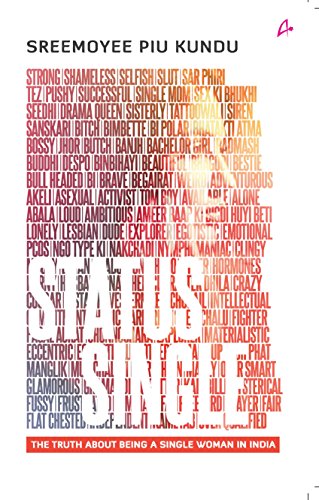
Marriage. It’s the obvious path for every girl in India. It’s supposed to define us, shape us, and give meaning to our life. But does it, really? Figures show that nearly 74.1 million women in India are either divorced, separated, widowed, or have never been married. And the number is on the rise. In what promises to be a path-breaking work on female identity, Sreemoyee Piu Kundu, a proud-to-be-single woman herself, spills the beans on what it is like being over 30 and unattached in India, through her own compelling story and the chequered lives and journeys of nearly 3,000 urban single Indian women from all walks of life.
A Single Revolution
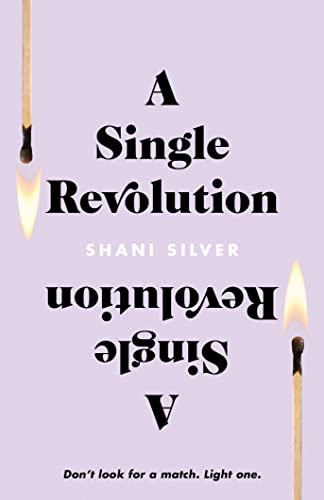
Shani Silver is not an advocate for singlehood. She’s an advocate for single women feeling good while single—and there’s a difference.
A Single Revolution is one book for single women that won’t approach you like you’re unfinished. It’s for those who are exhausted, frustrated, confused, or angry—who want relationships but don’t deserve to be miserable in the meantime.
Take Action Today
Do You realize that your qualification that may get you a job is just a starting point and that's all? Don't make the mistake of sitting on your job for forty years while hoping you will get success because the truth is you may not ever get what you are looking for. You have to step out and build your own boat and set your own sail if you want true success. Make a decision not to be a failure in life by grabbing the opportunity with both hands and then TAKE MASSIVE ACTION. Diehard4education will help you to succeed if you remain positive in the way you think.
Living Alone Videos Aren’t About Tips, They’re About What You Begin to See
There is a common way living alone videos are approached. They are built around tips. Small pieces of advice designed to make the experience easier, more manageable, more efficient. How to organize your space. How to structure your day. How to handle the quiet. And while these things can be useful, they rarely reach the part of the experience that actually shapes how it feels.
Because living alone is not defined by what you do.
It is defined by how you see it.
This is where the shift begins.
Living alone videos aren’t about tips.
They’re about what you begin to see.
Tips exist at the surface. They offer direction for specific situations. They solve immediate problems. But once the situation changes, the tip loses its relevance. It applies for a moment, and then it fades. And when the experience itself remains unchanged, the need for more tips continues.
This creates a cycle.
More advice.
More adjustments.
More attempts to manage something that has not yet been understood.
But when something helps you see differently, the cycle begins to break.
Because seeing changes how you move.
Not just once, but consistently.
When you live alone, the environment is constant. The space does not change unless you change it. The routines are yours to create. The silence is something you encounter regularly. And within that consistency, perception becomes the most influential factor.
The same room can feel open or empty.
The same routine can feel grounding or repetitive.
The same quiet can feel peaceful or isolating.
And none of those differences come from the environment itself.
They come from how it is seen.
This is why perspective matters more than instruction.
A video that offers tips may guide your actions, but it does not always change your understanding. It tells you what to do, but not how to interpret what you are experiencing. And without that shift in interpretation, the experience remains dependent on how you feel in the moment.
But when a video helps you see something you had not noticed before, it creates a different kind of change.
It reveals.
It brings attention to what was already there.
It shows patterns, connections, and perspectives that quietly shape your experience without being fully recognized.
And once something is seen clearly, it becomes part of how you think.
This is what gives it lasting value.
Because you do not need to be reminded of what you can already see.
It stays with you.
This is where living alone begins to feel different.
Not because the circumstances have changed, but because your relationship with them has.
What once felt uncertain begins to take form.
What once felt like something to manage becomes something to understand.
And understanding creates steadiness.
This is the point where the experience begins to settle.
Not through effort, but through clarity.
Because clarity removes the need to constantly fix what you are feeling. It reduces the need to search for answers in every moment. And it allows you to move through your day without needing to adjust everything to feel at ease.
This is what a video should create.
Not dependence, but recognition.
Because when you recognize something, you begin to trust your own understanding of it. You begin to respond naturally, rather than react based on uncertainty. And over time, that shift becomes something you rely on.
This is where many people notice a quiet change.
The same environment.
The same space.
The same routines.
But experienced differently.
Because what has changed is not what is around them.
It is what they see.
This is why fewer videos that create clarity can often do more than many that offer advice.
Because advice needs to be remembered.
Clarity does not.
Once something makes sense, it becomes part of how you think. It shapes your decisions without needing to be repeated. It influences how you move through your day without needing to be reintroduced.
And over time, that influence becomes something steady.
Something that does not depend on how you feel in the moment.
Something that allows you to move forward with a sense of ease that comes from understanding rather than effort.
This is the quiet strength of seeing clearly.
It does not force change.
It allows it.
And that is why living alone videos should not be built around tips.
Because tips address the surface.
They adjust the experience without changing how it is understood.
But when a video helps you see, it changes the experience itself.
It shifts how you interpret your space, your time, your routines.
And once that shift takes place, the need for constant adjustment begins to fade.
Because you are no longer trying to fix what you do not understand.
You are moving through something you can see clearly.
In the end, living alone is not something that needs to be solved.
It is something that needs to be understood.
And understanding begins with seeing.
Not more.
But more clearly.
Because when you begin to see clearly, everything that follows begins to settle into place.
Quietly.
Naturally.
In a way that does not need to be forced to continue.
Single: A Four Year Introspection
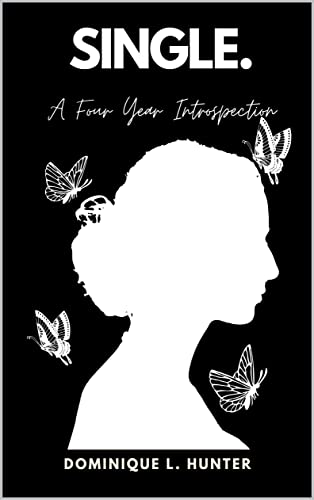
Single: A Four-Year Introspection
For the longest time, Dominique has been dealing with the ups and downs of her love life and never seems to know why. After dealing with an emotionally abusive ex and a short fling afterward, Dominique decides to take a hiatus from dating and during that time was forced to take a long look at herself and her past relationships. She writes her most personal feelings from her journal and realizes that she may have been the problem.
How to Be Single
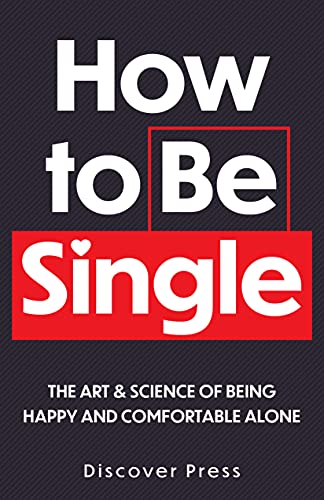
Discover the Best Way To Take Care Of Yourself and Show Yourself Love and Kindness You Deserve – Learn How To Be Happy and Comfortable Alone!
So, you’re single. Maybe you always have been; maybe being single is new for you. Either way, the good news is, that you’re not alone!
There are countless people trying to navigate being single and all the feelings and experiences that go along with it. Yet, no matter how many single people there are in the world, society still has this idea that you need someone else in your life to be truly happy.
FLASH NEWS, you don’t – you can be perfectly happy alone, and this book will show you how!
SINGLE?: How to live your best life being single

SINGLE?: How to live your best life being single
Are you single? Or you are confused if you can be happy without a partner?
As “Being single is just a status, not destiny” we can have a happy life even if you’re in a single state and if you have been learning all the way to be happy and also shining your aura in life. When you are happy, you are going to control all the things in your life and everyone will notice your happy aura too.
Being single is a word, not a dead end. So prepare your mind to live well and be happy. This isn’t a book about dating. It’s a book about living.
BEING SINGLE Why Are You Single?

BEING SINGLE Why Are You Single?
Being single is one of the hardest things to live with especially when you have friends who are in relationships. If you want to know why? then these are the main reasons behind it.

Tips For Living Alone
Living alone is often introduced as a set of practical adjustments. You learn how to organize your space, how to manage your time, how to take care of things without relying on anyone else. These are useful on the surface, and they help you settle into the experience. But over time, something becomes clear. Living alone is not shaped by the tips you collect. It is shaped by how you begin to move within the space you’ve created.
At the beginning, everything feels intentional. The decisions you make about your environment carry weight. Where things go, how your day is structured, how you fill the time that used to be shared. There is a sense of direction in those early days, a feeling that you are building something new. But as that phase passes, the experience begins to settle. The routines repeat. The quiet becomes familiar. And what once felt like a series of deliberate choices becomes something more ordinary.
This is where many people begin to look for more guidance.
More tips.
More ways to improve what they are doing.
But the shift that matters most does not come from adding more.
It comes from understanding what already exists.
Because living alone is not something that needs to be constantly adjusted. It is something that begins to take shape through repetition. The same actions, returned to without resistance, begin to form a rhythm. And that rhythm becomes the structure that supports everything else.
This is why the most useful approach is not to focus on doing more, but on seeing more clearly.
When you see how your day naturally unfolds, you begin to work with it instead of trying to control it. You notice where your energy rises and falls. You see which routines feel steady and which ones feel forced. And in that awareness, small adjustments begin to make sense without needing to be imposed.
This is where living alone becomes less about effort and more about alignment.
You start to arrange your space in a way that reflects how you actually live, not how you think you should. You simplify what doesn’t need to be complicated. You allow your environment to support you rather than expecting it to change how you feel.
And over time, this creates something that holds.
Not because everything is perfect, but because everything fits.
This is also where the experience of quiet begins to change. At first, it can feel like something that needs to be filled. A gap that needs to be addressed. But when you begin to understand it differently, it becomes something else entirely. Not empty, but open. Not something to avoid, but something that allows you to move without distraction.
This shift does not happen all at once.
It develops gradually.
Through the same patterns, the same routines, the same moments that repeat each day. And as those moments layer over time, they begin to create a sense of familiarity that does not need to be questioned.
This is where confidence begins to form.
Not through control, but through consistency.
You begin to trust the way you move through your space. You no longer feel the need to adjust everything to make it work. You recognize what works because you’ve stayed with it long enough to see it clearly.
This is why the most valuable “tips” are often the simplest.
Not because they are new, but because they can be returned to.
Keeping your space clear enough that it supports your movement.
Allowing your routines to form naturally rather than forcing them into place.
Giving yourself time to settle into what you’ve created instead of constantly changing it.
These are not dramatic changes.
They are small, steady decisions that become part of how you live.
And over time, they begin to build something that does not need to be rebuilt.
This is where living alone begins to feel different.
Not because the environment has changed, but because your relationship with it has.
The same space.
The same routines.
The same quiet.
But experienced with a sense of ease that comes from understanding.
Because once you understand how something works, you no longer need to manage it in the same way. You move through it with a sense of familiarity that removes the need for constant adjustment.
This is the quiet strength of living alone.
It does not rely on complexity.
It does not require constant input.
It develops through repetition, through awareness, through the willingness to stay with something long enough for it to take shape.
And that shape becomes your rhythm.
Something you return to without thinking.
Something that continues without needing to be restarted.
In the end, living alone is not something that needs to be solved through a collection of tips.
It is something that becomes clear over time.
Through the actions you repeat.
Through the space you create.
Through the way you choose to move within it.
Because what matters is not how much you know about living alone.
It is how you begin to live it.
And when you stay with that long enough, the experience becomes something that fits.
Quietly.
Naturally.
In a way that does not need to be forced to continue.
The Art of Living Alone
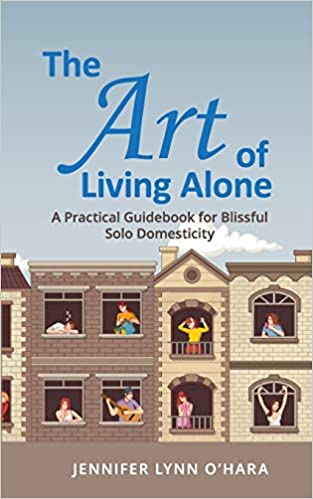
The number of unmarried people is higher today than at any time in modern history, and many of those people are choosing to live alone. Yet there are surprisingly few resources geared toward helping singletons thrive in a world still geared towards couples and families. In The Art of Living Alone, Jennifer Lynn O’Hara shares what she’s learned from nearly 20 years of living alone. She also draws on advice from friends, subject matter experts, and research data to provide a practical guidebook to help singles live their best lives in blissful solo domesticity.
The Art Of Living Alone: A Practical Guide
The Art Of Living Alone: A Practical Guide For Lonely & Bored Souls
f you aren’t depressed, but even more so if you are, this book is for you.
Take a fascinating journey into the depths of the mind, learn the techniques to banish negative thoughts and emotions, and choose to live a happy life.
Happiness is not a mystery, it has been scientifically researched for over 100 years, and even more so for the past 40 years, thanks in great part to the invention of the NMRI scanner, allowing scientists to look into the brain without having to poke into it.
Honjok: The art of living alone
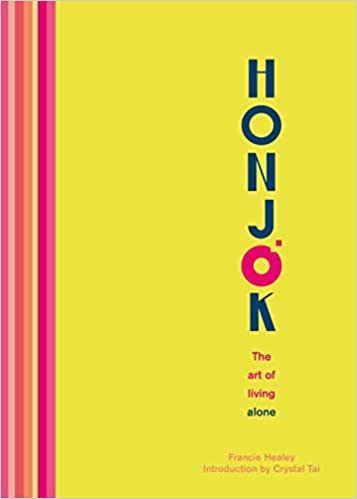
Honjok: The art of living alone
Honjok reflects on ideas of the self, introspection, self-esteem, self-worth, and fulfillment. Giving practical, psychological, and inspirational support, this book will help those embarking on their solo adventure to embrace solitude and independence with confidence.
Honjok is the South Korean term for loners and for those who undertake activities alone. Living and being alone is a growing, global phenomenon fed in part by the isolation that social media and technology can bring and by more people opting to remain single.
Living Alone and Loving It
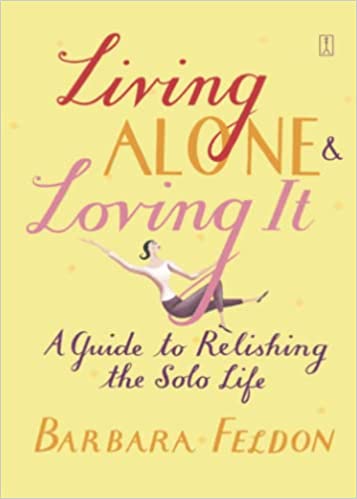
From a celebrity author who really walks the walk, Living Alone and Loving It is at once a celebration of living alone in a society that exalts marriage and family, and a prescriptive guide that shows the reader how truly to relish a life that does not include a partner.
After a relationship impasse, Barbara Feldon–universally known as the effervescent spy 99 on Get Smart–found herself living alone. Little did she know that this time would become one of the most enriching and joyous periods of her life.

Are You Ready for Opportunity?
If you are ready for an opportunity which means you are looking to ACT Now then you are in the right place to find something that resonates with you so you can decide to ACT NOW.
On My Own
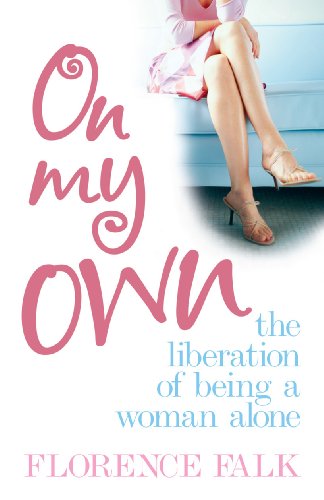
t some point over the course of the average American woman’s life, she will find herself alone, whether she is divorced, widowed, single, or in a loveless, isolating relationship. And when that time comes, it is likely that she will be at a loss as to how to handle it. As a society, we have an unspoken but omnipresent belief that a woman alone is an outcast, inherently flawed in some way. In this invigorating, supportive book, psychotherapist Florence Falk aims to take the fear, doubt, confusion, and helplessness out of being a woman alone. Falk invites all women to find their own paths toward an authentic selfhood, to discover the pleasures and riches of solitude, and to reconnect with others through a newfound sense of self-confidence.
ALONE BUT NOT LONELY
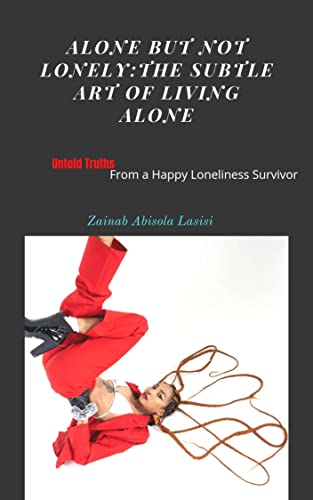
Are you tired of feeling lonely? Do you want to learn how to live alone but not be lonely? Are you tired of always needing the company of others? Do you want to learn how to be truly independent?
Alone But Not Lonely is a self-help book that will teach you how to
- Develop an assertive attitude towards living alone: Helps you to adjust your perception about living alone.
- Overcome your fear of living alone: It helps you understand why you may not want to live alone. It will help you to conquer your fear of living alone.
Going Solo
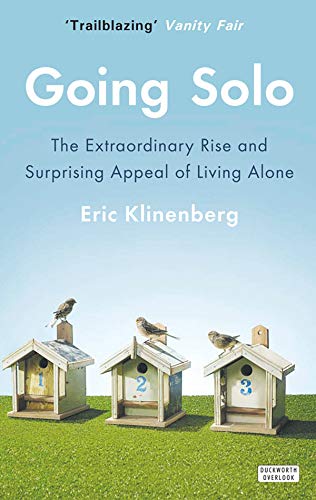
In 1950, only 22% of adults were single. Today, more than 50% of adults are. Though conventional wisdom tells us that living by oneself leads to loneliness and isolation, most solo dwellers, compared with their married counterparts, are more likely to eat out and exercise, sign up for art and music classes, attend public events and lectures, and volunteer. Drawing on over three hundred in-depth interviews with men and women of all ages and every class, Eric Klinenberg reaches some startling conclusions about the seismic impact solo living is having on our culture, business and politics.
HOW TO LIVE ALONE AND HAPPY
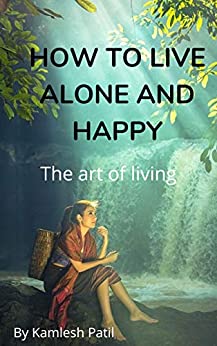
This book is about the art of living, generally, we are born alone and die alone, but in between, we are trying to live with a group of people. Without understanding the nature of life, we can not touch happiness, and this book can give a little bit of understanding about the natural life cycle and social life cycle.
To live alone and happy is basic in our nature, but due to our social structure, we so much went away from it, now the time has come to remember it.

Joy of Living Alone
If you are like me, who is in the stage of growing up alone, who has plenty of time but has no idea how to spend it and who always thinks about how to make yourself a better person when being alone, you can make the following attempts. You can have a room of your own, you can make various tasty food, you can buy flowers for yourself or travel alone.
Living Alone: How to Live Alone
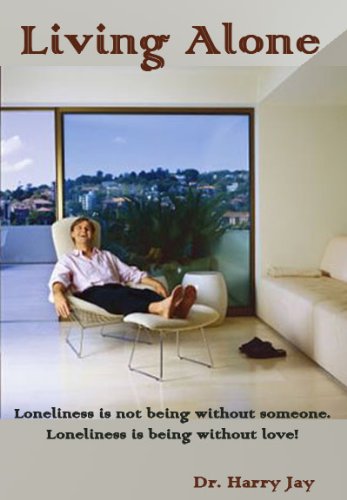
Living Alone: How to Live Alone
How to Live Alone – Living Alone is all about how to live alone and the rise in solitary living. It discusses the pros and cons of this form of lifestyle, the benefits of living alone, living alone tips, and more. Are you living alone for the first time? Have you confronted the fear of living alone? Is living life alone something that you are constantly thinking about? Living alone is not just a USA phenomenon; this is occurring worldwide with the Scandinavian countries taking the lead.
Living Alone
Living Alone: Information for men who find themselves on their own
Living alone following the end of a long-term relationship?
This book is for you.
Living on your own, after having shared your life with someone else for a long time, can be challenging. Not only do you have to look after yourself physically, you also need to face the demons of boredom and loneliness.
COMPLETE GUIDE BOOK FOR SENIOR LIVING ALONE
COMPLETE GUIDE BOOK FOR SENIOR LIVING ALONE
Seniors can stay safe by making sure their home is well-suited and equipped for any challenges they may encounter, creating a plan for contacting family members or someone in case of emergencies, and keeping specific behaviors and habits in mind for everyday safety. Family members and caregivers can make this desire a reality for their senior loved ones by preparing their homes and lives for successful aging in place. From lighting to flooring, simple fixes can ensure a safe and secure environment for seniors who live alone. But before beginning any renovations, be sure to assess how your loved one makes use of their surroundings.